 Phone: 850-772-1365
 info@bestwaterheater.com
Phone: 850-772-1365
info@bestwaterheater.com
info@bestwaterheater.com
Phone: 850-772-1365
info@bestwaterheater.com
 Phone: 850-772-1365
info@bestwaterheater.com
Phone: 850-772-1365
info@bestwaterheater.com

Including filter system and high-performance 1,1-Dichloroethylene filter.


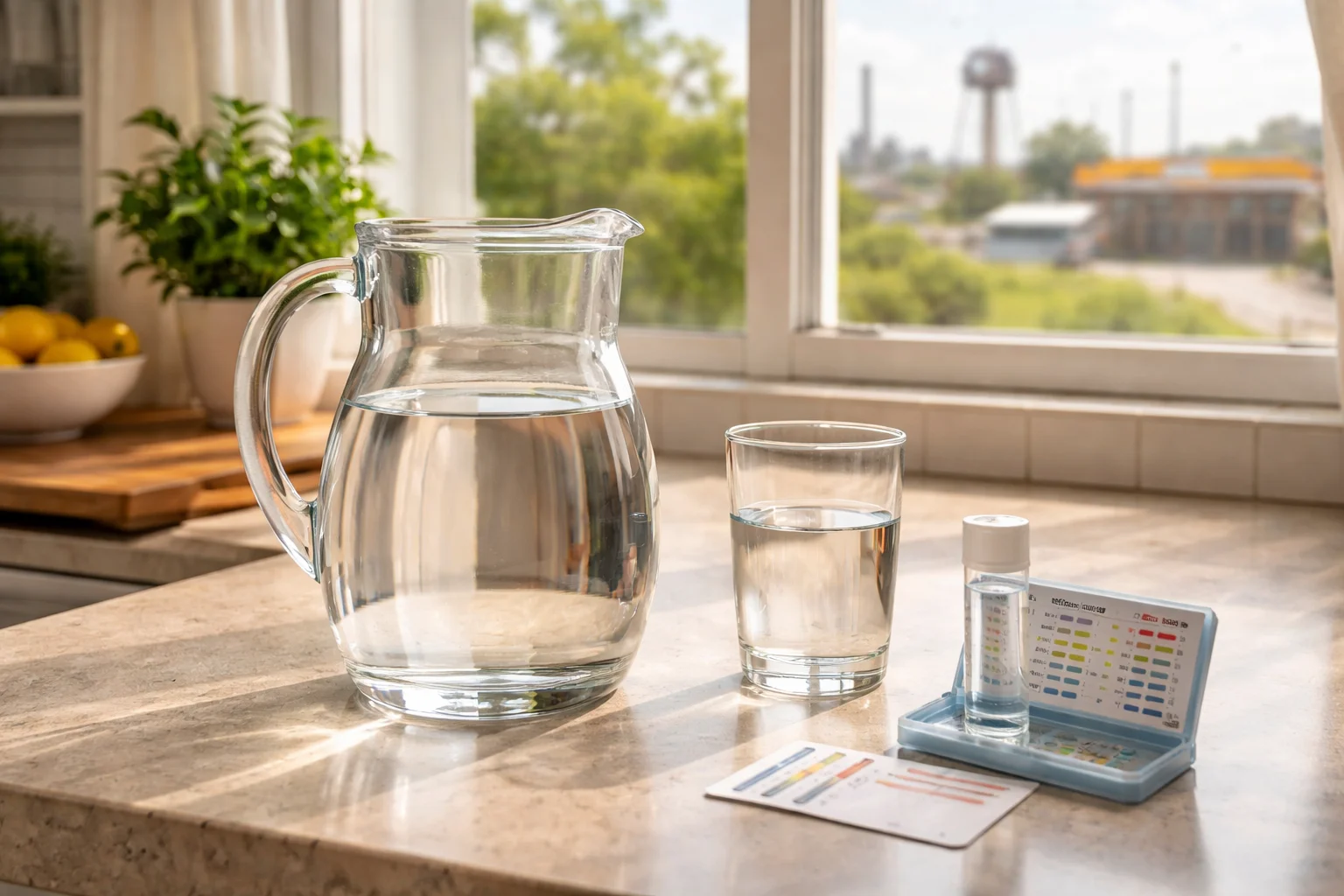
1,1-Dichloroethylene is a volatile organic compound (VOC) that can enter groundwater when certain industrial solvents or related chemicals contaminate the environment. Because it vaporizes readily, it can affect not only the water you use for drinking but also the air in your home during showers, laundry, and dishwashing. It usually doesn’t change water taste, smell, or appearance, so the only sure way to know if it’s present is through testing. If a sample shows elevated levels, many Arran homeowners choose to address it where water first enters the house.
VOCs such as 1,1-dichloroethylene are often found at very low concentrations that can shift over time, so clear-looking water isn’t a guarantee of safety. Families in Arran who want to lower exposure for everyday activities—cooking, teeth brushing, bathing—often prefer treating the whole house rather than a single faucet. A point-of-entry system helps ensure consistent treated water in bathrooms, the kitchen, and appliances, giving one solution that protects daily routines across your home.
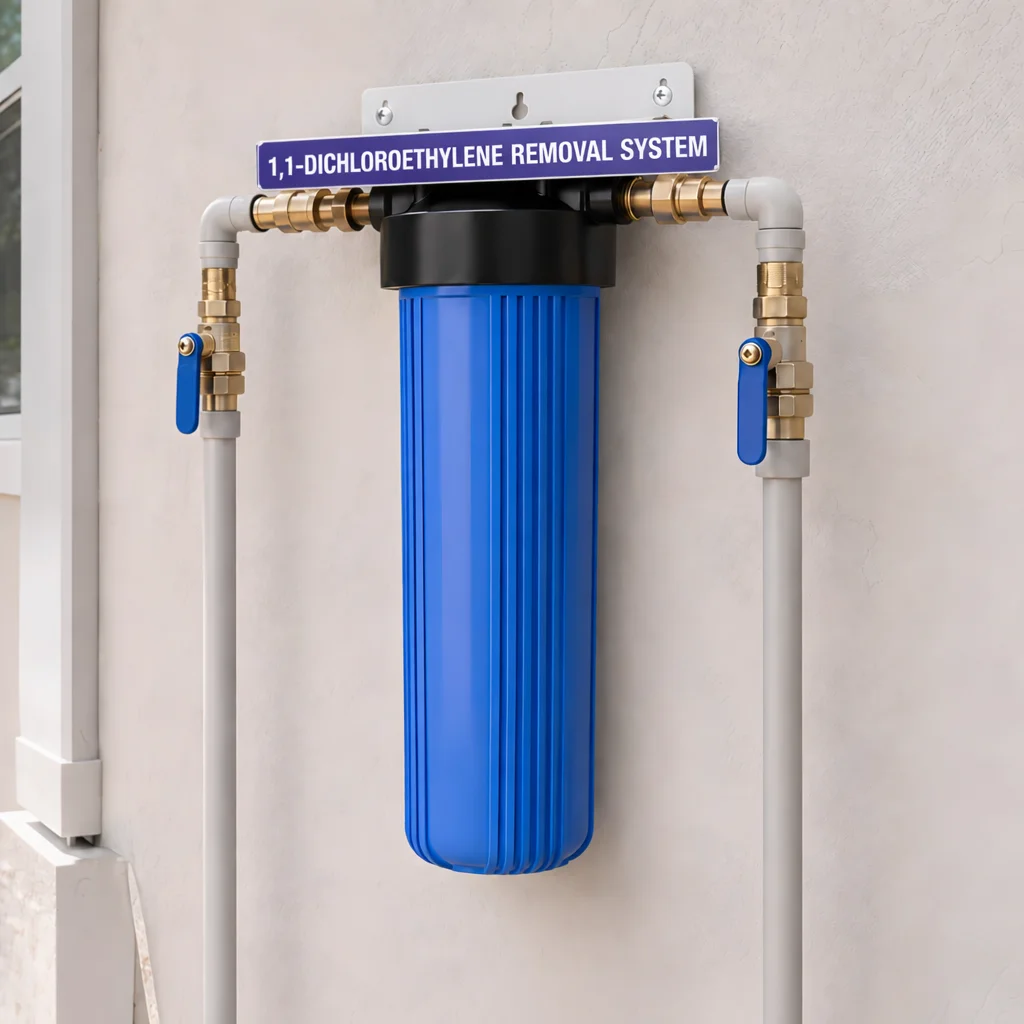
The most effective single-filter choice for reducing 1,1-dichloroethylene is a whole-house granular activated carbon (GAC) filter. Activated carbon adsorbs many VOCs as water flows through the carbon media, removing contaminants before they reach your showers, sinks, and appliances. Installed at the point of entry, a GAC tank treats water used for both drinking and household purposes—limiting the chance that VOCs will volatilize into the air during normal use.
Correct sizing of a GAC tank is important because sufficient contact time determines how well VOCs are removed, so the system should be matched to your home’s flow rate and usage. Carbon media eventually becomes exhausted and requires routine replacement or re-bedding to maintain performance. Using a prefilter helps keep sediment out of the carbon bed, preserving efficiency and limiting pressure loss. Mr. Pure Water can work with Arran homeowners to choose a whole-house carbon system sized for their property and focused on reducing 1,1-dichloroethylene.
 850-772-1365
 info@bestwaterheater.com

