 Phone: 850-772-1365
 info@bestwaterheater.com
Phone: 850-772-1365
info@bestwaterheater.com
info@bestwaterheater.com
Phone: 850-772-1365
info@bestwaterheater.com
 Phone: 850-772-1365
info@bestwaterheater.com
Phone: 850-772-1365
info@bestwaterheater.com

Including filter system and high-performance 2,4-D filter.


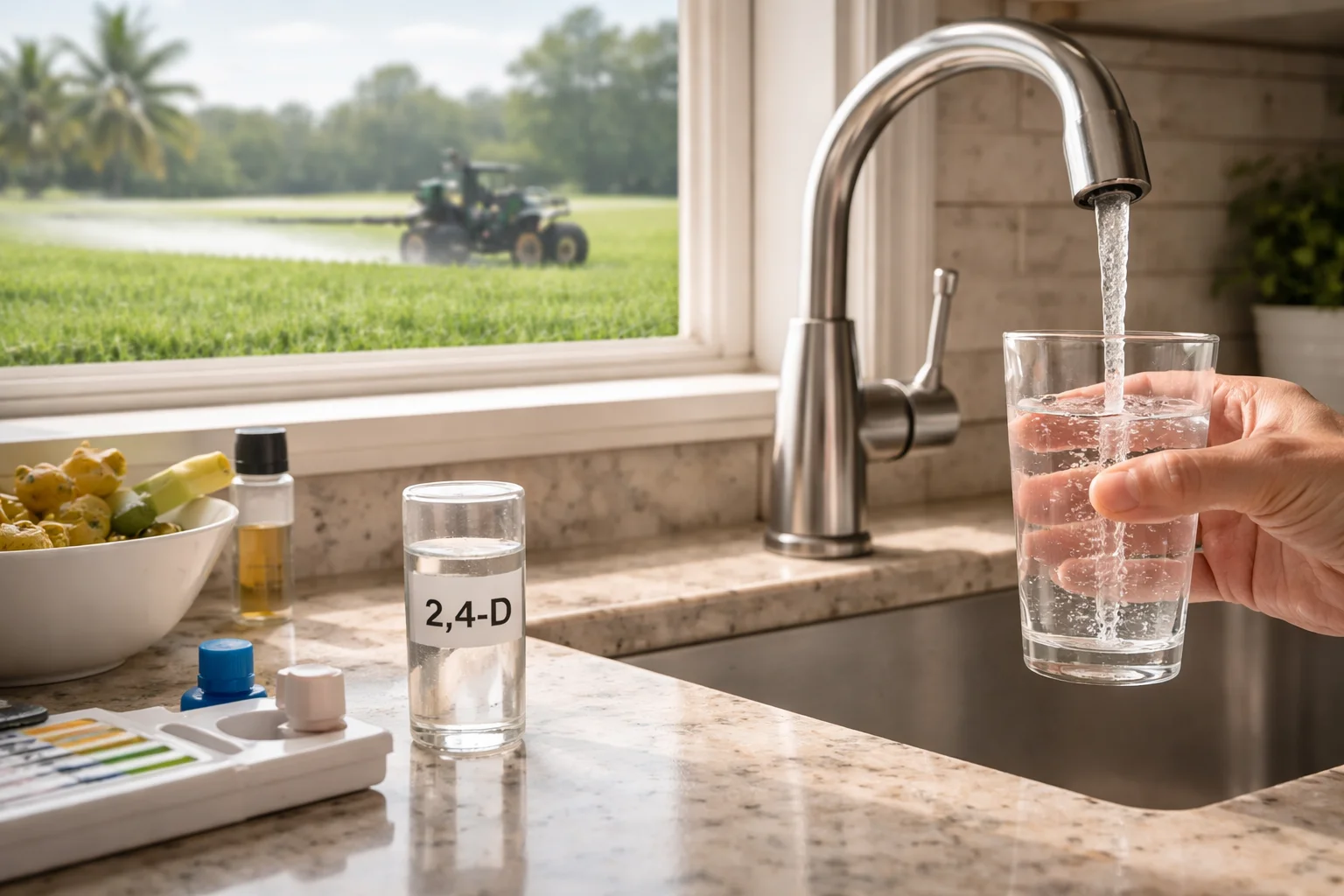
2,4-D is a common herbicide that can enter drinking water when it runs off treated lawns or moves through soil into water sources. Because it’s applied to control broadleaf weeds, its presence in water can vary with seasons and local application patterns; you won’t usually see it or taste it in tap water. Clarksville homeowners who worry about pesticides in their water often rely on testing and treatment rather than visible signs to know whether action is needed.
Municipal treatment can reduce many contaminants, but some pesticides like 2,4-D can fluctuate and may not be consistently removed by every standard process. Private wells in and around Clarksville can also be at risk when nearby land use changes or after heavy rains increase runoff. If you want to limit exposure in drinking, cooking, bathing and laundry, treating water as it enters your Clarksville home with a whole-house approach provides protection at every faucet and fixture.
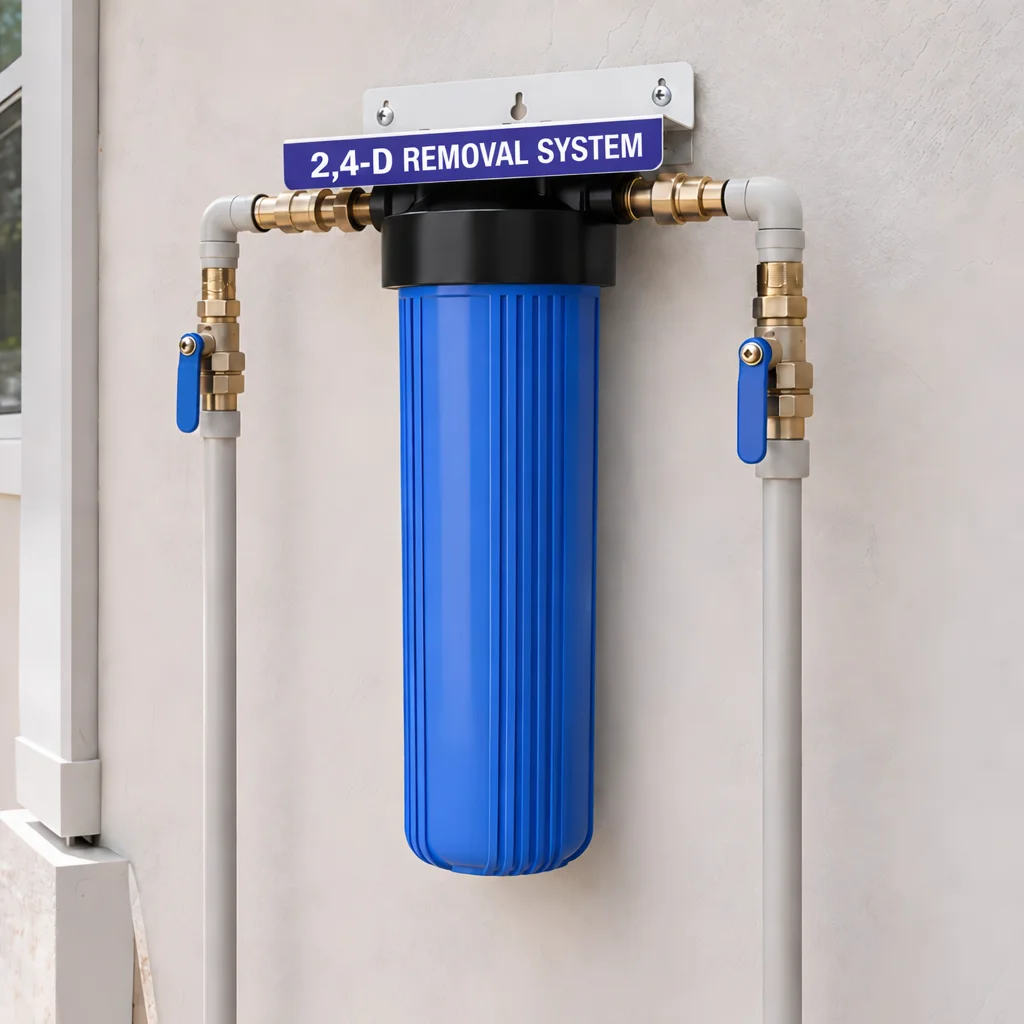
The most effective single-filter option for whole-house reduction of 2,4-D is an activated carbon system. Catalytic or coconut-shell activated carbon is engineered to adsorb many organic chemicals, including a variety of herbicides, by catching them in the carbon’s pore structure. Because adsorption depends on contact time, choosing the correct tank size and flow rate matters for reliable performance at showers, sinks and appliances in Clarksville homes. This solution treats water without altering normal household plumbing or usage.
A whole-house carbon unit is mounted on the main water line so all incoming water is treated before it reaches the house. Systems commonly include a sediment pre-filter to protect the carbon and preserve steady flow. Carbon media has a limited capacity, so scheduled replacement keeps 2,4-D reduction effective over time. Mr. Pure Water in Clarksville can size a whole-house carbon system to match your household water use and any lab results, giving you targeted protection without guesswork.
 850-772-1365
 info@bestwaterheater.com

