 Phone: 954-208-3500
 info@bestwaterheater.com
Phone: 954-208-3500
info@bestwaterheater.com
info@bestwaterheater.com
Phone: 954-208-3500
info@bestwaterheater.com
 Phone: 954-208-3500
info@bestwaterheater.com
Phone: 954-208-3500
info@bestwaterheater.com

Including filter system and high-performance 2,4-D filter.


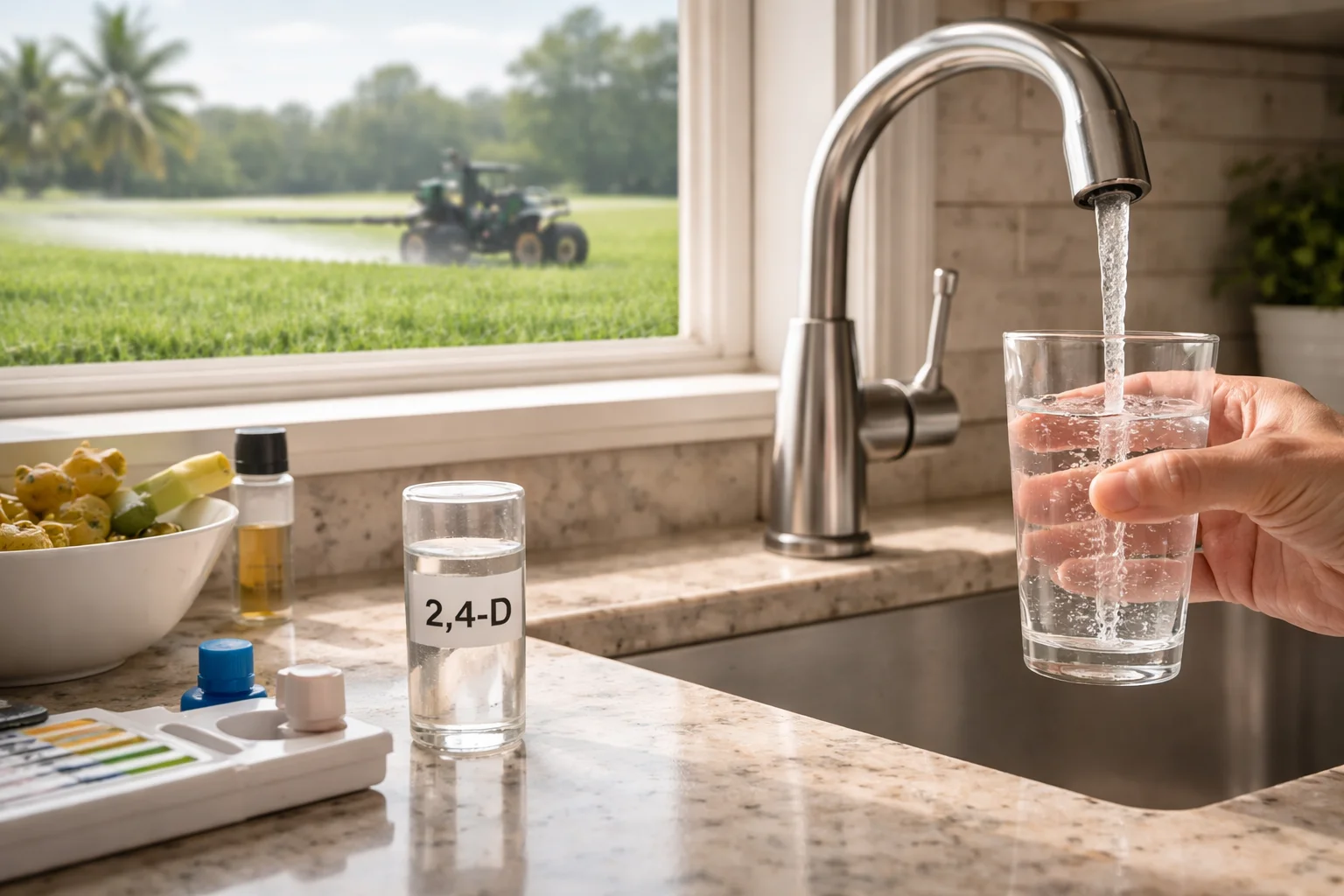
2,4-D is a common herbicide that can travel from lawns and fields into water supplies through runoff or by leaching into groundwater. Because it’s used to control broadleaf weeds, its presence in household water depends on factors like when it was applied and local water-source conditions. You usually won’t detect 2,4-D by sight, taste, or smell, which is why many Southwest Ranches homeowners choose testing and treatment rather than relying on how their water appears.
Even when city systems treat water, some pesticides are intermittent and can be difficult to remove with every method. Private wells in the Broward County area can be especially sensitive to changes in land use or heavy tropical-season rains that increase runoff. If you’re worried about unhealthy levels of 2,4-D in water used for drinking, cooking, bathing, or laundry, treating water at the point it enters your Southwest Ranches home provides protection at every faucet.
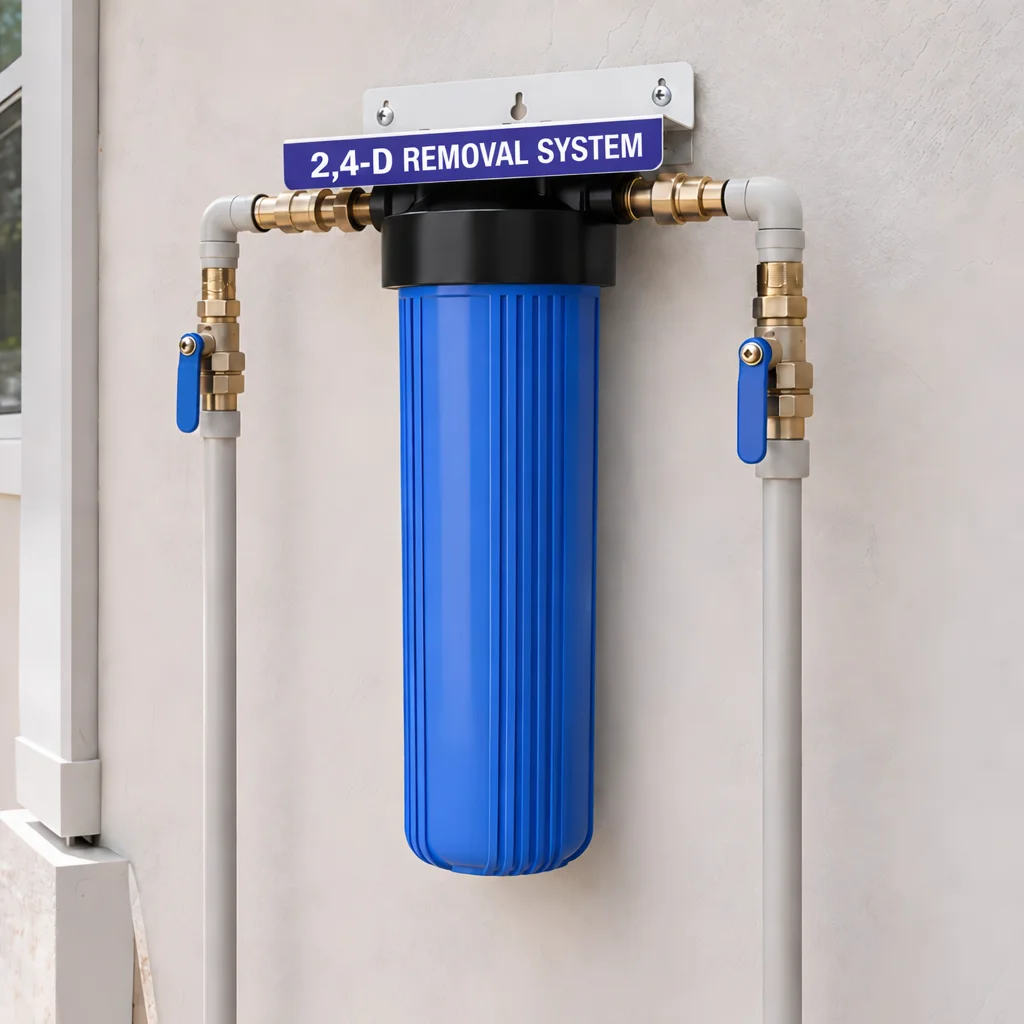
The most effective single-filter whole-house option for reducing 2,4-D is an activated carbon system. High-quality catalytic or coconut-shell activated carbon adsorbs many organic chemicals, including herbicides, by trapping them in its porous structure. For real-world performance in Southwest Ranches homes — where moderate water hardness and the need for good shower flow matter — correct tank sizing and flow rate are important because the filter’s effectiveness depends on contact time.
A whole-house carbon filter is installed on the main water line so all water entering your Southwest Ranches property is treated before reaching fixtures. These systems commonly include a sediment pre-filter to protect the carbon and preserve steady flow, which helps in our warm, mineral-bearing local water that can contribute to scale over time. Carbon media has limited capacity, so scheduled replacement keeps 2,4-D reduction consistent; Mr. Pure Water can size and specify a whole-house carbon solution to match your household use and any lab testing for targeted protection.
 954-208-3500
 info@bestwaterheater.com

