 Phone: 772-290-5223
 info@bestwaterheater.com
Phone: 772-290-5223
info@bestwaterheater.com
info@bestwaterheater.com
Phone: 772-290-5223
info@bestwaterheater.com
 Phone: 772-290-5223
info@bestwaterheater.com
Phone: 772-290-5223
info@bestwaterheater.com

Including filter system and high-performance 2,4-D filter.


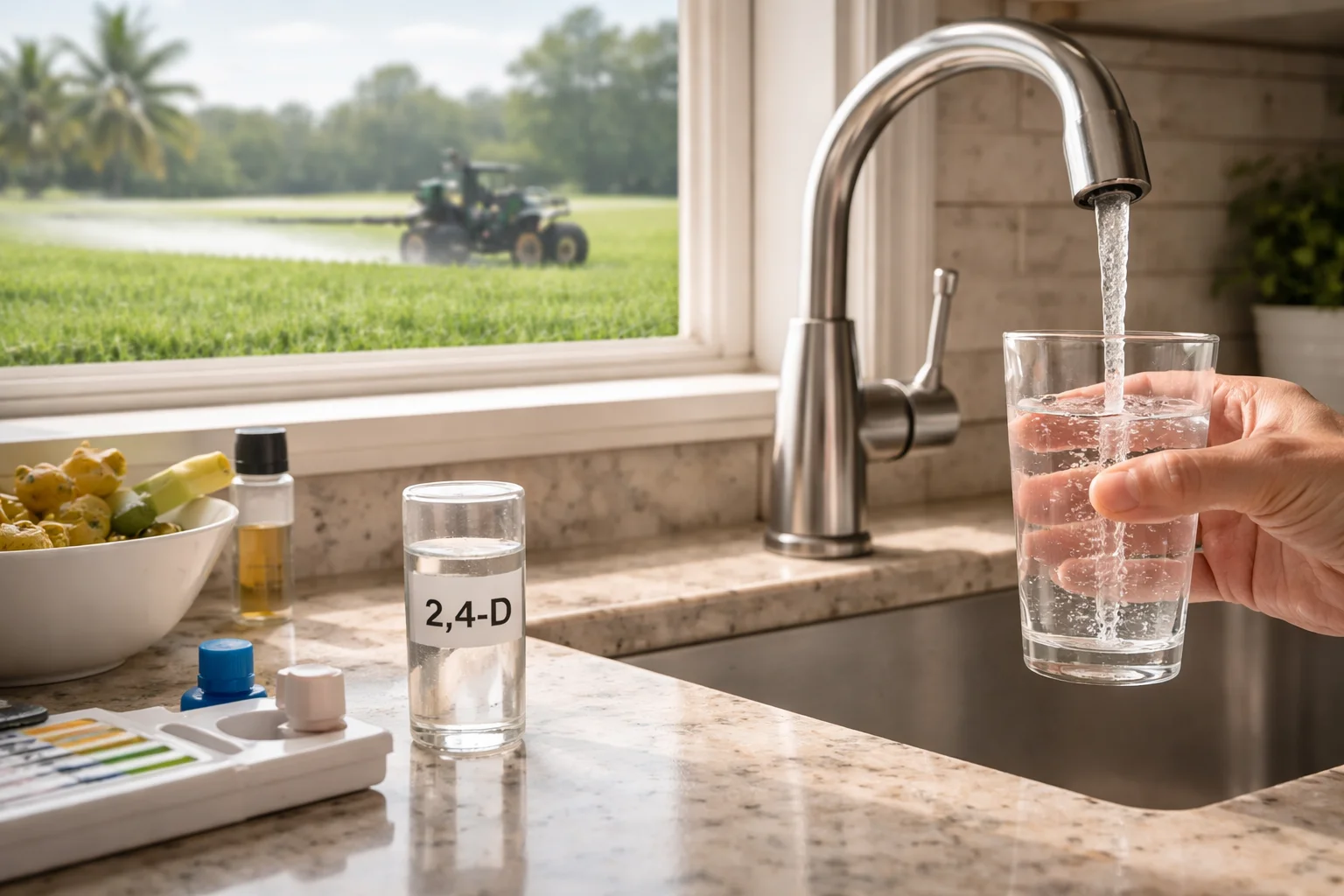
2,4-D is a broadleaf herbicide that can enter drinking water when it runs off the land or moves through soil into local sources. Because it’s used seasonally and moves with rainfall and irrigation, trace amounts can appear depending on where water is sourced and recent weather. You probably won’t notice 2,4-D by smell or sight in your tap water, which is why homeowners on the Treasure Coast rely on testing and targeted treatment rather than appearance alone.
Even treated municipal supplies and private wells can face variability in pesticide levels over time, especially after heavy rains or runoff events common in our humid subtropical coastal climate. In Martin, St. Lucie and Indian River counties, older plumbing and coastal conditions can also affect taste and corrosion concerns, so protecting water at the point it enters the house reduces exposure everywhere. If you’re worried about 2,4-D in water used for drinking, cooking, bathing and laundry, a whole-house approach treats all taps and appliances for peace of mind.
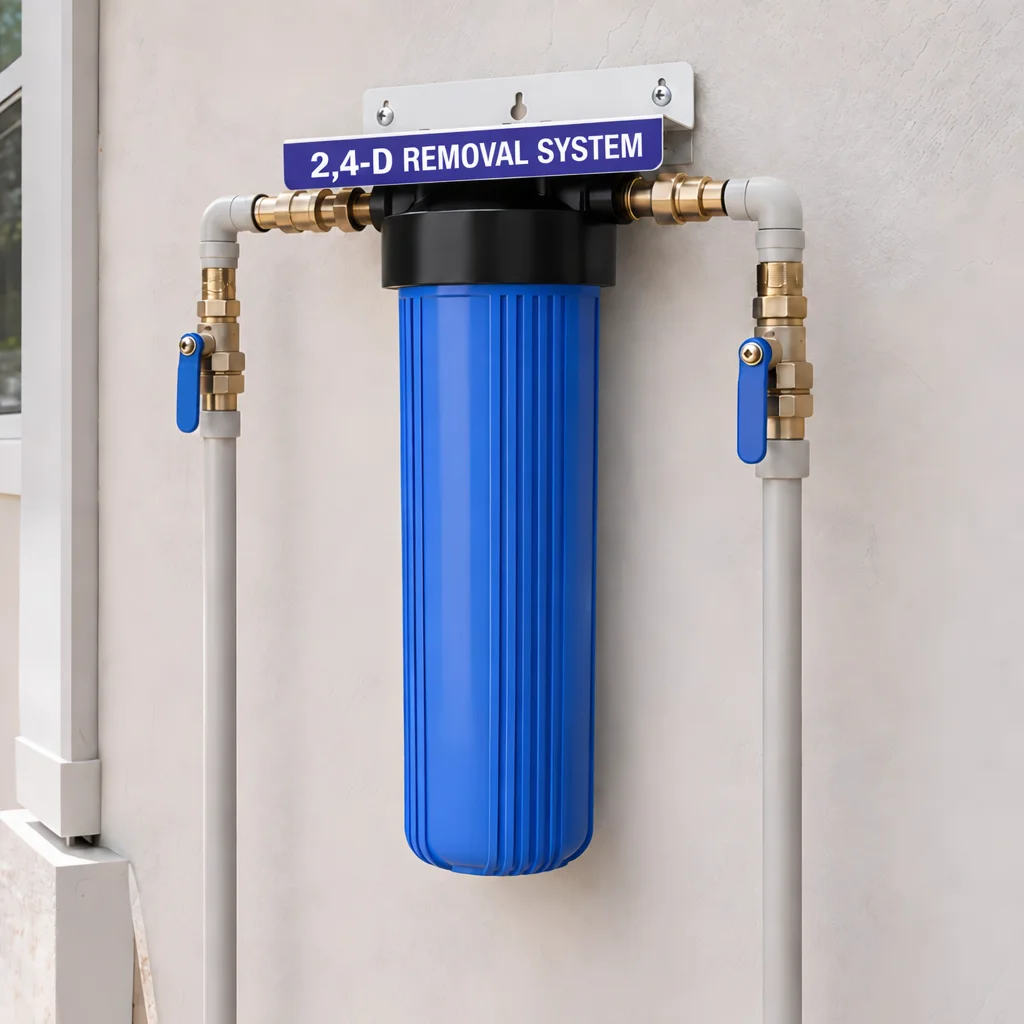
For whole-home reduction of 2,4-D, a single whole-house activated carbon system is generally the best filter choice. Catalytic or coconut-shell activated carbon is built to adsorb many organic chemicals and herbicides by trapping them in its porous structure. Since adsorption depends on contact time, selecting the right tank size and flow rate is important to maintain performance at showers, sinks and appliances in Treasure Coast homes with moderate water hardness.
A correctly sized whole-house carbon filter is placed on your main water line so every faucet receives treated water; sediment pre-filtration is commonly included to protect the carbon and preserve flow. Because carbon media eventually becomes exhausted, scheduled replacement keeps 2,4-D reduction consistent over time. Mr. Pure Water can help Treasure Coast homeowners—whether in Stuart, Fort Pierce, Port St. Lucie or Vero Beach—match a whole-house carbon system to your household demand, local water characteristics and any lab results for reliable, local protection.
 772-290-5223
 info@bestwaterheater.com

