 Phone: 772-290-5223
 info@bestwaterheater.com
Phone: 772-290-5223
info@bestwaterheater.com
info@bestwaterheater.com
Phone: 772-290-5223
info@bestwaterheater.com
 Phone: 772-290-5223
info@bestwaterheater.com
Phone: 772-290-5223
info@bestwaterheater.com

Including filter system and high-performance 2-Methylisoborneol (MIB) filter.



If your Indrio tap water sometimes smells musty or earthy, 2-Methylisoborneol (MIB) could be a cause. MIB is a natural compound that can appear in drinking water when certain algae or bacteria are present in source waters, and it’s most often noticed because it affects taste and odor at very low concentrations. It isn’t usually a sign of plumbing failure, but it can make water from every faucet less pleasant for drinking and cooking around St. Lucie County.
Homeowners often describe MIB’s effect as a dirt-like, pondy, or moldy flavor that comes and goes. Because it’s detectible at tiny amounts, routine disinfection that keeps water microbiologically safe may not remove the smell or taste. Boiling sometimes makes the odor seem stronger as water evaporates, so it isn’t a reliable fix. When that earthy scent becomes frequent in Indrio homes, treating water at the point it enters the house is usually the most straightforward way to get better-tasting water everywhere.
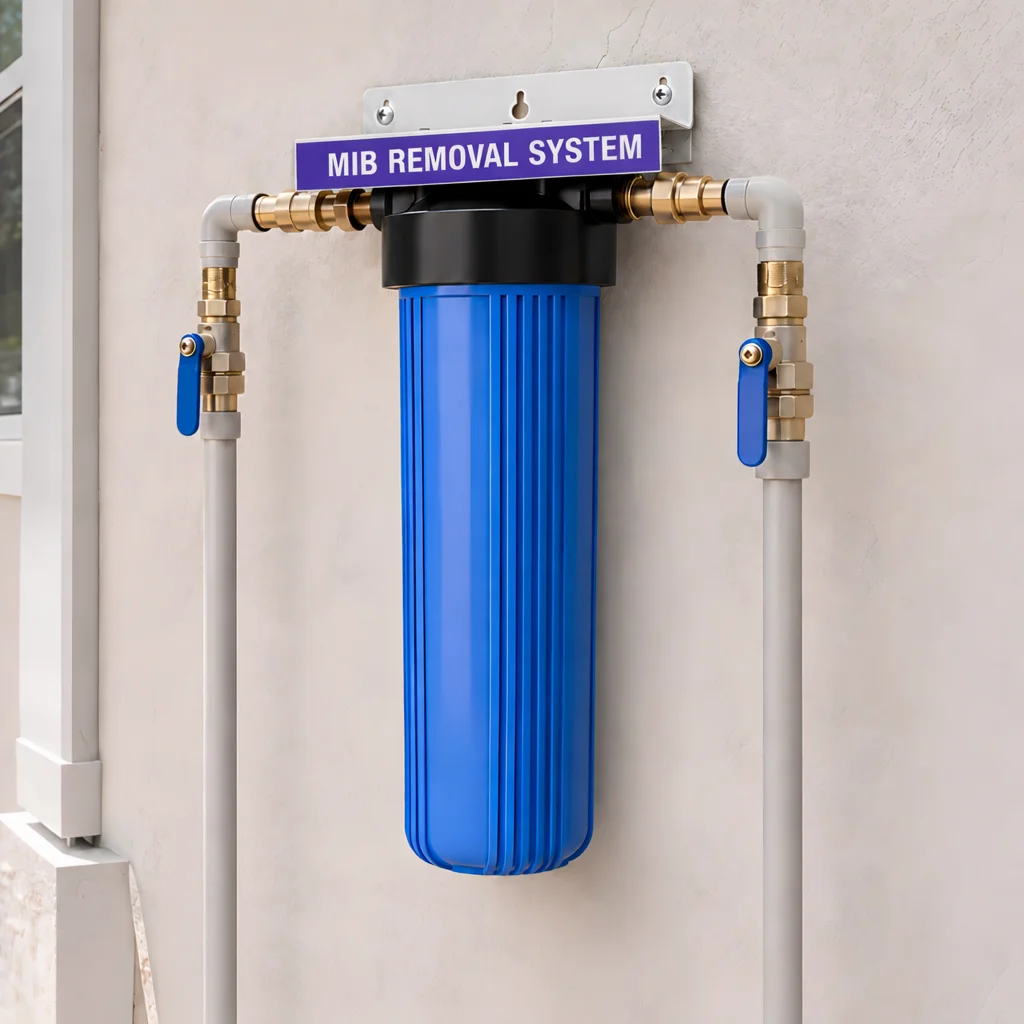
To tackle 2-Methylisoborneol, the single best filter choice is a high-quality activated carbon system — commonly catalytic carbon or a high-capacity granular activated carbon (GAC) design. Carbon media is effective at adsorbing taste-and-odor compounds like MIB as water flows through the tank. The important factors are adequate contact time and enough carbon volume, which is why a correctly sized whole-house carbon tank generally works better than small point-of-use cartridges. This kind of system treats water for every faucet, shower and appliance in your Indrio home without changing how you use your plumbing.
A whole-house activated carbon system configured for MIB should be matched to the home’s flow rate and have sufficient media bed depth so 2-Methylisoborneol can bind to the carbon. In Indrio and the Treasure Coast’s humid subtropical climate, this can also help remove other contributors to unpleasant odors. Because carbon media is consumable, performance depends on proper sizing and periodic media replacement based on your water use and the degree of the taste-and-odor problem; this also helps limit scale and buildup concerns common with hard water in the area.
 772-290-5223
 info@bestwaterheater.com

