 Phone: 407-214-2646
 info@bestwaterheater.com
Phone: 407-214-2646
info@bestwaterheater.com
info@bestwaterheater.com
Phone: 407-214-2646
info@bestwaterheater.com
 Phone: 407-214-2646
info@bestwaterheater.com
Phone: 407-214-2646
info@bestwaterheater.com

Including filter system and high-performance Aldicarb filter.



Aldicarb is a pesticide that can enter drinking water when it moves from treated land into groundwater or surface sources. In DeBary, where homes draw from the Floridan aquifer and water is typically hard, you usually won’t see or smell aldicarb — it’s the sort of issue a lab test or utility report turns up. Because the compound and its regulatory history are complex, many homeowners choose testing first to understand whether older residues or breakdown products are present in their supply.
As aldicarb degrades it can create related compounds such as aldicarb sulfoxide and aldicarb sulfone; water reports sometimes list those names separately even though they stem from the same pesticide. If your DeBary water test mentions any of these terms, treat them as part of a single contamination concern. Addressing the issue with a whole-house strategy protects every faucet in your home — from showers near Lake Monroe to the kitchen in neighborhoods like Glen Abbey.
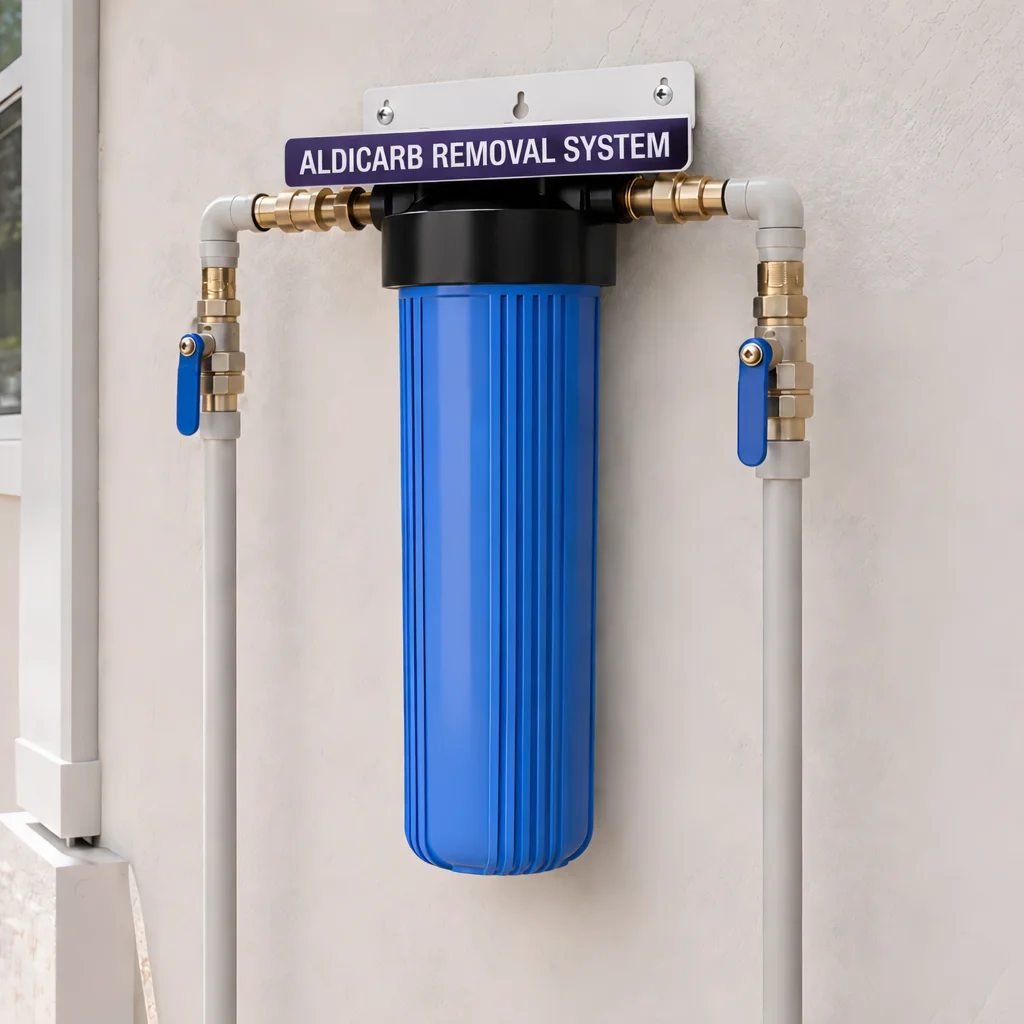
The most effective single-filter choice for reducing aldicarb in household water is a whole-house granular activated carbon (GAC) system. GAC removes many organic chemicals by adsorption, which sediment filters alone can’t do. To work well in Volusia County homes that often have hard water and mineral scaling, the system needs the right-sized carbon bed and sufficient contact time to handle peak flow without losing performance.
A properly designed whole-home GAC filter can also reduce aldicarb sulfoxide and aldicarb sulfone, since those breakdown products behave like other organic contaminants. Local water chemistry, contaminant levels, and household usage patterns affect how much carbon you need and how often it should be changed, so pairing a targeted test with correct sizing is important. Routine maintenance keeps the media working; Mr. Pure Water can evaluate your DeBary home, size and install the right whole-house carbon system, and set a maintenance schedule so treated water reaches every tap.
 407-214-2646
 info@bestwaterheater.com

