 Phone: 850-772-1365
 info@bestwaterheater.com
Phone: 850-772-1365
info@bestwaterheater.com
info@bestwaterheater.com
Phone: 850-772-1365
info@bestwaterheater.com
 Phone: 850-772-1365
info@bestwaterheater.com
Phone: 850-772-1365
info@bestwaterheater.com

Including filter system and high-performance Aldicarb filter.


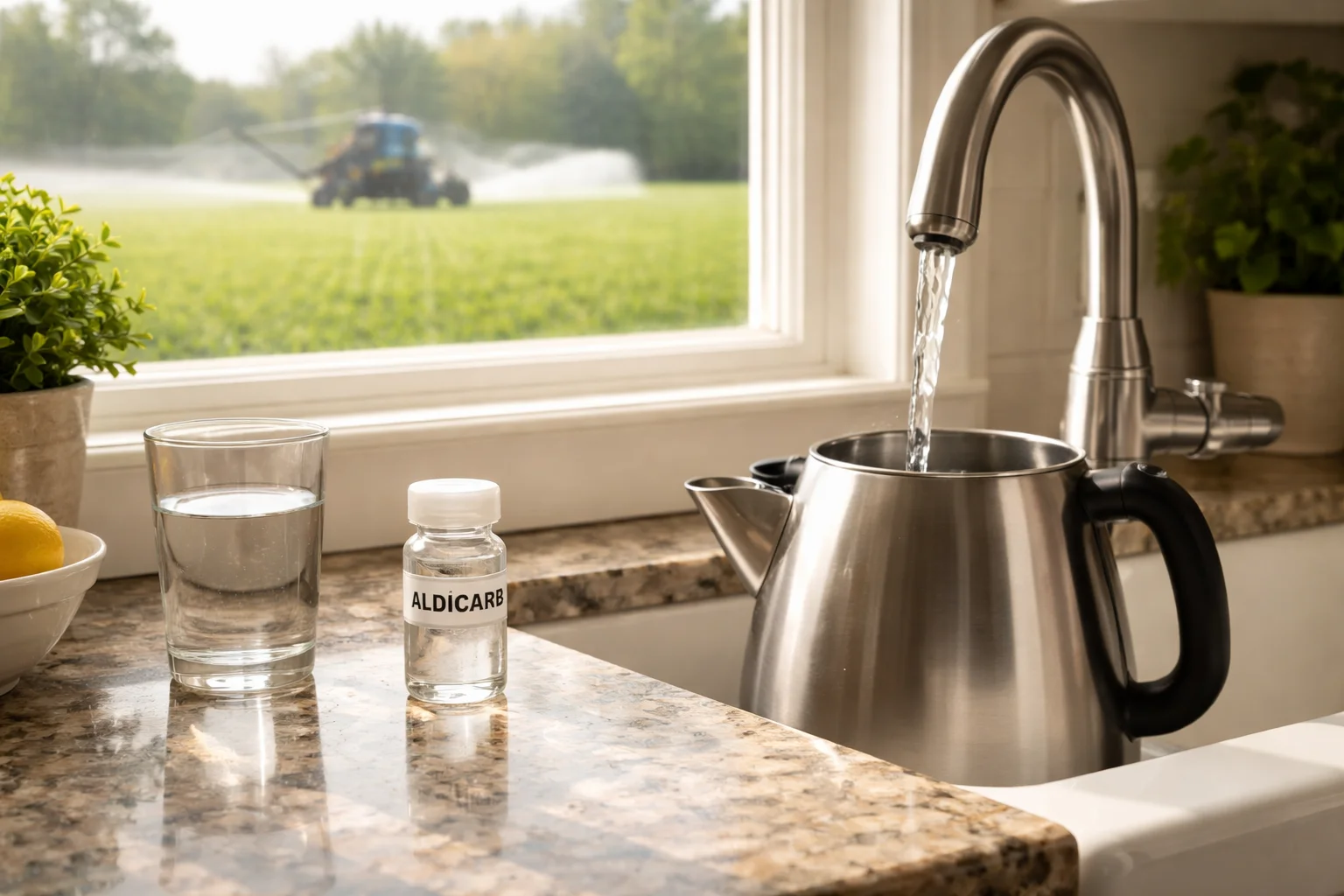
Aldicarb is a pesticide that can leach into groundwater or surface supplies after use on treated land. You won’t be able to taste or smell it in your plumbing, so the only reliable way to discover it is through a water test or a utility notice. Because regulations and uses have changed over time, sometimes older residues or breakdown products are the concern. If you want a clear picture of what’s in your Econfina water, start with testing so you know whether treatment is needed.
As aldicarb degrades it can form related chemicals like aldicarb sulfoxide and aldicarb sulfone, and lab reports may list those names separately. Seeing any of these on a test points back to the same original pesticide, so it’s best to consider them together when assessing risk. For homes in Econfina, a whole-house strategy treats water at every faucet and shower rather than addressing only one outlet.
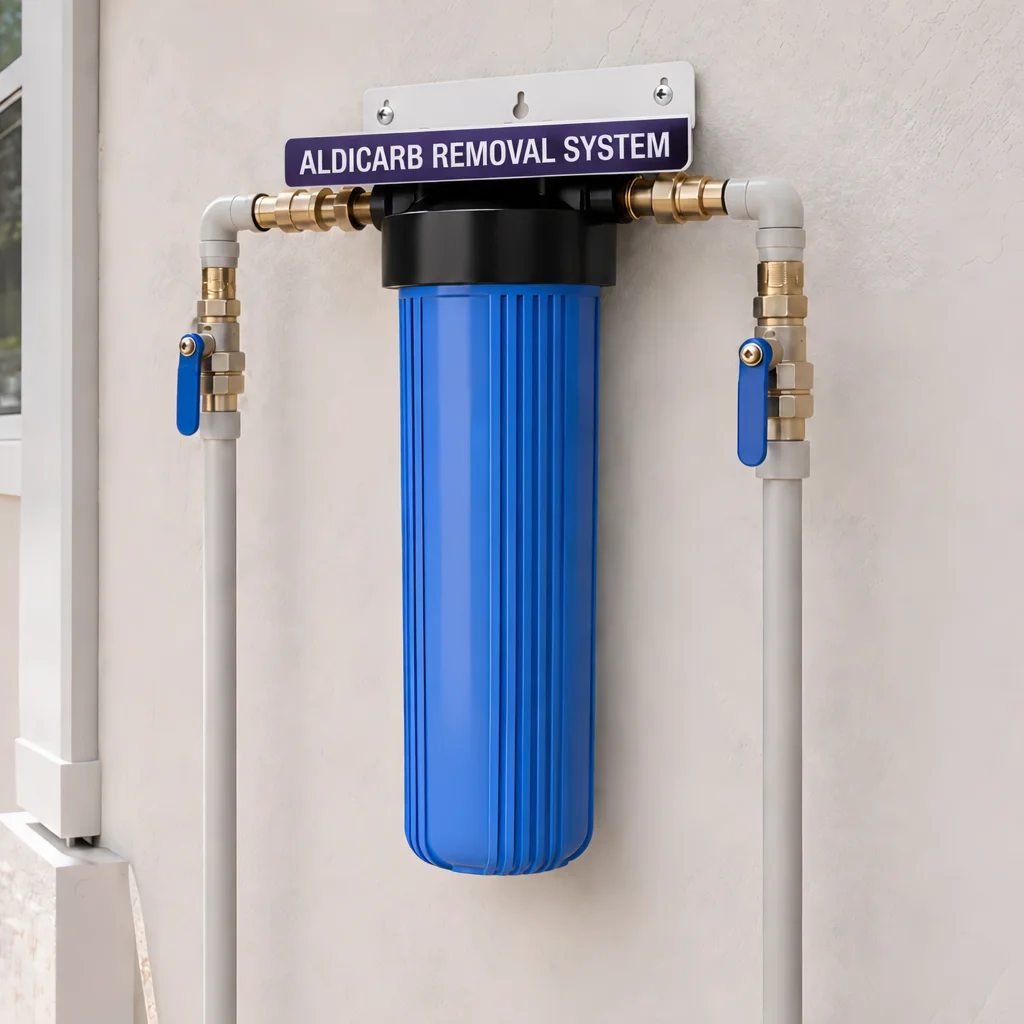
The most effective single whole-house option for reducing aldicarb in residential water is a granular activated carbon (GAC) filter. Carbon media adsorbs many organic compounds that sediment or simple particle filters cannot remove. To work well for an Econfina home, the system needs a tank sized with enough carbon and contact time to handle your household’s peak flow—proper bed depth and flow rate ensure consistent treatment to showers, laundry, and kitchen taps.
A properly designed whole-house GAC system can also reduce related byproducts such as aldicarb sulfoxide and aldicarb sulfone because they behave like other organic contaminants. Performance varies with water chemistry, contaminant levels, and household usage, so pairing a targeted Econfina water test with the carbon system helps determine the right media volume and service schedule. Routine maintenance is important because carbon eventually becomes exhausted; Mr. Pure Water can size, install, and maintain a whole-home carbon filter so your family gets treated water throughout the house.
 850-772-1365
 info@bestwaterheater.com

