 Phone: 850-772-1365
 info@bestwaterheater.com
Phone: 850-772-1365
info@bestwaterheater.com
info@bestwaterheater.com
Phone: 850-772-1365
info@bestwaterheater.com
 Phone: 850-772-1365
info@bestwaterheater.com
Phone: 850-772-1365
info@bestwaterheater.com

Including filter system and high-performance Aldicarb filter.


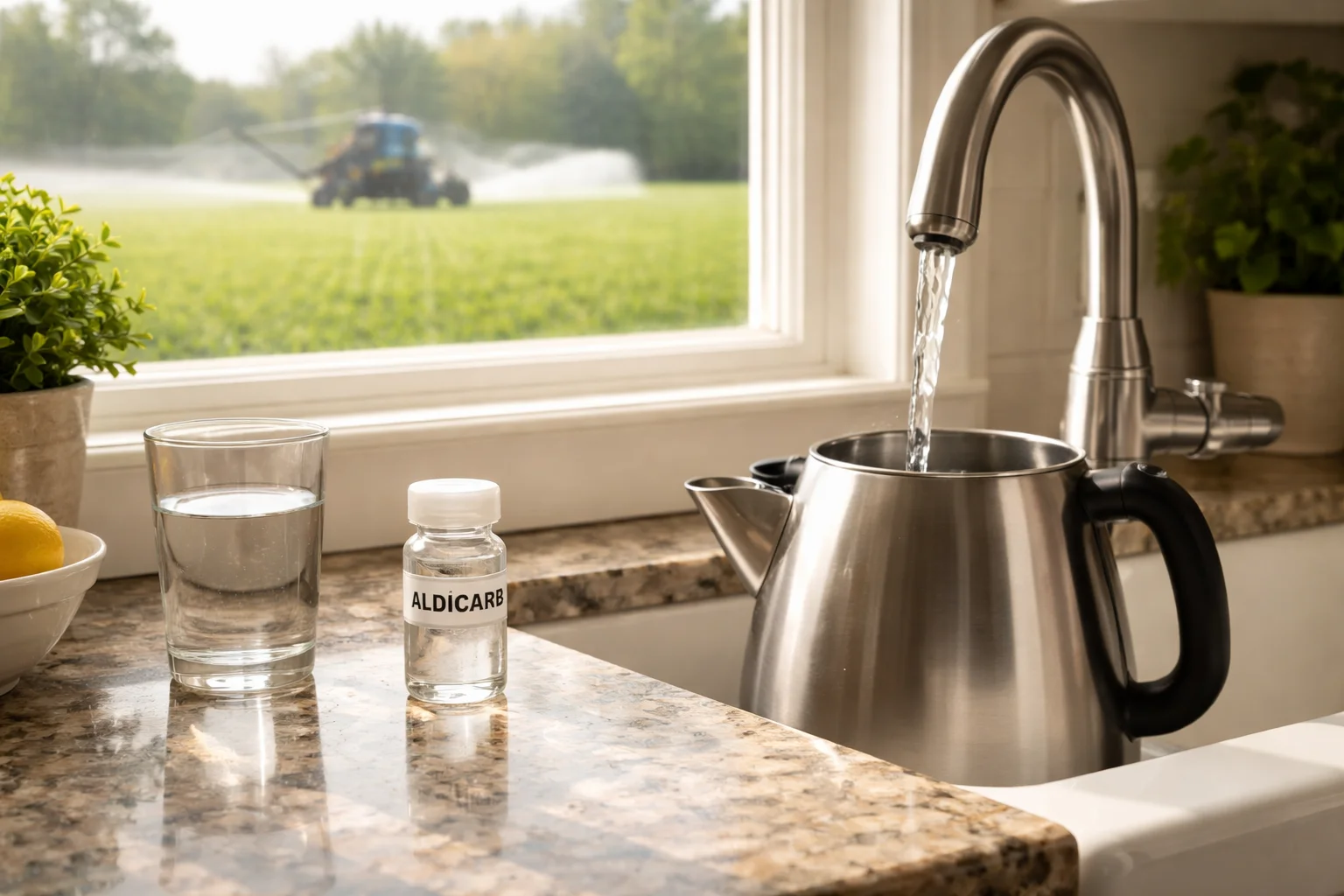
Aldicarb is a pesticide that can wash into groundwater or surface sources and end up in household water supplies. Because it has no distinctive taste or smell, most Harper homeowners wouldn’t notice it without a lab test or a utility alert. Over time aldicarb use and regulation have changed, so lingering residues or breakdown products are often the focus of concern. If you want clarity about what’s coming from your taps in Harper, start with a proper water test.
As aldicarb degrades it can form related compounds such as aldicarb sulfoxide and aldicarb sulfone, and laboratories may report those names separately. Seeing any of these terms on a water report generally points back to the same pesticide issue, so treat them together when assessing risk. For Harper homes, addressing the whole house — not just the kitchen faucet — ensures exposure from showers, laundry, and outdoor taps is reduced.
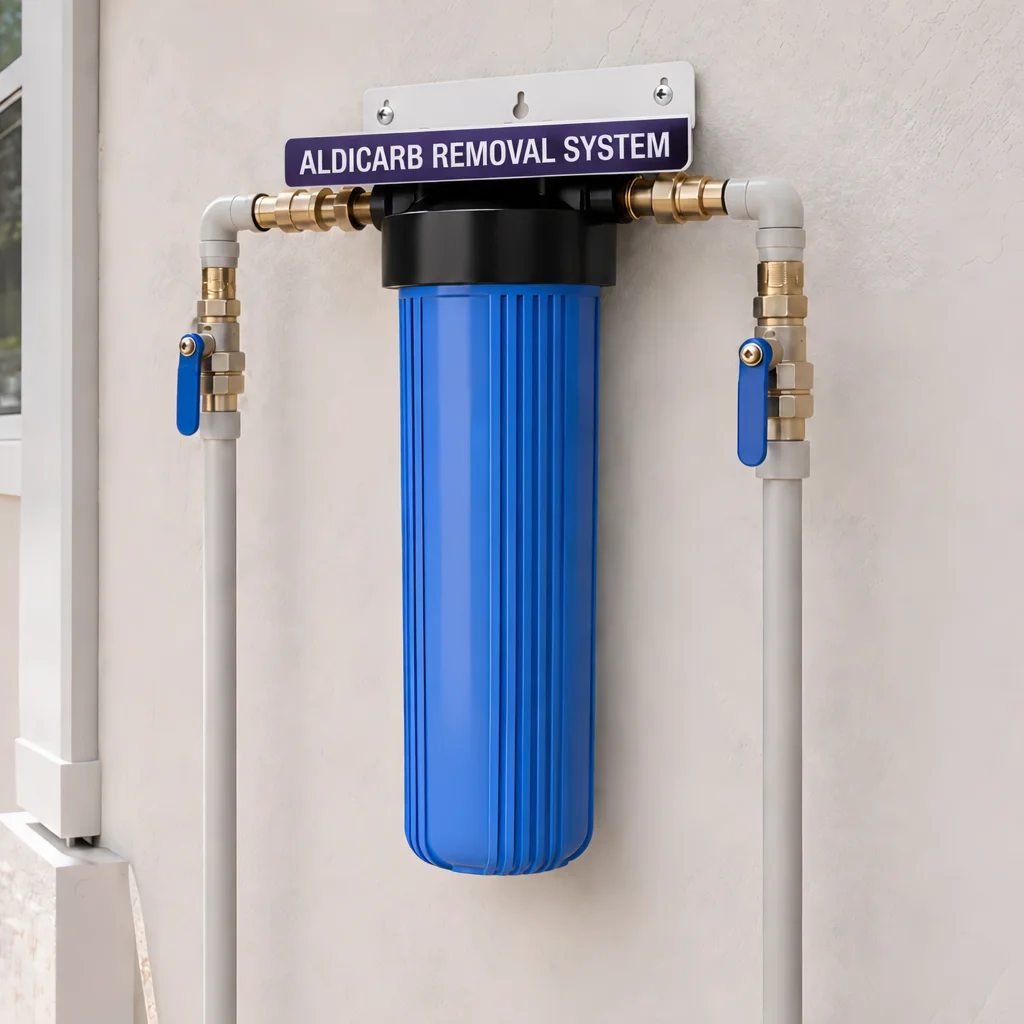
The most effective single-filter option for reducing aldicarb in household water is a whole-house granular activated carbon (GAC) system. Carbon filters work by adsorbing many organic contaminants that sediment filters can’t capture. For Harper properties, it’s important the GAC tank is sized with sufficient carbon and contact time to accommodate peak household flow so treatment is consistent across every tap.
A properly engineered whole-home GAC system can also lower levels of aldicarb sulfoxide and aldicarb sulfone, since those byproducts respond to the same carbon adsorption mechanisms. Performance will depend on your water chemistry, contaminant concentrations, and how the household uses water, so pairing a targeted test with the system design helps determine media volume and service intervals. Routine maintenance matters because carbon becomes exhausted and must be replaced; Mr. Pure Water in Harper can size, install, and maintain a whole-house carbon filter so your family gets treated water at every tap.
 850-772-1365
 info@bestwaterheater.com

