 Phone: 561-300-5075
 info@bestwaterheater.com
Phone: 561-300-5075
info@bestwaterheater.com
info@bestwaterheater.com
Phone: 561-300-5075
info@bestwaterheater.com
 Phone: 561-300-5075
info@bestwaterheater.com
Phone: 561-300-5075
info@bestwaterheater.com

Including filter system and high-performance Aldicarb filter.


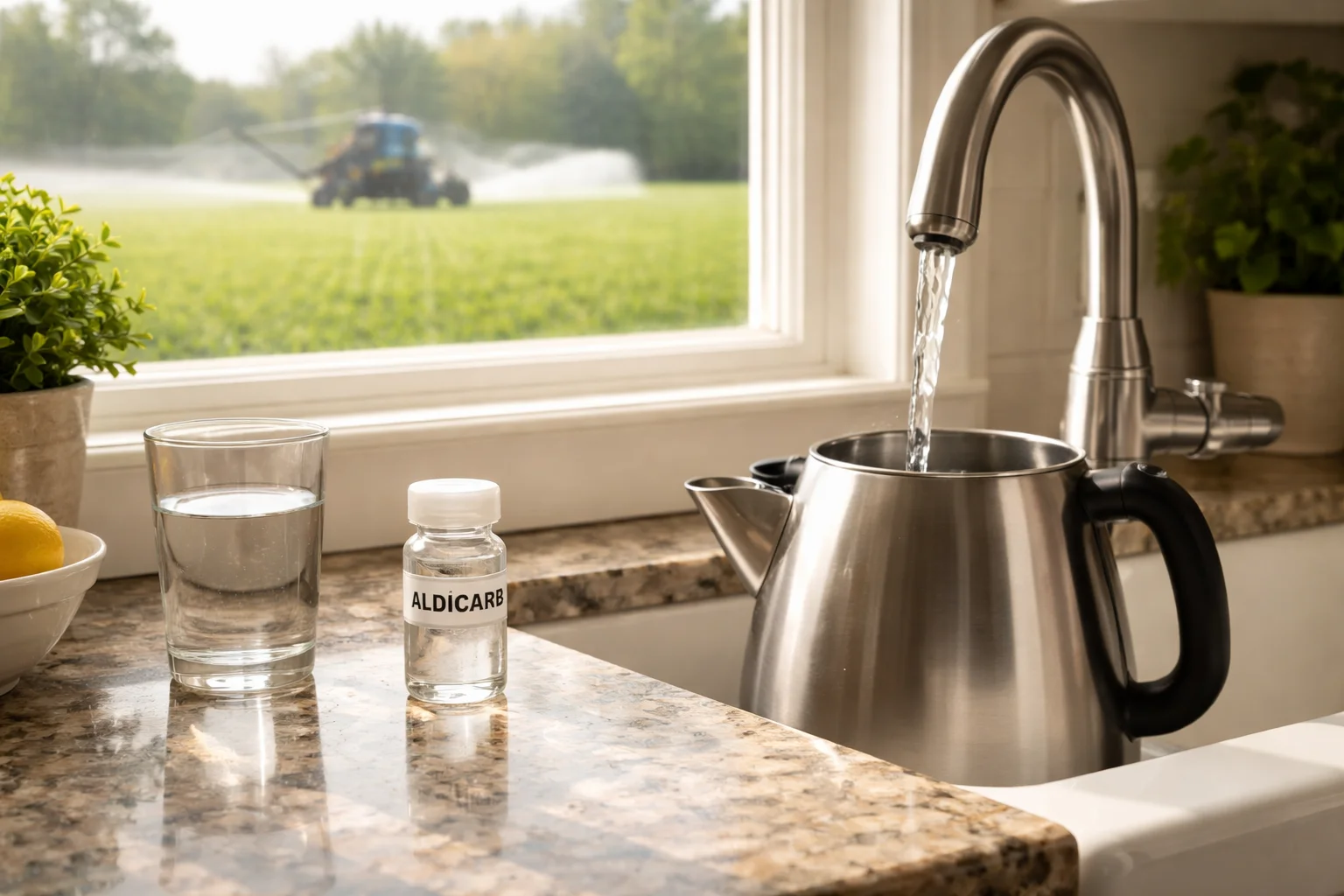
Aldicarb is a pesticide that can enter drinking water when it moves from treated land into groundwater or surface supplies. Because it’s odorless and colorless, most Haverhill homeowners won’t notice it without laboratory testing or a utility report. Concerns often focus on whether older applications or breakdown products remain in the environment, so the most reliable first step is a targeted water test to see what’s actually in your household supply.
As aldicarb degrades it can form related chemicals such as aldicarb sulfoxide and aldicarb sulfone, and lab results may list these names separately. If any of those compounds appear on your water test, treat them as part of the same contamination concern. For Haverhill homes, a whole-house strategy protects every outlet — from showers to external faucets — rather than relying only on a point-of-use device at the kitchen sink.
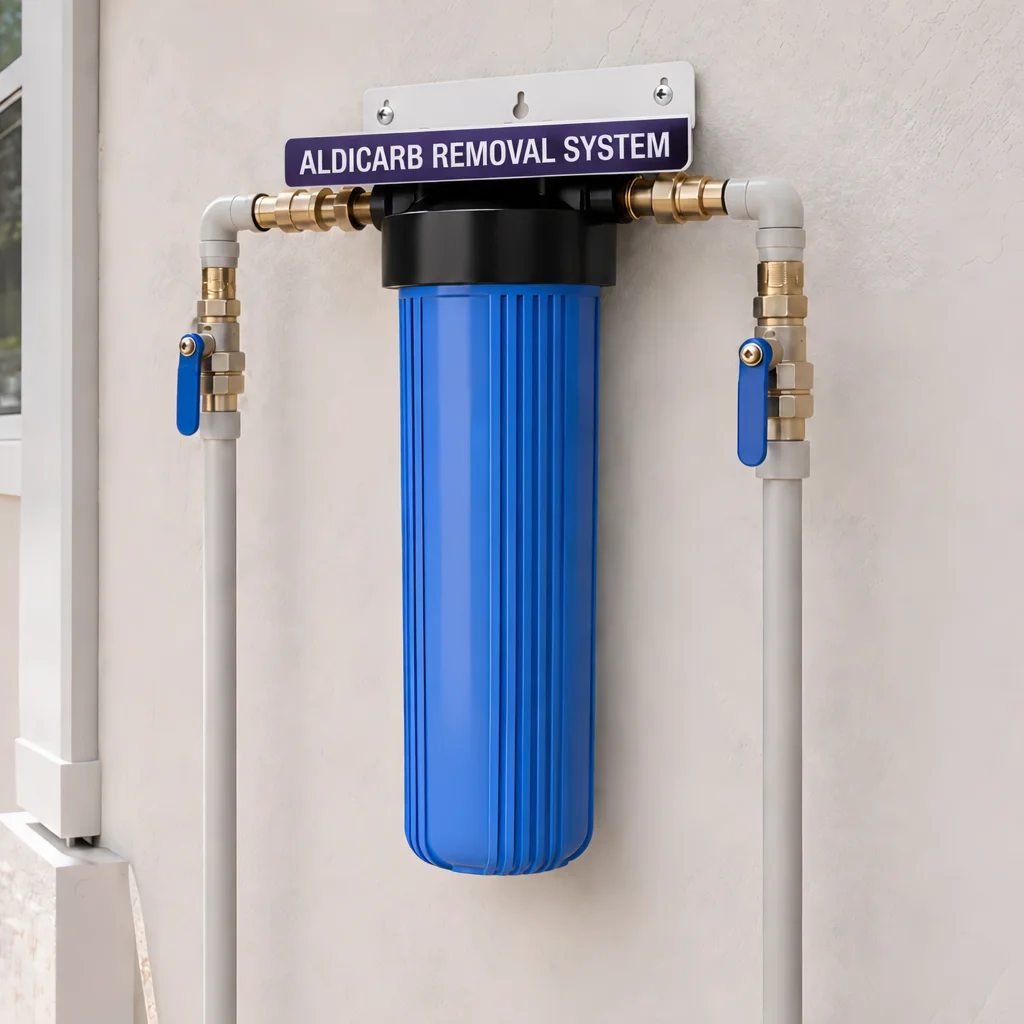
The most effective single whole-house option for reducing aldicarb in household water is a granular activated carbon (GAC) filter. Carbon media adsorbs many organic pesticides and their breakdown products in ways that sediment or scale-focused systems do not. In Palm Beach County’s typically hard, mineral-rich water, it’s important to choose a tank sized with enough carbon and contact time to handle your home’s peak flows so treatment stays consistent across showers, laundry and drinking taps.
A properly designed whole-house GAC system can also help lower levels of aldicarb sulfoxide and aldicarb sulfone because they are chemically related. Performance varies with water chemistry, contaminant concentration and household use, so pairing a carbon system with a specific water test will clarify the right media volume and replacement schedule. Routine maintenance is essential — activated carbon becomes exhausted over time — and Mr. Pure Water can size and install a whole-home carbon filter for Haverhill families so treated water reaches every tap.
 561-300-5075
 info@bestwaterheater.com

