 Phone: 305-404-8790
 info@bestwaterheater.com
Phone: 305-404-8790
info@bestwaterheater.com
info@bestwaterheater.com
Phone: 305-404-8790
info@bestwaterheater.com
 Phone: 305-404-8790
info@bestwaterheater.com
Phone: 305-404-8790
info@bestwaterheater.com

Including filter system and high-performance Aldicarb filter.


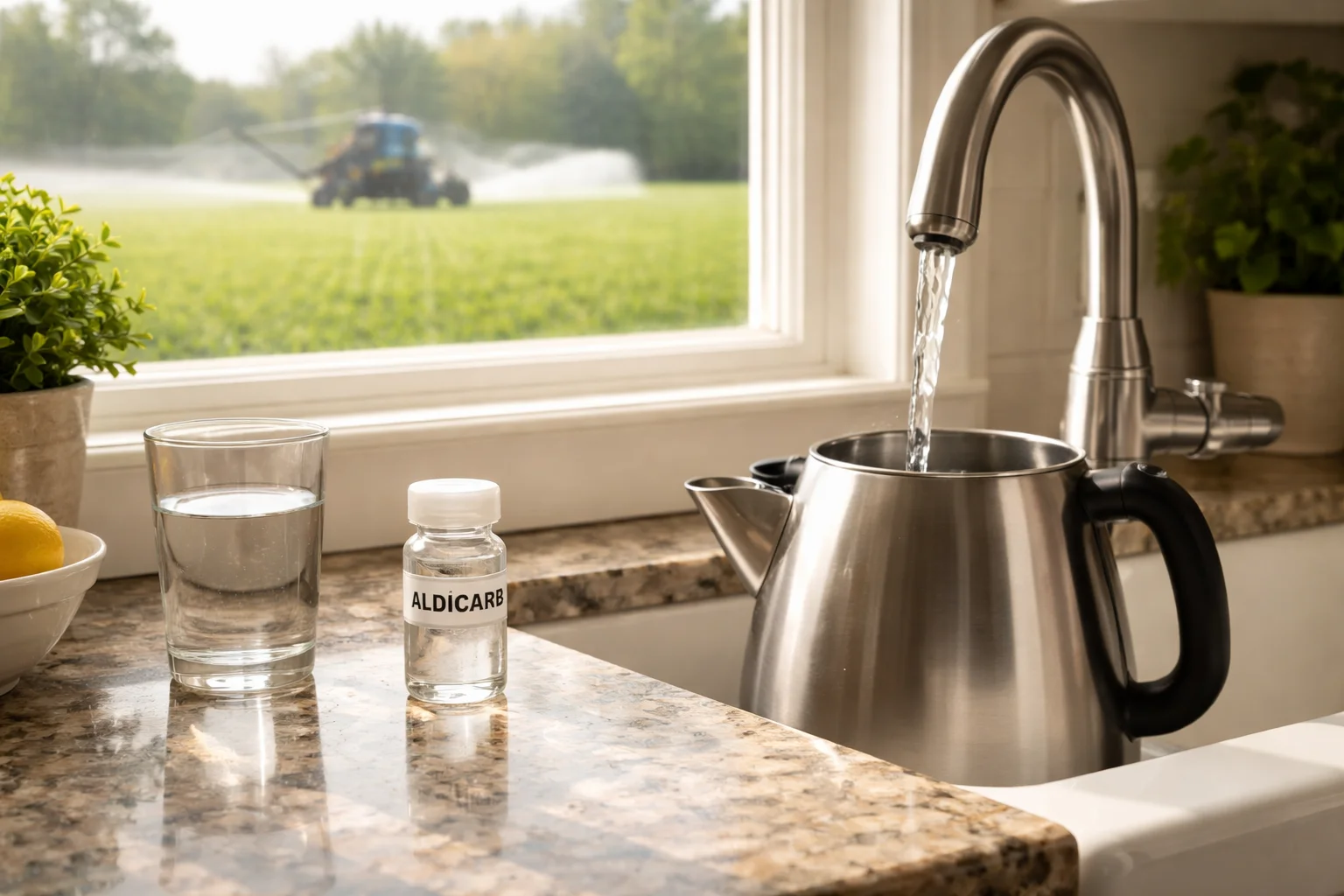
Aldicarb is a pesticide that can enter water when it runs off treated land into groundwater or surface supplies. Because it’s tasteless and odorless, most Princeton homeowners wouldn’t notice it without a lab test or a utility notice. Concerns often center on lingering residues and how they’ve broken down over time, so the clearest first step for Miami‑Dade County residents is to test your water if you want a definite answer about what’s in your plumbing.
As aldicarb degrades it can form compounds like aldicarb sulfoxide and aldicarb sulfone, and those names may appear separately on a lab report even though they stem from the same original chemical. If your Princeton water test lists any of these names, treat them as related parts of the same issue. Taking a whole‑house perspective makes sense here — it protects showers, laundry and all taps around your home rather than only the kitchen sink.
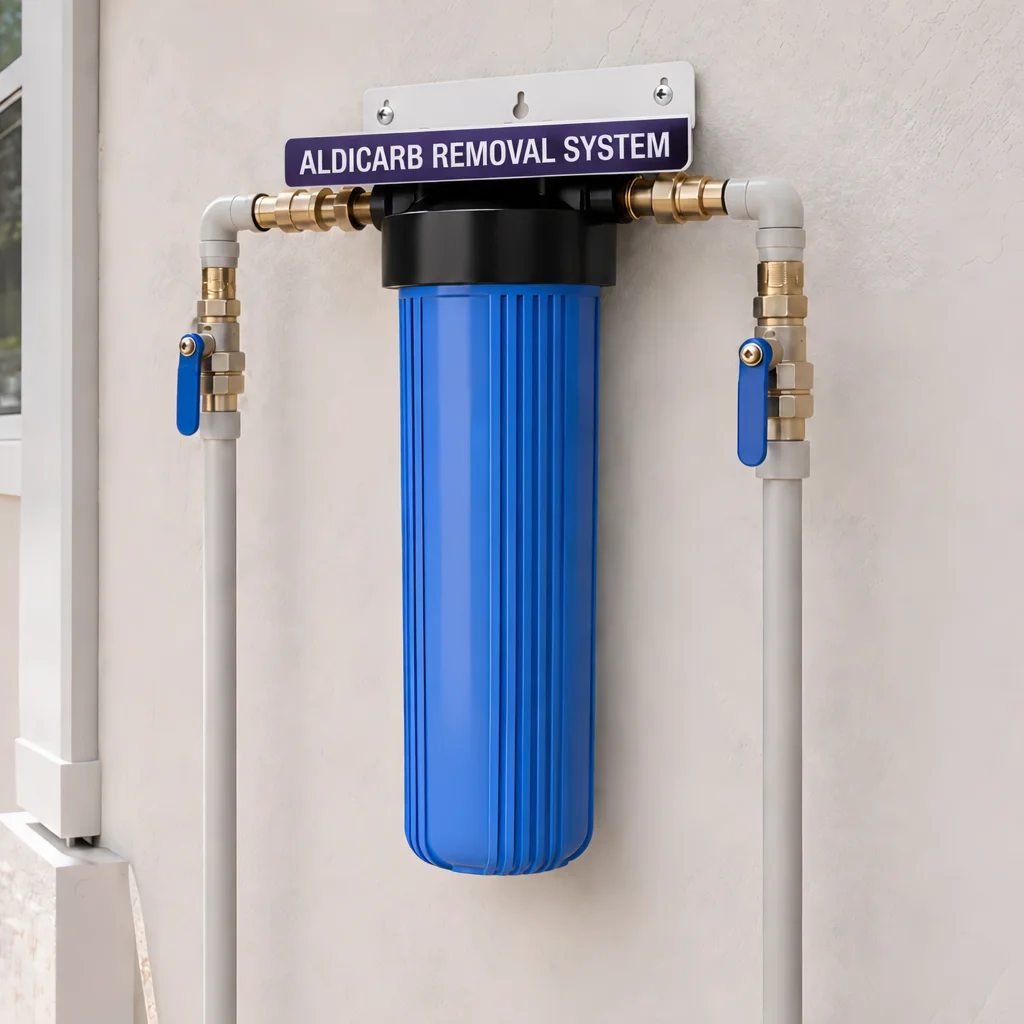
The most effective single-filter choice for reducing aldicarb in household water is a whole‑house granular activated carbon (GAC) system. Carbon adsorbs many organic pesticides and breakdown products that sediment or simple point-of-use filters won’t remove. For Princeton homes — where Miami‑Dade’s hard water can affect flow and scale — it’s important to size the tank so there’s enough carbon and contact time to handle peak household demand and maintain treatment at every outlet.
A properly designed whole‑house GAC installation will also target aldicarb sulfoxide and aldicarb sulfone since they’re similar organic compounds. Because performance varies with water chemistry, contaminant level and household use, pairing a focused water test from your Princeton property with the right media volume and maintenance plan is key. Carbon media does exhaust over time, so regular changeouts keep the system working — and Mr. Pure Water can size, install and service a whole‑home carbon filter so your family has treated water throughout the house.
 305-404-8790
 info@bestwaterheater.com

