 Phone: 561-300-5075
 info@bestwaterheater.com
Phone: 561-300-5075
info@bestwaterheater.com
info@bestwaterheater.com
Phone: 561-300-5075
info@bestwaterheater.com
 Phone: 561-300-5075
info@bestwaterheater.com
Phone: 561-300-5075
info@bestwaterheater.com

Including filter system and high-performance Ammonia filter.


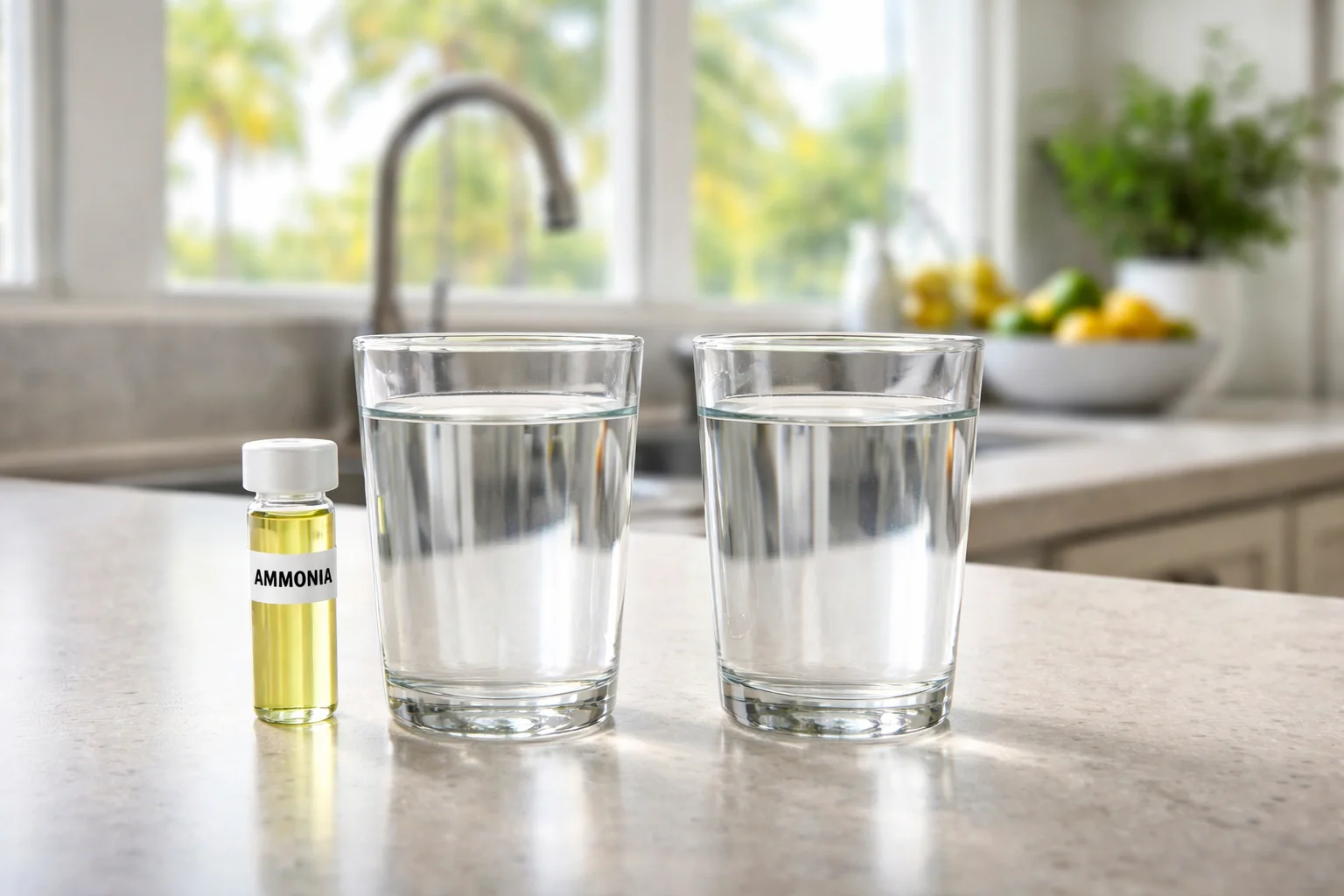
Ammonia in household water is usually noticed when water develops an off taste or odor, or when routine testing flags it as a concern. In water chemistry, ammonia can also appear as ammonium, a related form that changes depending on pH and temperature. It may enter water from natural breakdown of organic matter, certain treatment processes, or runoff sources. Whatever the source, many homeowners prefer to address it at the point the water enters the home.
Ammonia and ammonium can create practical problems beyond simple aesthetics. They can contribute to chloramine-related taste and odor issues when disinfectants are present, and they may interfere with some filtration approaches if not chosen correctly. Because it is dissolved in water, ammonia is not something a basic sediment filter will handle. A whole-house approach can help provide more consistent water quality at every tap and fixture.
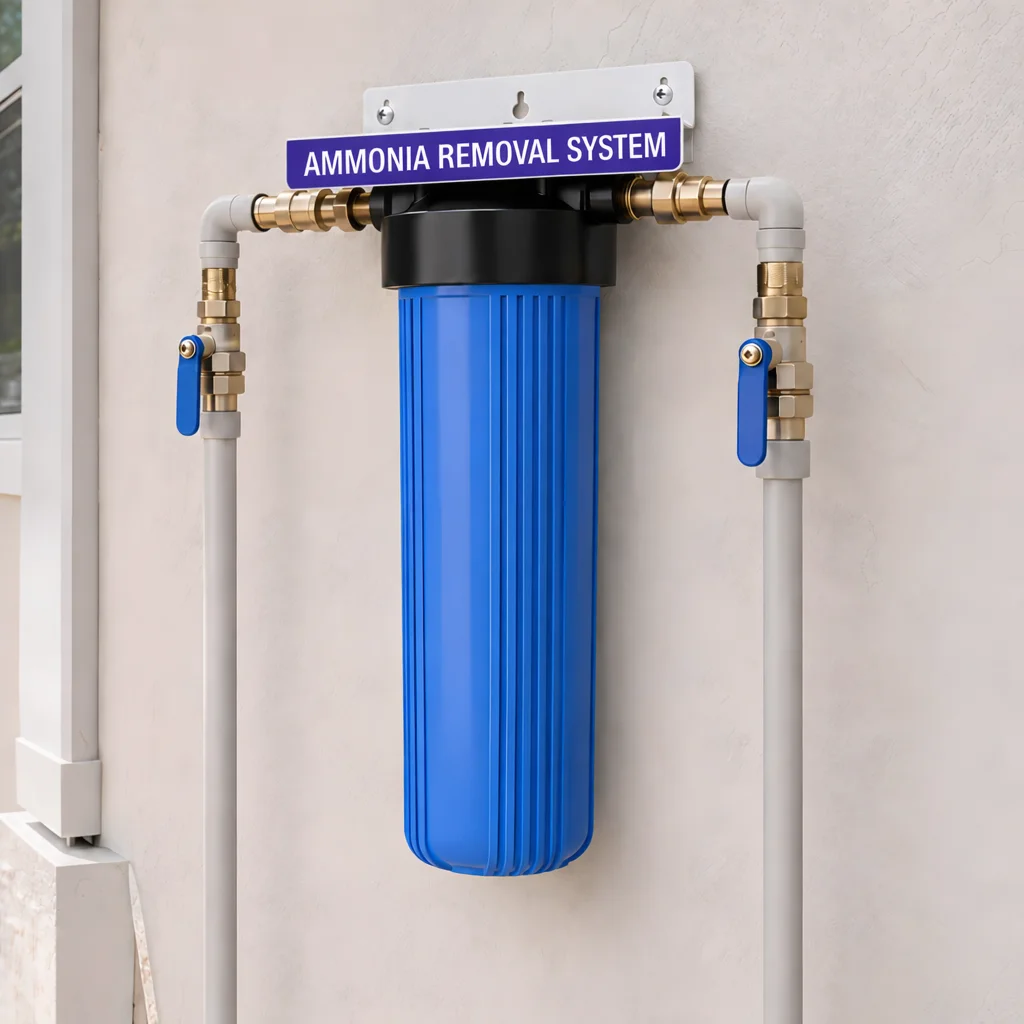
For whole-house removal, the most effective single filter type for ammonia is typically a properly designed ion exchange system using a cation exchange resin. This media is made to capture ammonium from the water as it flows through, reducing the amount that reaches faucets, showers, and appliances. Ion exchange works differently than carbon, which is better suited for many tastes and odors but is not the primary tool for dissolved ammonium. Selecting the right resin and sizing the tank correctly are key to reliable performance in a home.
An ion exchange ammonia filter is usually installed at the main water line so the entire home is treated, not just one sink. Like any media-based system, it needs periodic service, which may include regeneration or media replacement depending on the design and the water conditions. Pre-filtration for sediment can help protect the resin from fouling and keep flow rates steady. With the right setup, whole-house ion exchange is a straightforward way to reduce ammonia and ammonium and make your water easier to live with.
 561-300-5075
 info@bestwaterheater.com

