 Phone: 407-214-2646
 info@bestwaterheater.com
Phone: 407-214-2646
info@bestwaterheater.com
info@bestwaterheater.com
Phone: 407-214-2646
info@bestwaterheater.com
 Phone: 407-214-2646
info@bestwaterheater.com
Phone: 407-214-2646
info@bestwaterheater.com

Including filter system and high-performance Ammonia filter.


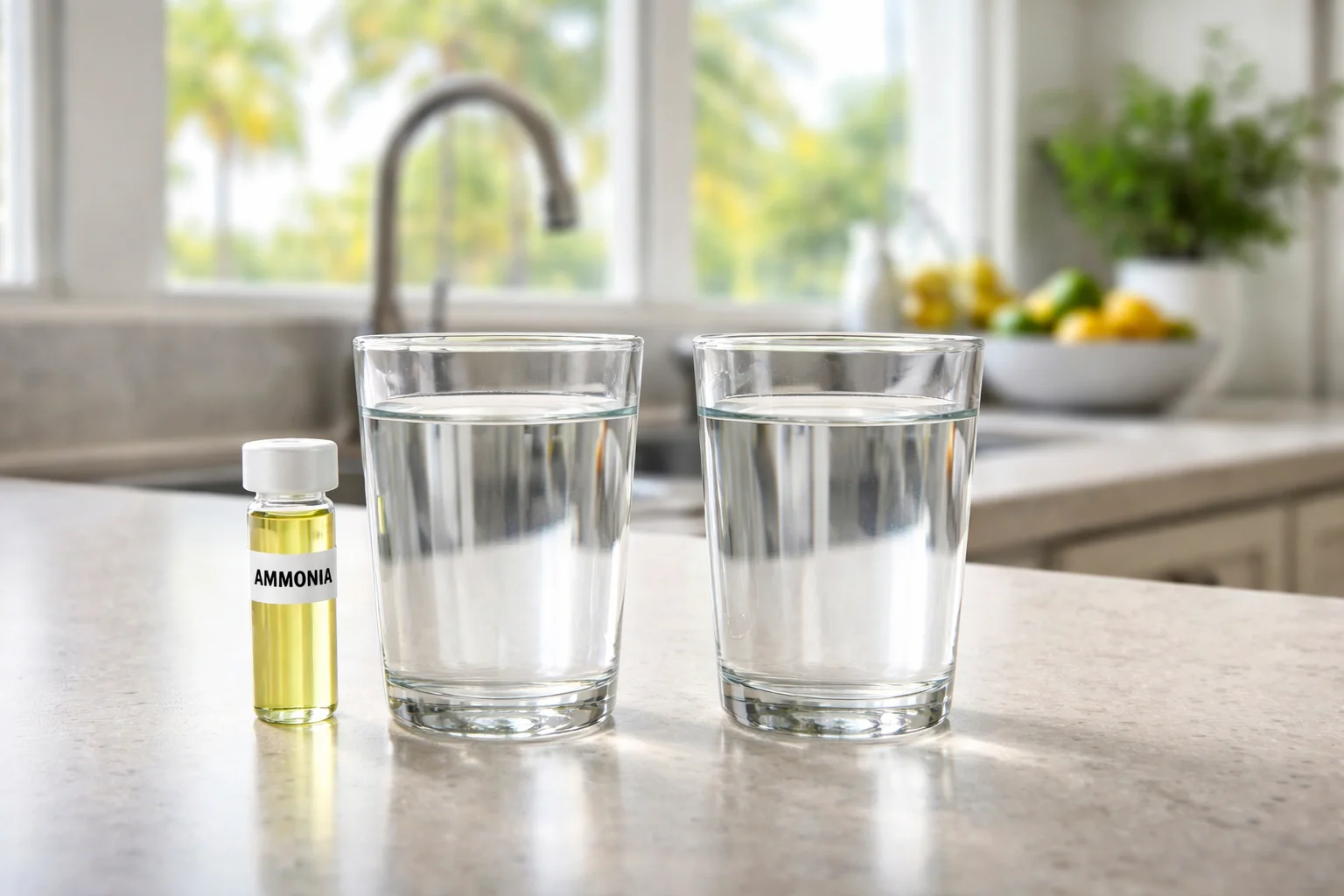
Homeowners in Narcoossee may first notice ammonia in their water as an unpleasant taste or smell, or it can show up on a routine water test. In water chemistry ammonia is closely related to ammonium, a form that shifts with pH and temperature. It can originate from natural decomposition of organic material, certain treatment processes, or runoff, and can affect both municipal and private well supplies in the Osceola County area. Because local well water can vary in minerals and staining potential, many Narcoossee residents choose to treat the water where it enters the house so the whole home benefits.
Beyond off tastes and smells, ammonia and ammonium can create practical headaches: they can worsen chloramine-related odors when disinfectants are present and can challenge some filtration systems if the wrong technology is used. Ammonia is dissolved in water, so a simple sediment or basic carbon filter won’t reliably remove it. For consistent water quality at every tap—whether you’re near Lake Nona or closer to East Lake Tohopekaliga—a whole‑house system is often the better choice for Narcoossee homes.
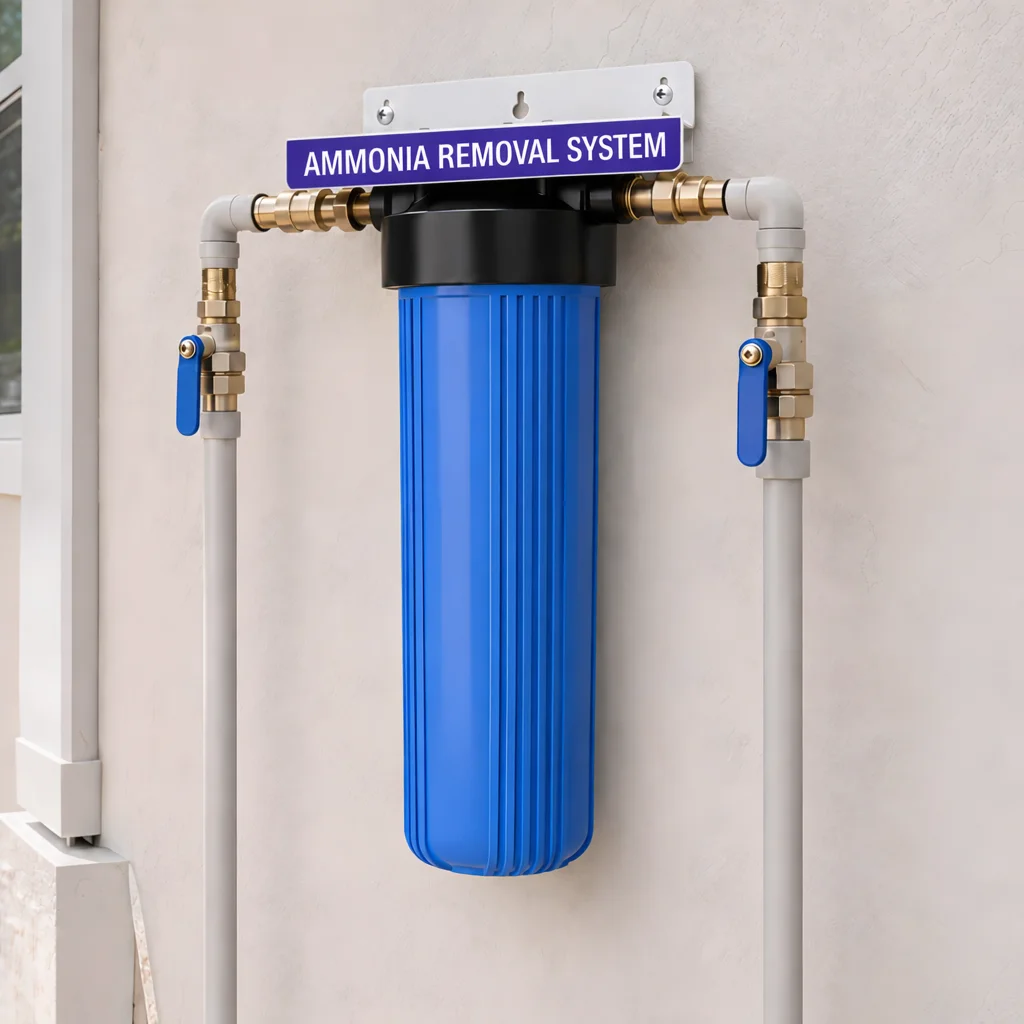
The most effective single whole‑house filter for ammonia is a properly designed ion exchange system using a cation exchange resin. This media captures ammonium as water passes through the tank, lowering the levels that reach faucets, showers and appliances. Unlike carbon, which targets many tastes and odors, ion exchange is the primary tool for dissolved ammonium; picking the correct resin type and sizing the tank to match your household demand and moderate water hardness common in this region are essential for dependable performance.
An ion exchange ammonia system is normally installed at the main service line so every fixture in a Narcoossee house is treated. These media systems require periodic care—some designs need regeneration, others need media replacement—so service intervals depend on the system and local water conditions. Adding a sediment pre-filter helps protect the resin from fouling and maintains steady flow rates. With proper design and maintenance, whole‑house ion exchange provides a straightforward way to reduce ammonia and ammonium and make living with local water from wells or municipal supplies more pleasant.
 407-214-2646
 info@bestwaterheater.com

