 Phone: 561-300-5075
 info@bestwaterheater.com
Phone: 561-300-5075
info@bestwaterheater.com
info@bestwaterheater.com
Phone: 561-300-5075
info@bestwaterheater.com
 Phone: 561-300-5075
info@bestwaterheater.com
Phone: 561-300-5075
info@bestwaterheater.com

Including filter system and high-performance Arsenic filter.



Arsenic is a naturally occurring element that can find its way into drinking water, especially where water interacts with certain rocks and soils. Because it has no reliable taste, smell, or color at typical levels, it can go unnoticed without a water test. Homeowners may first hear about it through lab results, a utility notice, or when checking a private well. If your report shows arsenic, it’s worth taking action to lower long-term exposure at every tap.
Arsenic can be present in different forms, and that matters for treatment. In water it’s commonly found as arsenic(III) or arsenic(V), and some filters work better on one form than the other. Levels can also vary over time, so a one-time result may not tell the whole story. The best next step is matching the filtration method to your water chemistry so performance is consistent and predictable.
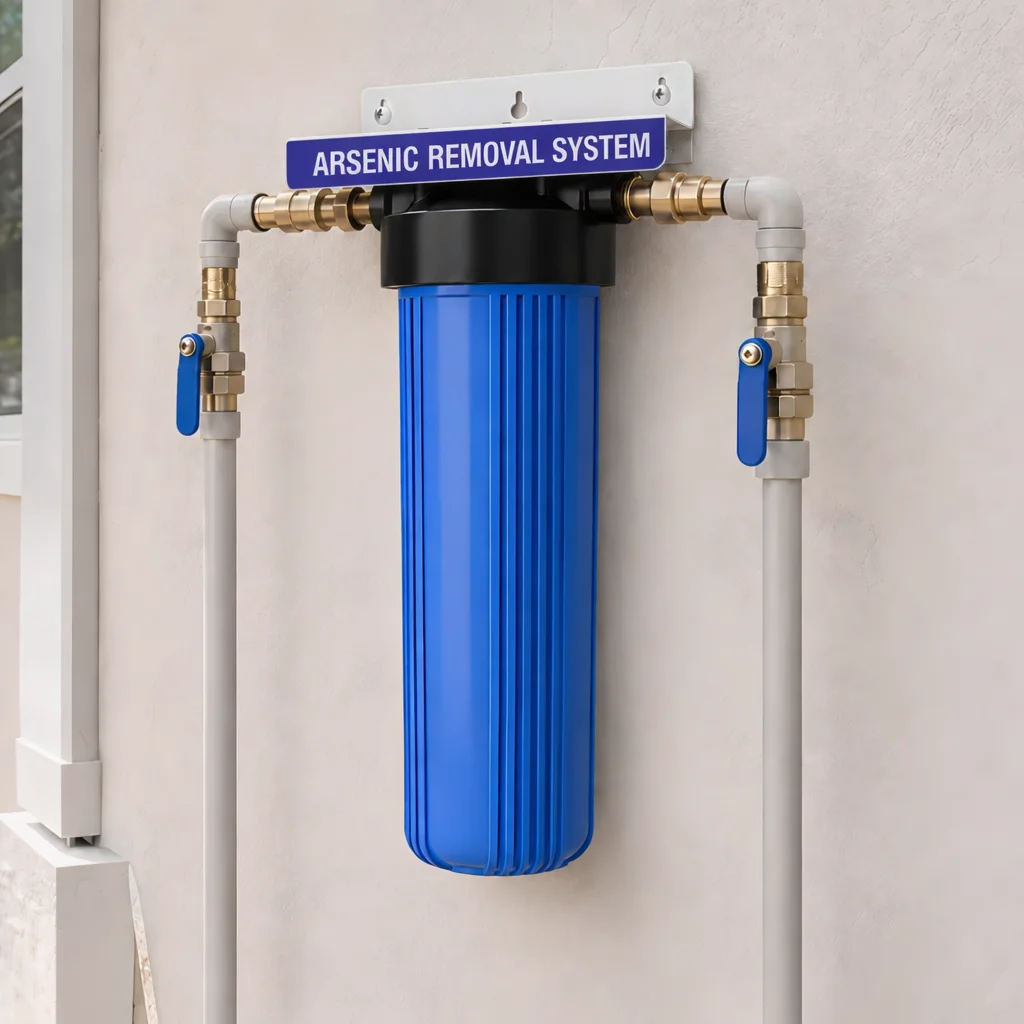
For whole-house arsenic reduction, a dedicated adsorptive media filter is often the most effective single-filter approach for homes. These systems use specialized media, commonly based on iron oxide or similar materials, that binds arsenic as water passes through. They’re designed to treat water at the point where it enters your home, helping reduce arsenic in showers, sinks, laundry, and cooking water. This style of filter targets dissolved contaminants rather than just sediment or taste-and-odor issues.
Because arsenic treatment depends on water chemistry, an adsorptive media system is typically sized and set up based on your test results and household flow needs. If arsenic is present in a form the media removes less efficiently, a simple pre-treatment step like oxidation may be recommended so the filter can capture it more reliably. Routine cartridge or media change-outs keep the system working as intended over time. Mr. Pure Water can help you choose a whole-house arsenic filter that fits your home and your water report.
 561-300-5075
 info@bestwaterheater.com

