 Phone: 407-214-2646
 info@bestwaterheater.com
Phone: 407-214-2646
info@bestwaterheater.com
info@bestwaterheater.com
Phone: 407-214-2646
info@bestwaterheater.com
 Phone: 407-214-2646
info@bestwaterheater.com
Phone: 407-214-2646
info@bestwaterheater.com

Including filter system and high-performance Arsenic filter.


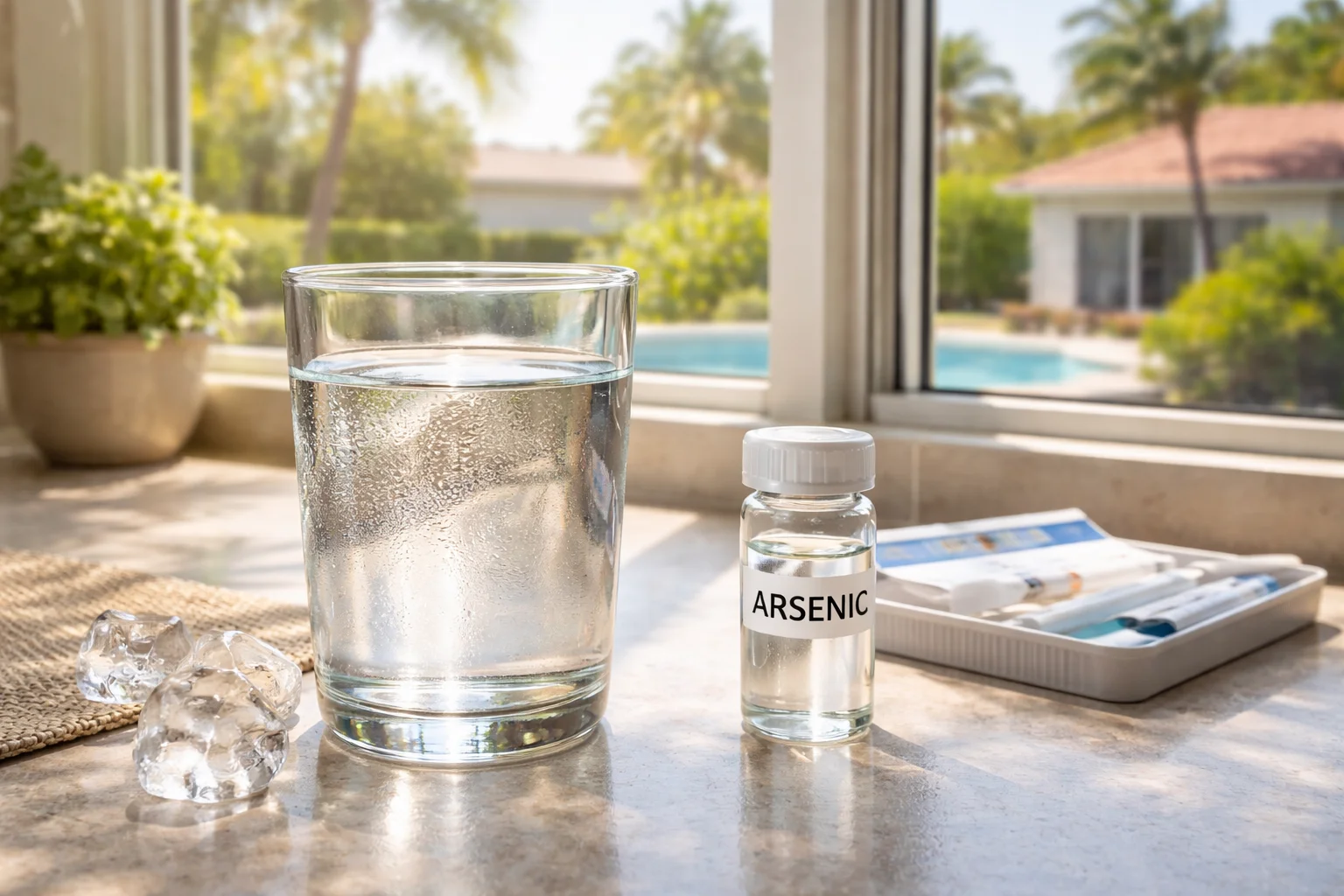
Arsenic is a naturally occurring element that can leach into drinking water where it contacts certain rocks and soils. Because arsenic usually has no taste, odor, or color at household levels, it can go unnoticed unless you test your water. In Ashton homeowners typically discover it from a utility report, private well testing, or lab results—if your water test shows arsenic, it’s a good idea to act to lower long-term exposure at every tap in the house.
Arsenic appears in water in different chemical forms, most commonly arsenic(III) and arsenic(V), and that difference affects which treatment will work best. Concentrations can change over time, so a single sample might not reflect ongoing conditions. In Ashton — where Florida communities often balance mineral scaling and corrosion concerns depending on the groundwater — matching the right filtration approach to your water chemistry is the key to steady, predictable removal.
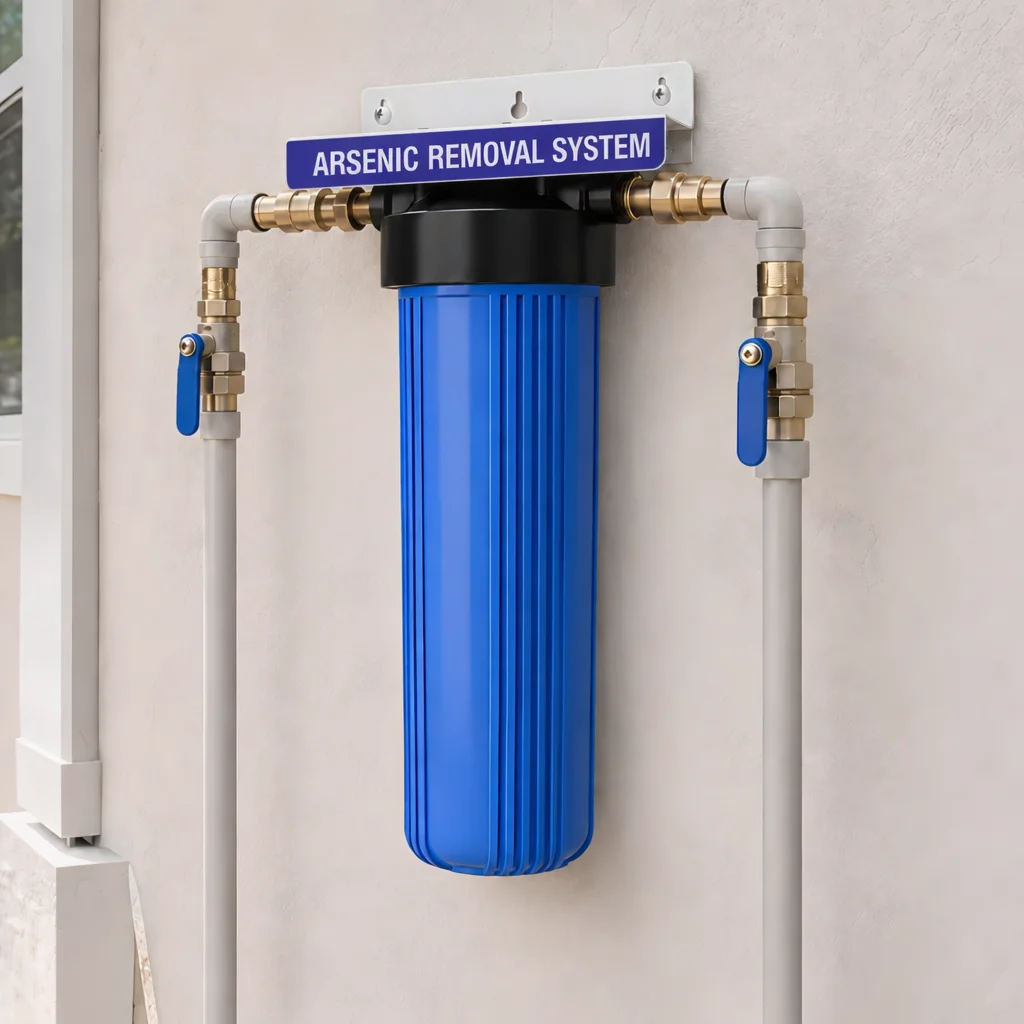
For whole-house arsenic reduction in Ashton, a dedicated adsorptive media filter is often the single most effective option. These systems use media such as iron-oxide–based materials that bind arsenic as water flows through, treating water at the point it enters your home so showers, sinks, laundry, and cooking water see lower arsenic levels. This type of filter targets dissolved contaminants rather than just sediment or taste-and-odor problems, making it a strong choice for whole-house protection.
Because arsenic removal depends on your specific water chemistry, adsorptive media systems are sized and configured based on your test results and household flow needs. If arsenic is present in a form the media handles less effectively, a simple pre-treatment such as oxidation may be suggested so the filter can capture it reliably. Regular media or cartridge replacements keep the system performing, and Mr. Pure Water can guide Ashton homeowners through choosing and maintaining a whole-house arsenic filter that matches their water report and household demands.
 407-214-2646
 info@bestwaterheater.com

