 Phone: 561-300-5075
 info@bestwaterheater.com
Phone: 561-300-5075
info@bestwaterheater.com
info@bestwaterheater.com
Phone: 561-300-5075
info@bestwaterheater.com
 Phone: 561-300-5075
info@bestwaterheater.com
Phone: 561-300-5075
info@bestwaterheater.com

Including filter system and high-performance Benzene filter.


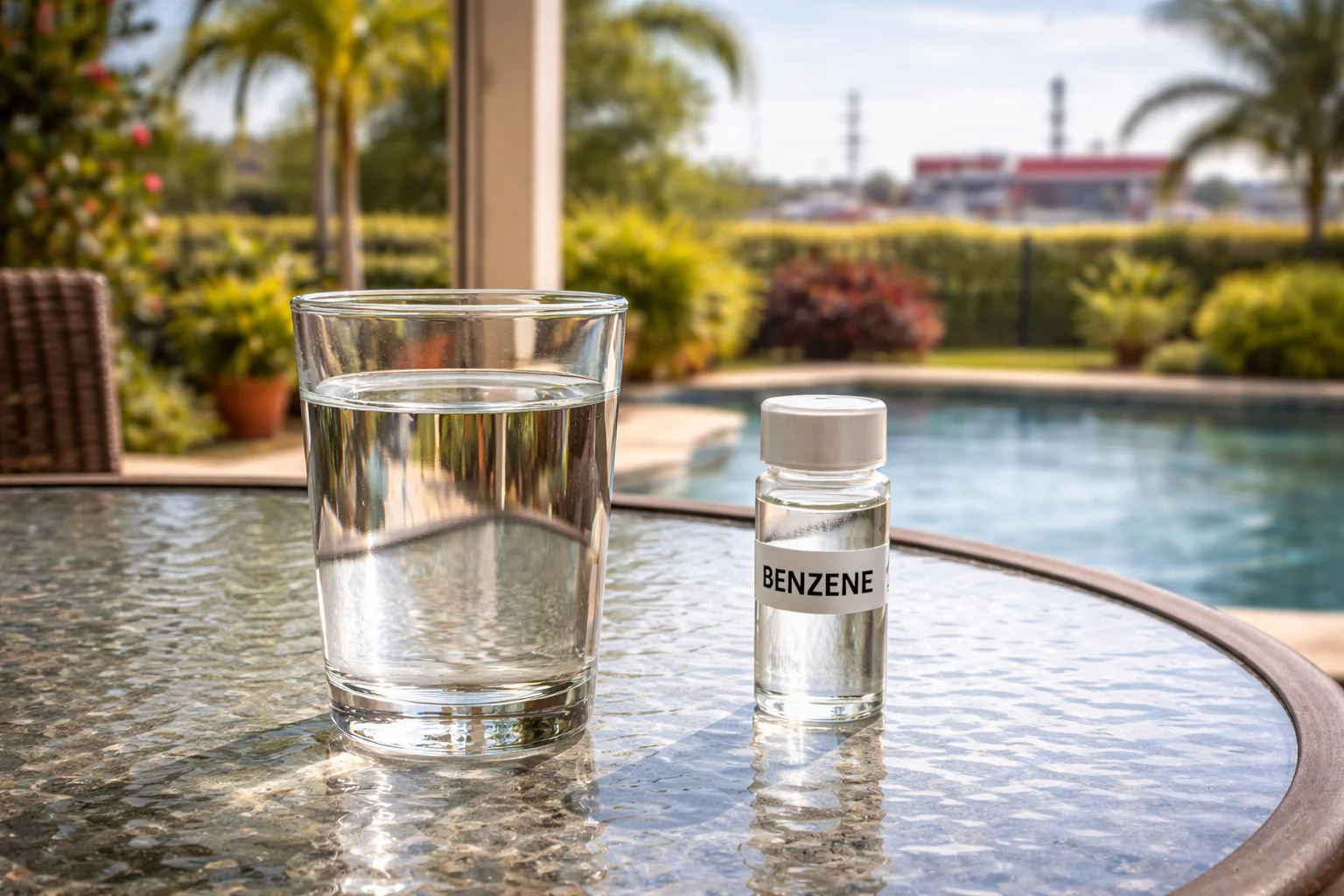
Benzene is a volatile organic compound (VOC) that can enter drinking water when petroleum products or industrial solvents reach groundwater or other sources. Because it can affect every tap, many Rood homeowners need more than bottled water or a single sink filter to feel secure. Even crystal-clear water can carry VOCs like benzene, so if you’re concerned it helps to know common sources and the standard treatments used to address it.
Benzene contamination is often tied to fuel-related releases — think storage tanks, spills, or industrial discharges — and in some cases from materials that contact water. In humid subtropical Rood, where many properties rely on private wells and mineral-rich groundwater, homeowners often take a whole-house stance to limit exposure. Because benzene can move through plumbing and even volatilize during showers, treating water at the entry point protects drinking, cooking, bathing, and laundry across the house.
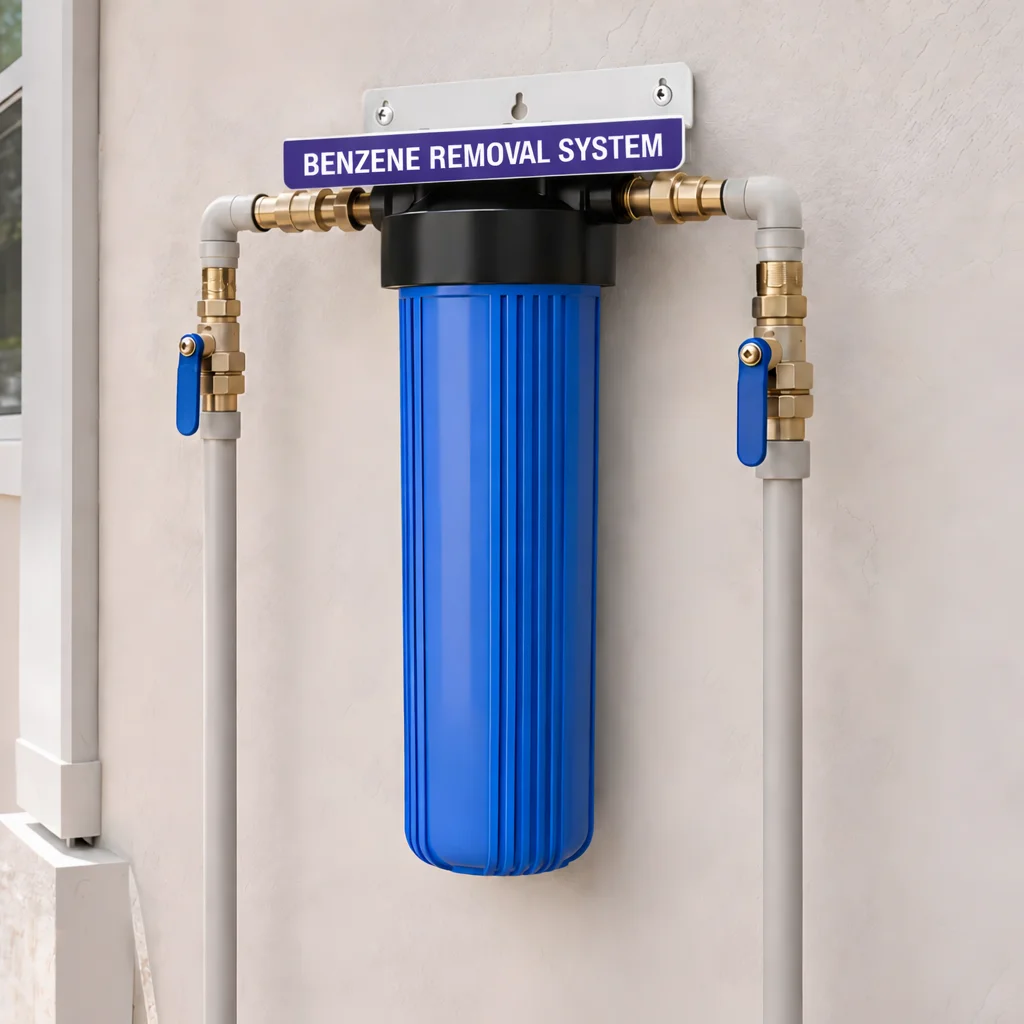
The most widely recommended single-filter option for lowering benzene in a home is a whole-house granular activated carbon (GAC) system. Activated carbon adsorbs many VOCs, including benzene, as water flows through the media; larger whole-house tanks provide longer contact time than point-of-use cartridges, improving removal. Installing a GAC vessel at the main water entry treats every fixture so you get filtered water throughout your Rood home.
An effective whole-house GAC installation matches carbon volume and flow rate to your household’s water use so the media has sufficient contact time to capture VOCs. Because carbon eventually reaches capacity, scheduled media replacement keeps benzene reduction consistent over time. Many Rood homeowners with private wells also add prefiltration to remove sediment and protect the carbon bed from clogging. Mr. Pure Water can help you size and configure a whole-house carbon system that fits your plumbing, handles local water characteristics, and meets your filtration goals.
 561-300-5075
 info@bestwaterheater.com

