 Phone: 407-214-2646
 info@bestwaterheater.com
Phone: 407-214-2646
info@bestwaterheater.com
info@bestwaterheater.com
Phone: 407-214-2646
info@bestwaterheater.com
 Phone: 407-214-2646
info@bestwaterheater.com
Phone: 407-214-2646
info@bestwaterheater.com

Including filter system and high-performance Benzene filter.


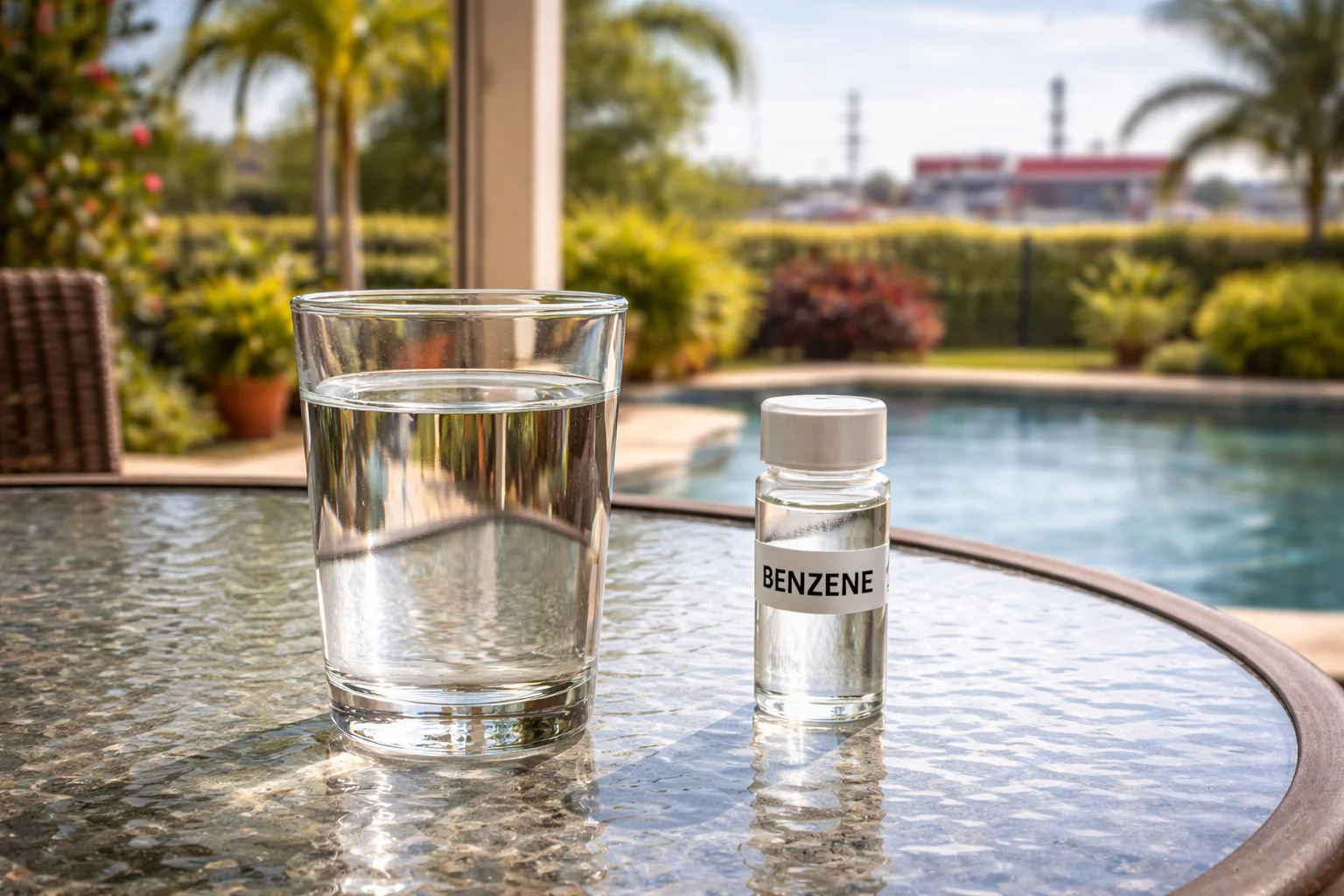
Benzene is a volatile organic compound (VOC) that can enter drinking water when petroleum products or industrial solvents reach groundwater or supply systems. In South Apopka — where many homes draw from groundwater-based municipal systems or private wells — contaminants can affect water that comes from every tap, not just the kitchen sink. Even crystal-clear water can carry VOCs like benzene, so if you’re concerned about what’s in your home’s water, it helps to know common pathways and how benzene is typically addressed.
Benzene is frequently tied to fuel components and can be introduced by releases from storage tanks, spills, or certain industrial activities; it can also migrate through water and volatilize into the air during showers. For homeowners around South Apopka, protecting water used for drinking, cooking, bathing, and laundry often means looking beyond a single faucet filter. A whole-house strategy gives broader coverage for the household fixtures residents rely on every day.
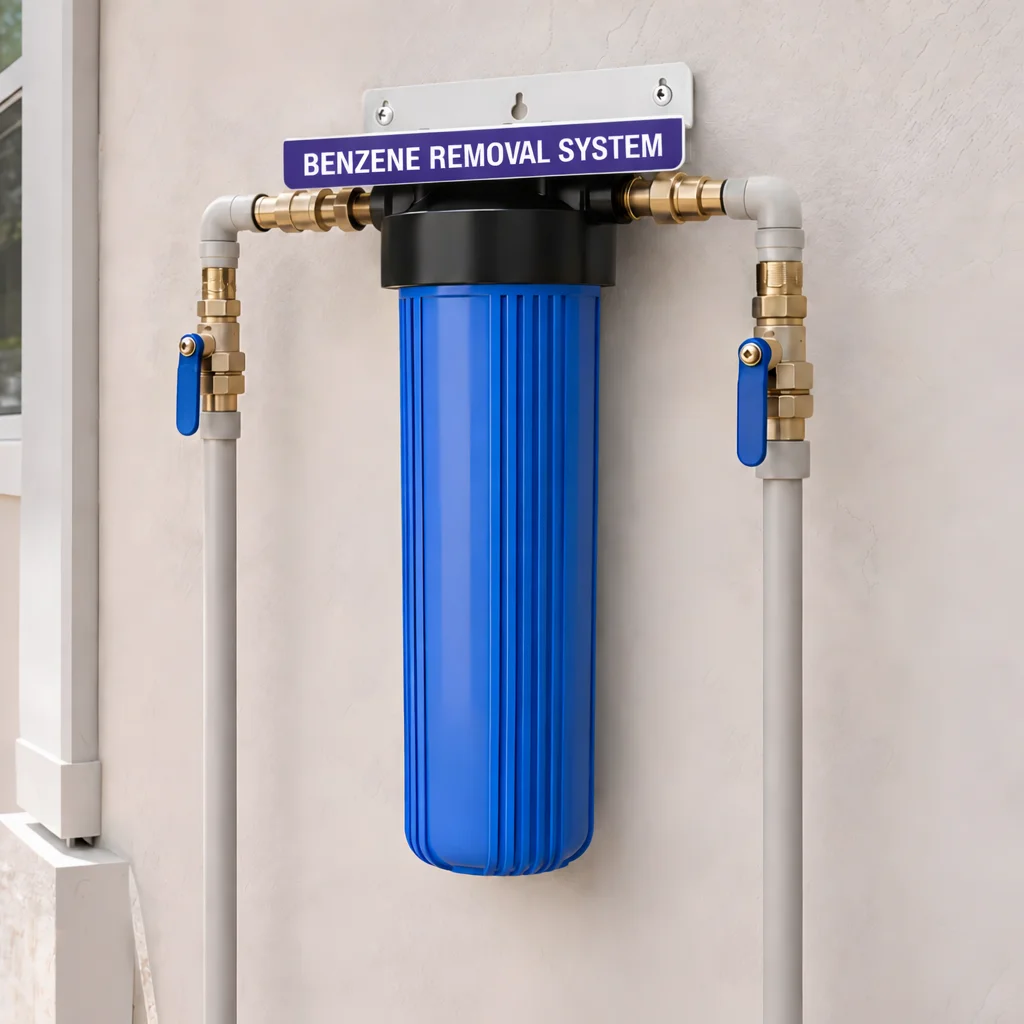
To reduce benzene throughout the home, a whole-house granular activated carbon (GAC) filter is widely recommended as the most effective single-filter option. Activated carbon adsorbs many VOCs, including benzene, as water flows through the carbon media. Because whole-house GAC tanks are sized for longer contact time than point-of-use cartridges, they tend to perform better for treating all the water entering a South Apopka household.
A properly designed GAC installation matches carbon volume and flow rate to your household’s needs so the media has sufficient contact time to capture VOCs. In hard-water areas like South Apopka, prefiltration to remove sediment and reduce scale-related clogging can help the carbon last longer and maintain flow. Since carbon’s capacity is finite, timely media replacement is important to preserve benzene reduction — and Mr. Pure Water can help size and specify a whole-house carbon system that fits your plumbing and everyday water use.
 407-214-2646
 info@bestwaterheater.com

