 Phone: 561-300-5075
 info@bestwaterheater.com
Phone: 561-300-5075
info@bestwaterheater.com
info@bestwaterheater.com
Phone: 561-300-5075
info@bestwaterheater.com
 Phone: 561-300-5075
info@bestwaterheater.com
Phone: 561-300-5075
info@bestwaterheater.com

Including filter system and high-performance Beryllium filter.


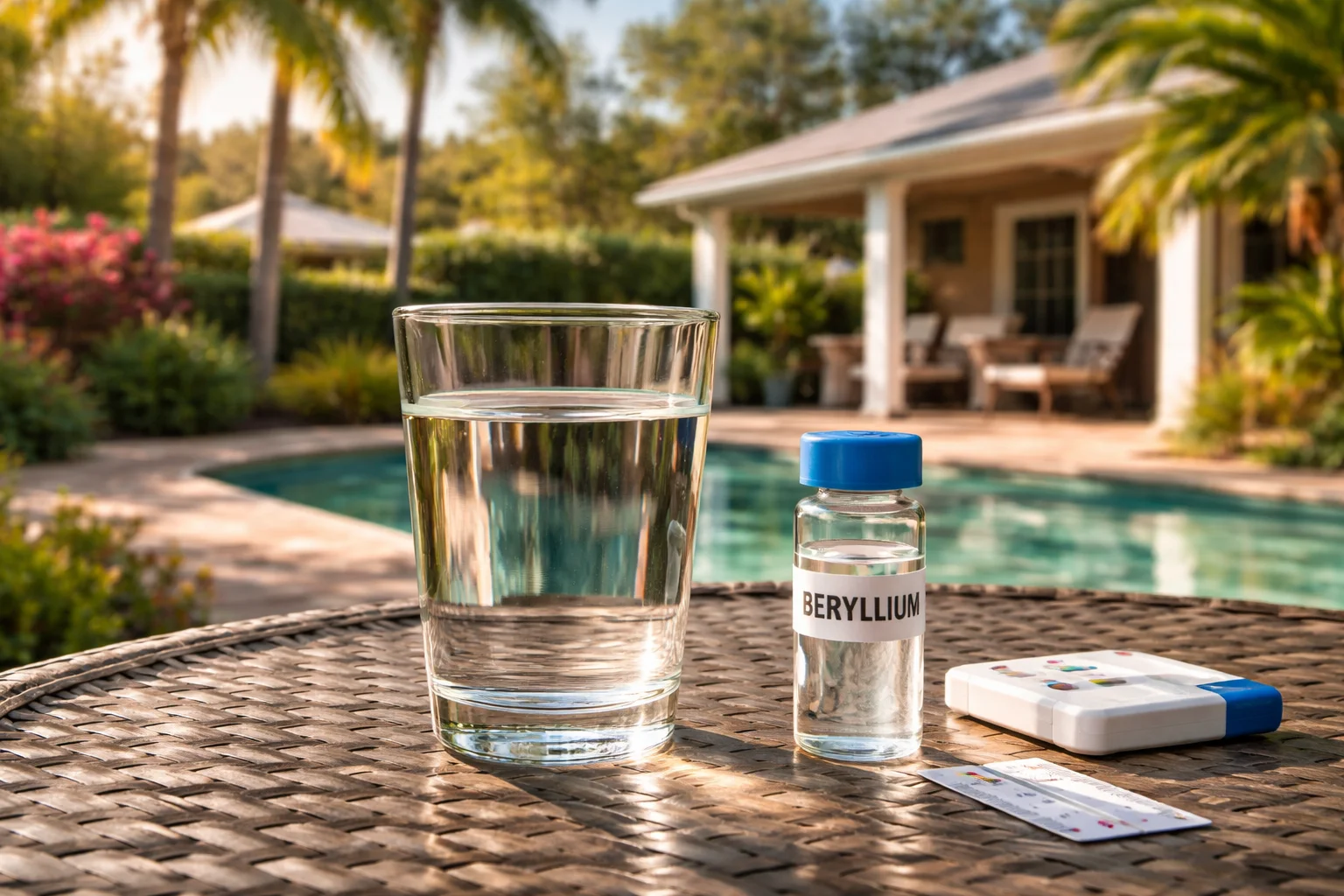
Beryllium is a metal that can enter drinking water when it dissolves from certain rocks and soils or from industrial sources. Because it has no distinctive taste, smell, or color, you won’t detect it at the kitchen sink — testing is the only reliable way to know if it’s present. Palm Beach homeowners often discover potential concerns when reviewing lab results, water quality reports, or during a real estate inspection, so it helps to understand where beryllium can come from and how it is commonly addressed in household plumbing.
In water, beryllium can appear as dissolved ions or attached to tiny particles, and the treatment needed depends on that form. Because Palm Beach County’s municipal water is generally hard and can carry sediment or scale, a single simple cartridge may not be sufficient—water chemistry like pH, particulates, and hardness all influence performance. Since beryllium isn’t a taste or odor issue, the focus is on selecting a proven reduction method that protects every faucet and appliance rather than just improving flavor.
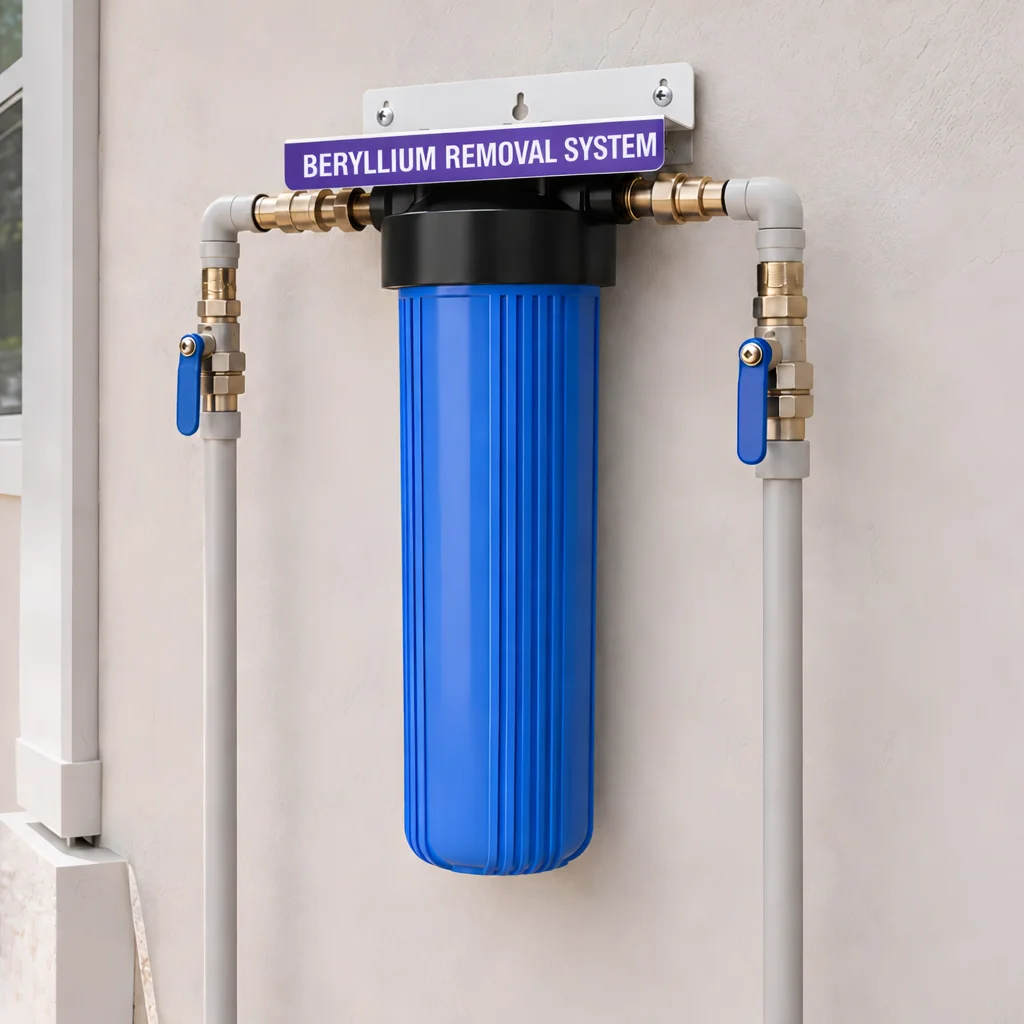
To reduce beryllium throughout a house, a whole-house reverse osmosis (RO) system is usually the most effective single-filter option. RO relies on a semipermeable membrane that rejects many dissolved metals and inorganic contaminants, including dissolved forms of beryllium that other media can miss. Unlike basic carbon filters, which target chlorine and organic compounds, a properly sized whole-house RO installed at the point of entry treats water before it reaches showers, sinks, laundry, and appliances in Palm Beach homes.
A whole-house RO system for a Palm Beach home typically includes prefiltration to protect the membrane from sediment and scale—especially important given the region’s hard water—plus post-treatment to restore balanced water characteristics. The membrane does the primary work of beryllium reduction, but it will last and perform best when guarded from dirt and pressure swings. Mr. Pure Water can assess your Palm Beach water conditions, match membrane capacity and pretreatment to your needs, and use any available lab results to configure the right system for reliable day-to-day performance.
 561-300-5075
 info@bestwaterheater.com

