 Phone: 850-772-1365
 info@bestwaterheater.com
Phone: 850-772-1365
info@bestwaterheater.com
info@bestwaterheater.com
Phone: 850-772-1365
info@bestwaterheater.com
 Phone: 850-772-1365
info@bestwaterheater.com
Phone: 850-772-1365
info@bestwaterheater.com

Including filter system and high-performance Carbendazim filter.


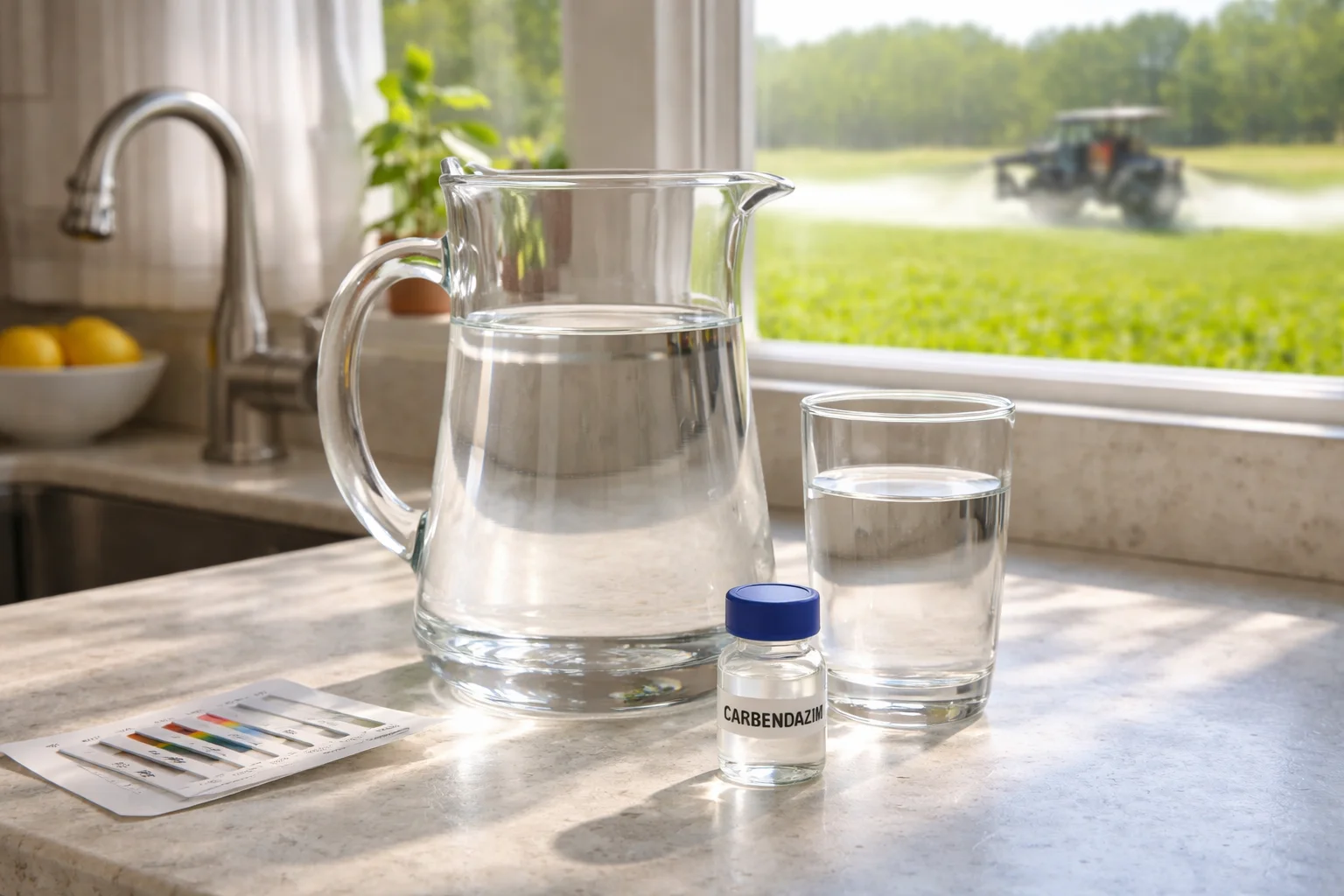
Carbendazim is a fungicide that can appear as a trace pesticide residue in water; residents may learn about it from lab testing, water reports, or local agricultural news. Because it’s made to be stable for crop protection, it can be slow to break down when it reaches waterways, which is why finding out what’s in your Cantonment water with a test can put your mind at ease.
Carbendazim doesn’t usually announce itself with a taste, smell, or visible change, so you won’t spot it by sampling water at the kitchen sink. It can reach drinking supplies via runoff or improper disposal and sometimes persists through standard treatment at low concentrations, so the only way to know if it’s present is a laboratory water test. Many Cantonment homeowners prefer a point-of-entry system so water used for cooking, bathing and laundry is treated throughout the house rather than only at one tap.
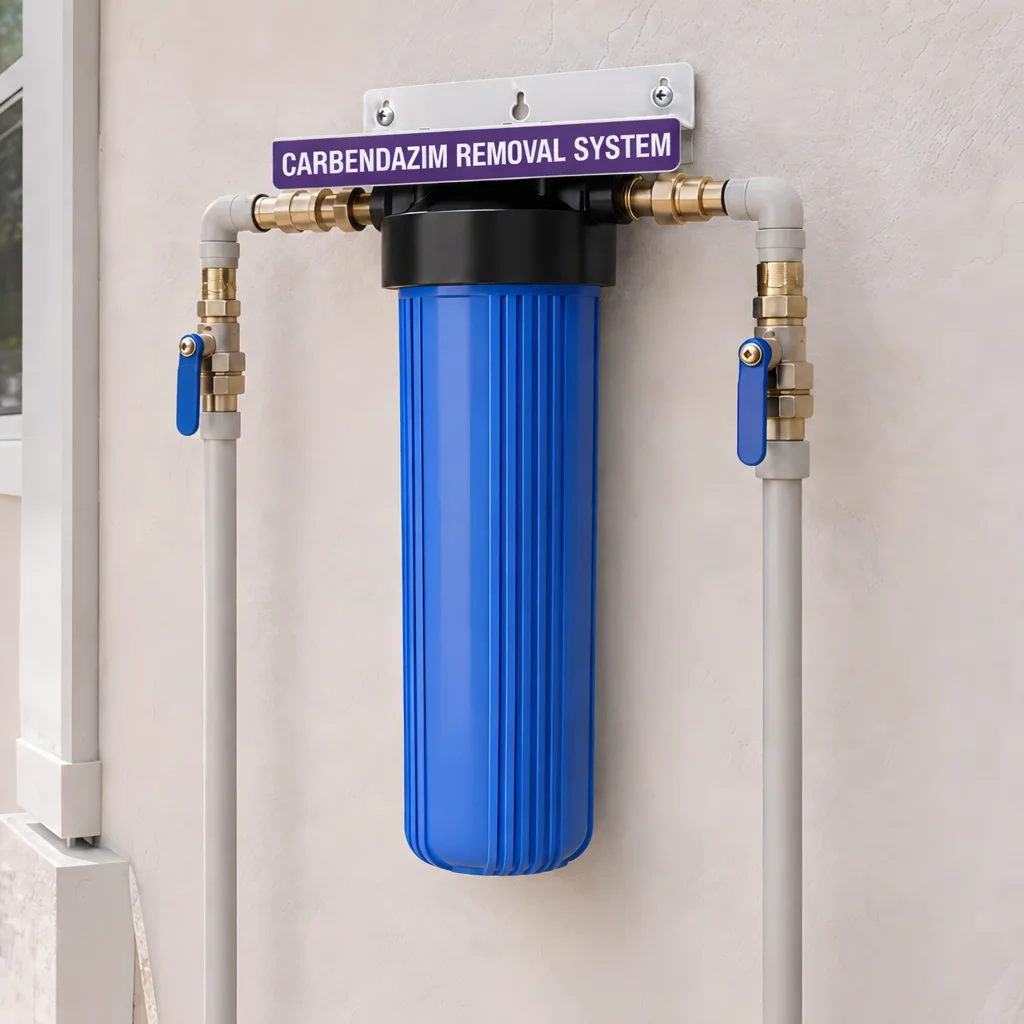
When treating carbendazim for an entire home, a high-quality activated carbon whole-house filter is typically the single best option. Carbon works by adsorbing many organic pesticides and related compounds into its porous structure, reducing what reaches faucets, showers and appliances. For Cantonment homes, this straightforward approach treats every water line without changing how you use water around the house.
Effective carbendazim reduction depends on carbon media having sufficient contact time and capacity, which means choosing the right system size and matching the flow rate to your household’s needs. A point-of-entry carbon filter sits where water enters your Cantonment home so all lines are treated, but performance requires timely media replacement because spent carbon can’t continue to adsorb contaminants. Mr. Pure Water can review your water test results and household demand to recommend a carbon-based whole-house filter tailored for your home.
 850-772-1365
 info@bestwaterheater.com

