 Phone: 407-214-2646
 info@bestwaterheater.com
Phone: 407-214-2646
info@bestwaterheater.com
info@bestwaterheater.com
Phone: 407-214-2646
info@bestwaterheater.com
 Phone: 407-214-2646
info@bestwaterheater.com
Phone: 407-214-2646
info@bestwaterheater.com

Including filter system and high-performance Carbendazim filter.



Carbendazim is a fungicide that can appear as a trace pesticide residue in drinking water. Orlando homeowners may encounter it through utility water-quality reports, local news about agricultural chemicals, or private lab testing done for reassurance. Because the compound is formulated to be stable, it can persist once it reaches waterways, which makes anyone checking their water understandably concerned about what’s coming from each faucet in their home.
Carbendazim doesn’t announce itself like a foul smell or visible discoloration—many homeowners won’t notice anything different at the tap. It can enter source water through runoff or improper disposal and sometimes persists through standard treatment at low concentrations, so the only way to know for sure is a certified water test. In Orlando and greater Orange County, many families opt for point-of-entry (whole-house) treatment so water used for drinking, cooking, bathing, and laundry is treated everywhere inside the home.
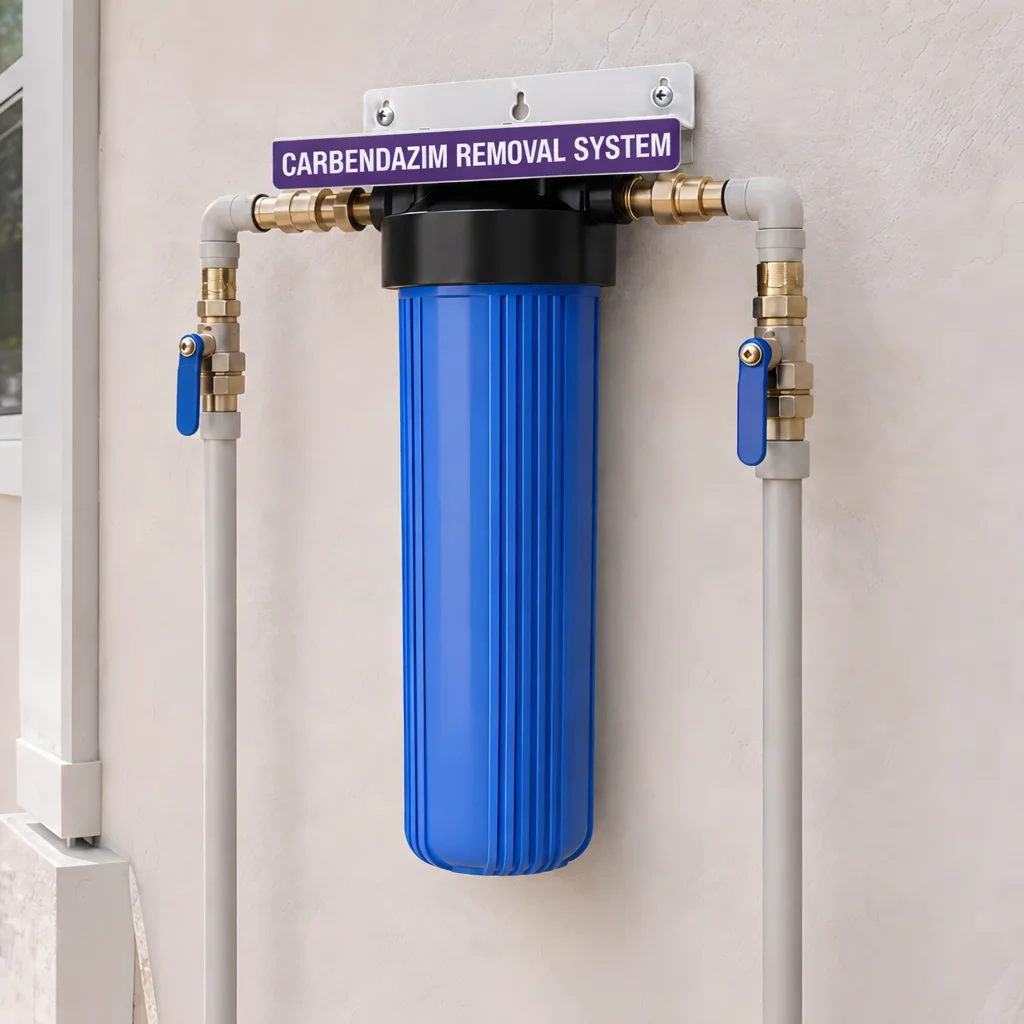
For whole-home reduction of carbendazim, a high-quality activated carbon filter is generally the best single-filter option. Activated carbon adsorbs many organic compounds—including pesticide residues—by trapping them in its porous structure. When the system is properly sized for your household, carbon filtration lowers what reaches faucets, showers, and appliances without changing how you use water, making it a straightforward, proven choice for Orlando homes.
Effective carbendazim reduction requires carbon media with sufficient contact time and capacity, which means choosing the right size and flow rate for your house. Whole-house carbon filters are installed at the main supply so every line is treated—not just a single sink—and in Central Florida’s humid climate they help protect against contaminants reaching plumbing and fixtures. Performance depends on replacing exhausted carbon on schedule; Mr. Pure Water can guide Orlando homeowners to the carbon-based whole-house system matched to their water test results and household demand.
 407-214-2646
 info@bestwaterheater.com

