 Phone: 850-772-1365
 info@bestwaterheater.com
Phone: 850-772-1365
info@bestwaterheater.com
info@bestwaterheater.com
Phone: 850-772-1365
info@bestwaterheater.com
 Phone: 850-772-1365
info@bestwaterheater.com
Phone: 850-772-1365
info@bestwaterheater.com

Including filter system and high-performance Chloramine filter.



Many water providers use chloramine as a long-lasting disinfectant to protect supply lines, and you might see it referenced as chloramines when it exists in multiple forms. While effective at maintaining disinfection, chloramine can leave a faint chemical taste or odor and is generally tougher to remove than free chlorine. Sink Creek homeowners commonly notice these effects in drinking water, showers, and laundry.
Chloramine occurs in different chemical forms—monochloramine, dichloramine, and trichloramine—which can change how strong an odor is or how water feels on skin and hair. Everyday activities like making coffee, brushing teeth, or bathing may seem less pleasant when these residuals are present. If you want consistently improved water at every tap in your Sink Creek home, treating the water where it enters the house is an effective strategy.
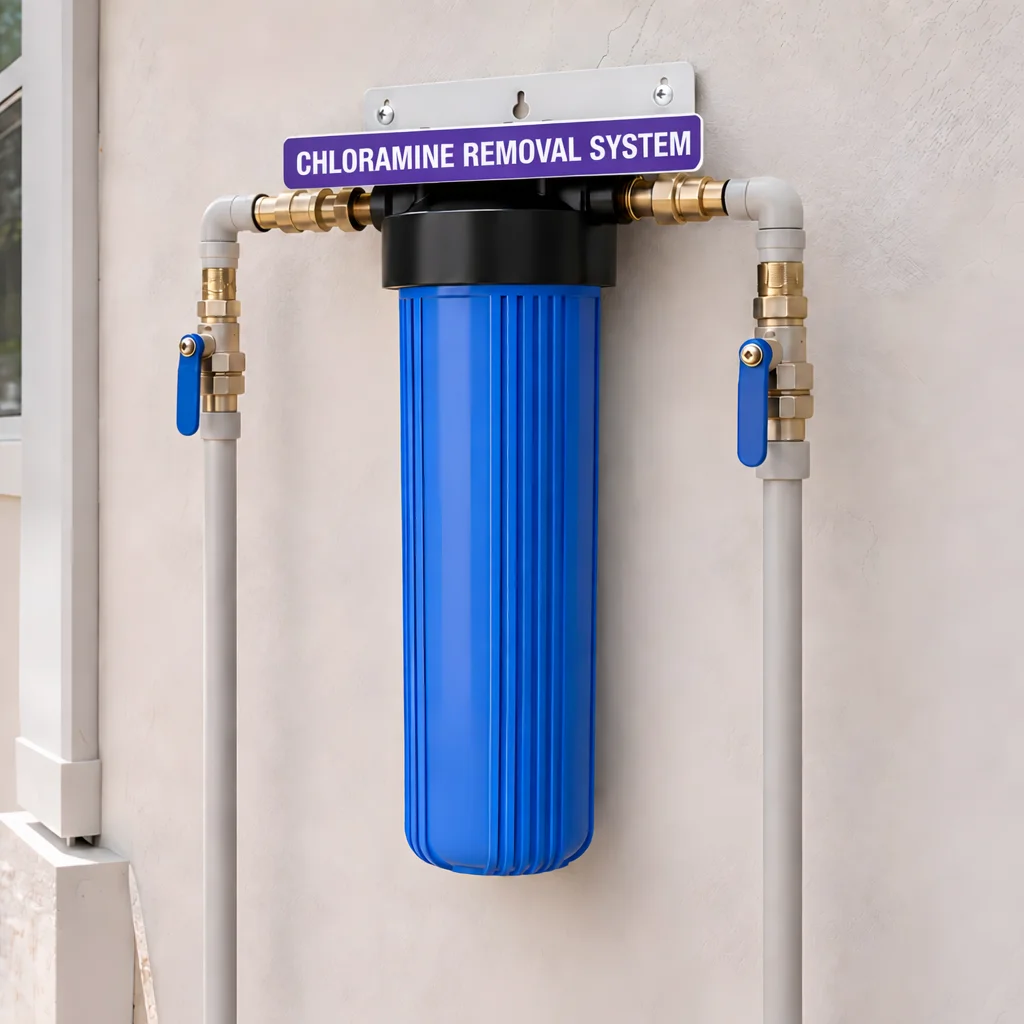
For a single-tank approach, a whole-house catalytic carbon filter is typically the best single-filter choice for reducing chloramine. Catalytic carbon is engineered to break down chloramine more effectively than standard activated carbon, making it well suited when chloramines act as a stable disinfectant rather than a quickly evaporating chlorine residual. Installed as one primary media bed, this system treats water used for drinking, bathing, cooking, and laundry throughout your Sink Creek property.
When sized correctly, a catalytic carbon system gives sufficient contact time for chloramine conversion and adsorption as water flows through the home, which also helps improve taste and reduce that treated-water character. Because monochloramine, dichloramine, and trichloramine can behave differently, matching system size to flow rates matters for steady performance. Mr. Pure Water can assess your Sink Creek household’s demand and plumbing layout and recommend a catalytic carbon whole-house filter configured for reliable results.
 850-772-1365
 info@bestwaterheater.com

