 Phone: 561-300-5075
 info@bestwaterheater.com
Phone: 561-300-5075
info@bestwaterheater.com
info@bestwaterheater.com
Phone: 561-300-5075
info@bestwaterheater.com
 Phone: 561-300-5075
info@bestwaterheater.com
Phone: 561-300-5075
info@bestwaterheater.com

Including filter system and high-performance Chloride filter.


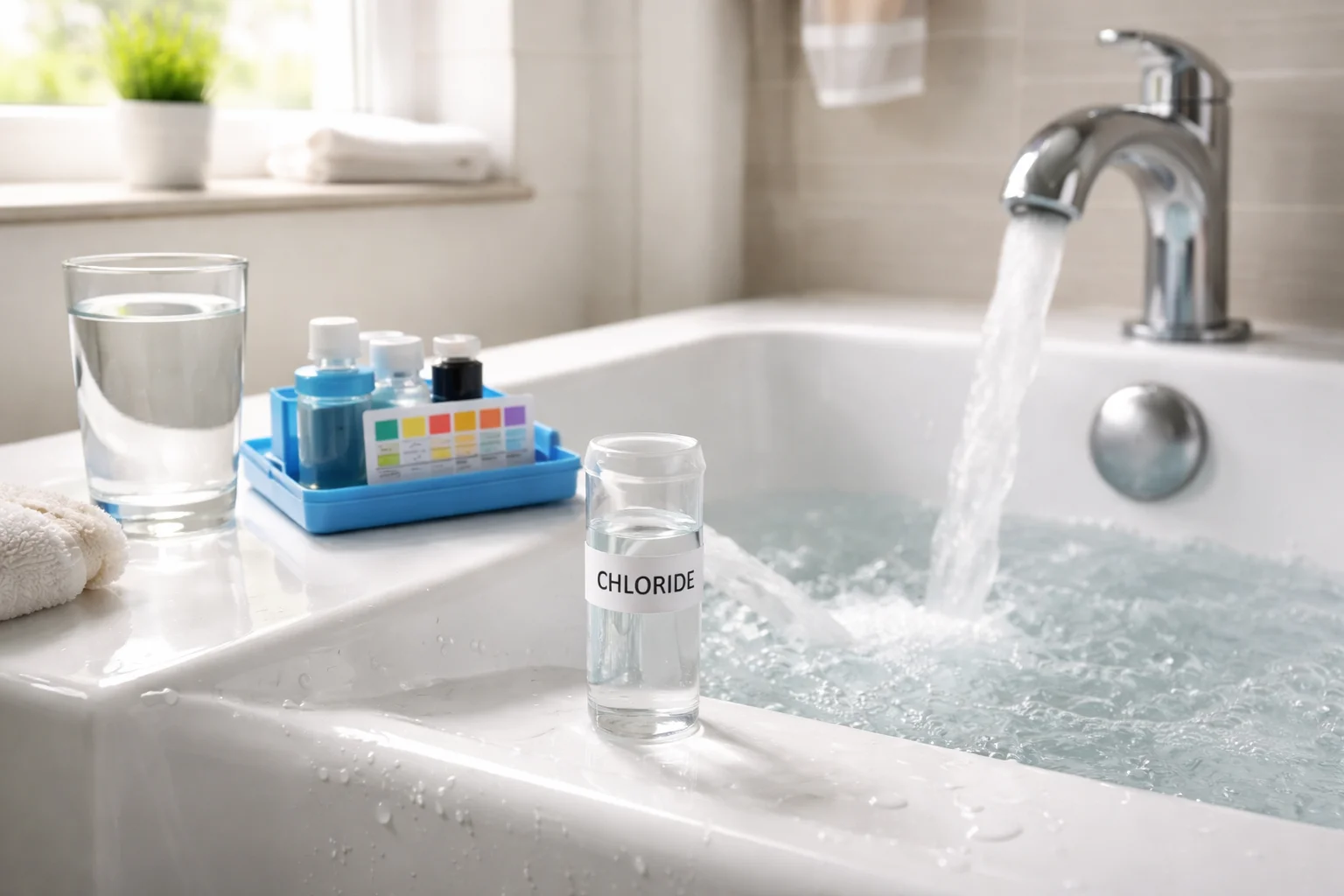
Chloride is a naturally occurring ion found in many water sources, and it can also enter drinking water through road salts, water softener discharge, and some industrial processes. In a home, higher chloride levels are often noticed first as a salty or brackish taste, especially in cold water from the tap. Chloride itself isn’t a germ, but it can be a useful clue that your water has elevated dissolved salts overall. If you’re on a private well or near coastal areas, chloride can be a common water-quality concern to keep an eye on.
Beyond taste, chloride can contribute to corrosion concerns in certain plumbing materials and fixtures, particularly when combined with other water chemistry factors like pH and total dissolved solids. That can show up over time as pinhole leaks, staining, or reduced lifespan of water-using appliances. Because chloride is dissolved, it won’t be removed by basic sediment filters, and it often passes through many common “taste and odor” cartridges. Testing is the best way to confirm whether chloride is elevated and to choose the right treatment approach for your home.
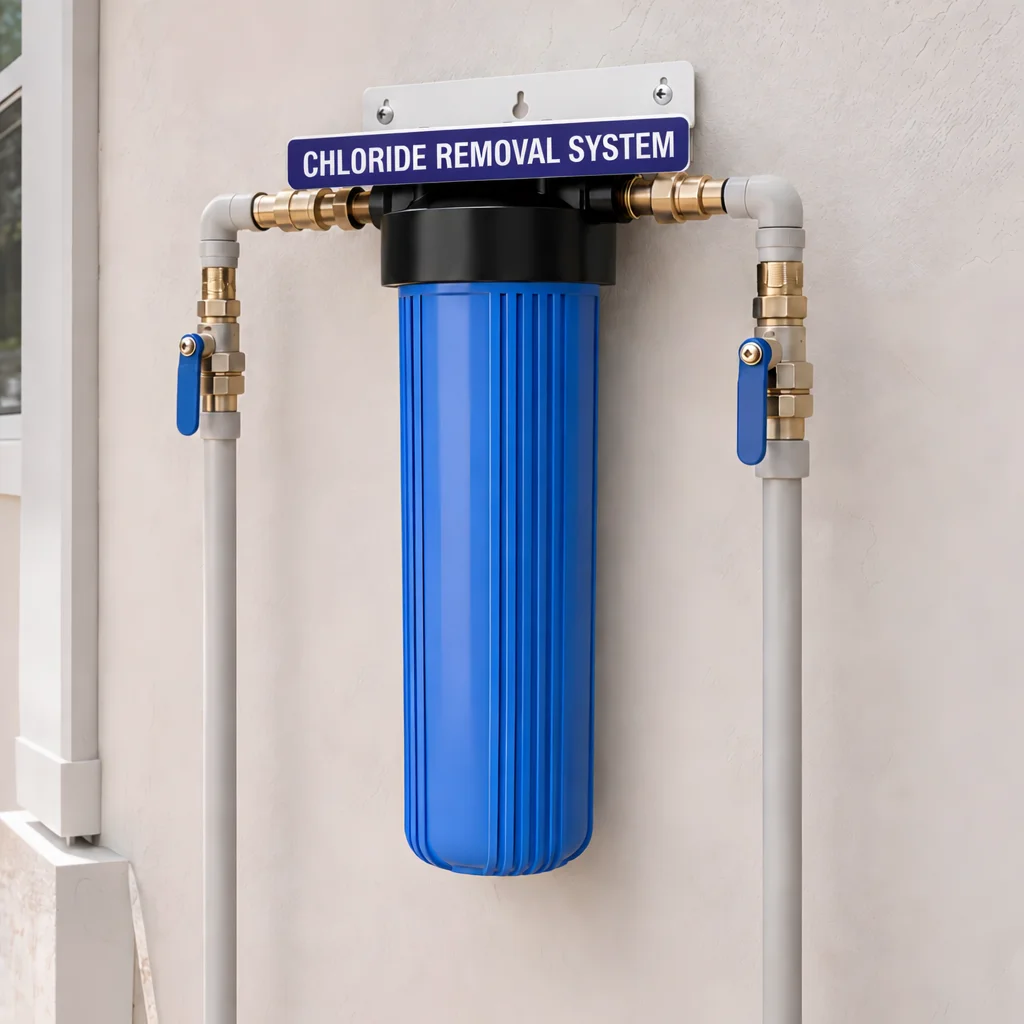
For reducing chloride in household water, reverse osmosis is typically the most effective single-filter approach because it’s designed to remove dissolved ions, not just particles. An RO membrane acts as a fine barrier that can significantly reduce chloride along with other dissolved salts that drive a salty taste. This is why RO is commonly recommended when the goal is lowering total dissolved solids rather than only improving smell or removing sediment. In many homes, RO is installed where you drink and cook, since treating all water in the house requires more flow and storage capacity.
If you’re looking for a whole-house solution in Florida, it’s important to match the system to both your chloride level and your household water demand. Whole-house RO can be designed to supply the entire home, but it generally requires prefiltration to protect the membrane and may use a storage tank to handle peak usage. A water softener can reduce hardness, but it does not remove chloride and can increase sodium and chloride in discharge, so it’s not a chloride solution. Mr. Pure Water can help confirm the source of the salty taste and design a whole-house filtration plan that targets chloride with the right RO configuration.
 561-300-5075
 info@bestwaterheater.com

