 Phone: 407-214-2646
 info@bestwaterheater.com
Phone: 407-214-2646
info@bestwaterheater.com
info@bestwaterheater.com
Phone: 407-214-2646
info@bestwaterheater.com
 Phone: 407-214-2646
info@bestwaterheater.com
Phone: 407-214-2646
info@bestwaterheater.com

Including filter system and high-performance Chlorine Dioxide filter.


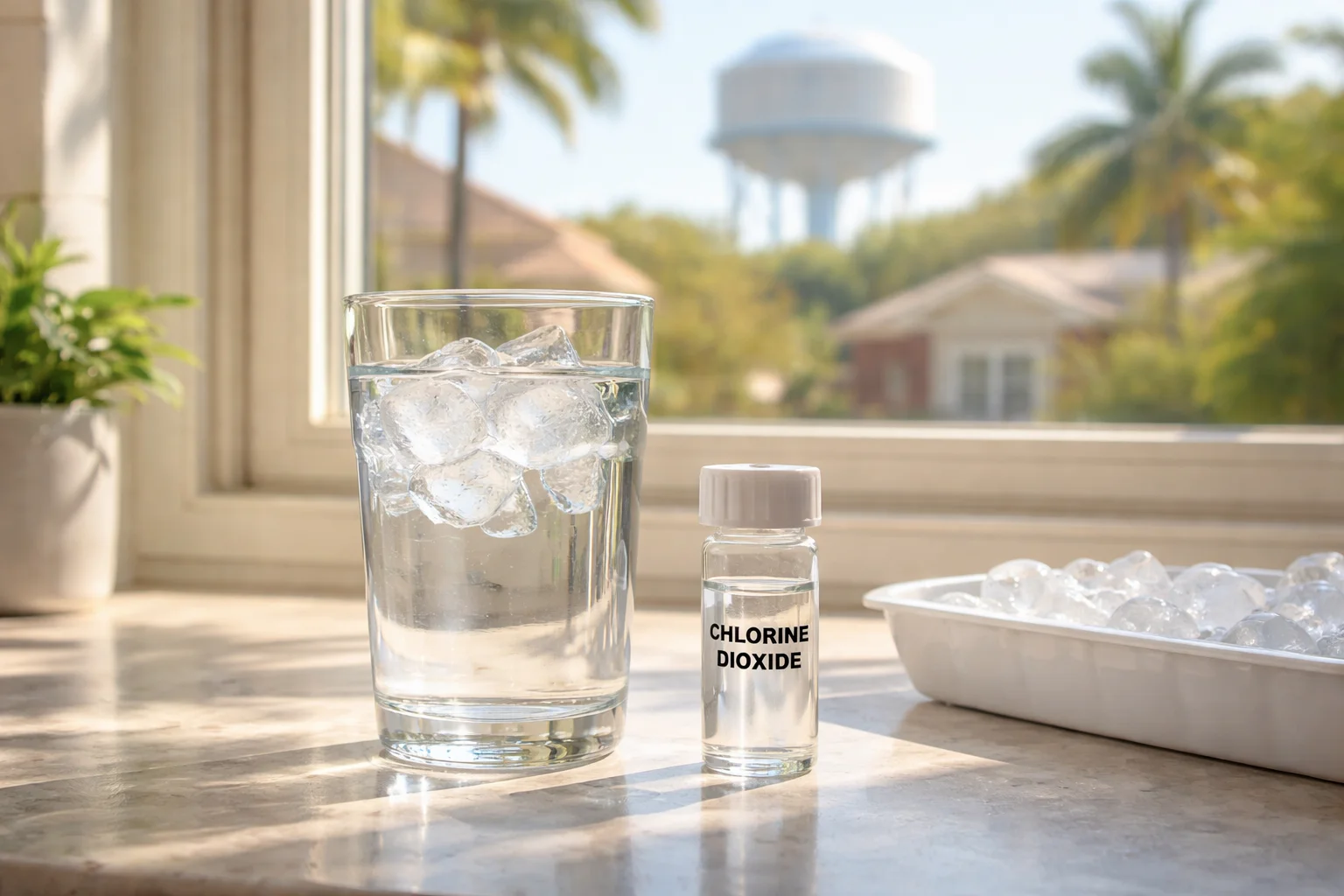
Chlorine dioxide is a powerful disinfectant sometimes applied in drinking water systems to control microbes. At higher levels it can leave a chemical taste or odor that’s noticeable from the kitchen tap to the showerhead, and some people report drier-feeling skin or hair after bathing when that oxidizing scent is present. In Geneva homes—where hard, mineral-rich groundwater is common—any change in water feel or smell can stand out against usual mineral impacts, so chlorine dioxide is one possible cause to check if your water suddenly seems harsher than normal.
Because chlorine dioxide reacts in water, it can produce related byproducts that affect taste and odor even when the water looks clear. These compounds are often more noticeable in hot water or after water has sat in pipes, which can make showering and dishwashing feel worse even if you’re drinking bottled water. For Geneva homeowners, a point-of-entry solution treats water used for cooking, bathing, laundry and cleaning, making a bigger overall difference than point-of-use pitchers or filters alone.
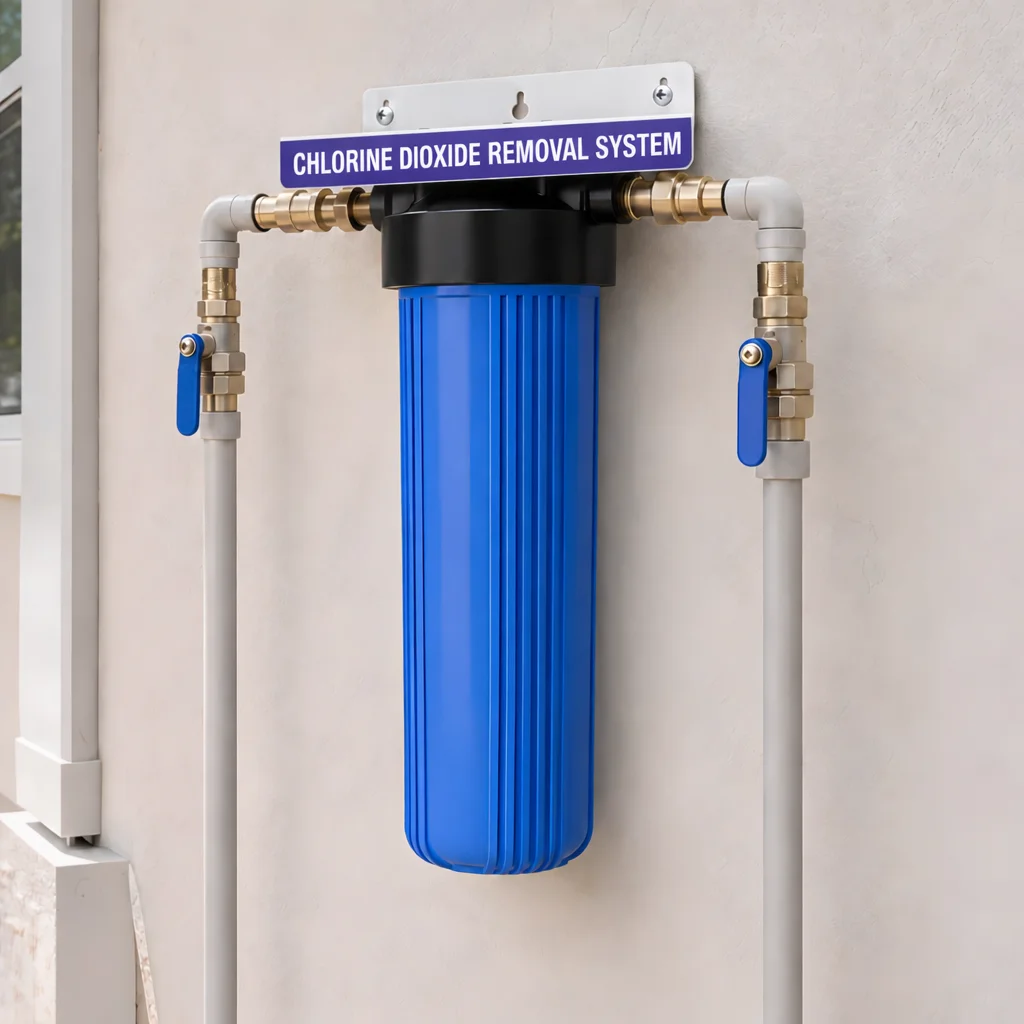
The most effective single-filter choice for reducing chlorine dioxide in the whole house is a catalytic carbon filter. Carbon media is commonly used to improve disinfectant taste and odor, and catalytic carbon is designed to work better with certain oxidizing compounds. Installed where water enters your Geneva residence, a properly sized catalytic carbon system treats every faucet and fixture so your water smells and tastes cleaner throughout the house without changing how you use it daily.
A correctly sized catalytic carbon system relies on sufficient contact time and media capacity to consistently reduce chlorine dioxide, and it avoids the upkeep of multiple under-sink units or pitchers that don’t protect showers and laundry. Mr. Pure Water can help Geneva homeowners choose the right whole-house catalytic carbon filter for their flow rate and household needs, and we recommend testing your water first if you want confirmation that chlorine dioxide or its byproducts are the likely source of the issues you’re experiencing.
 407-214-2646
 info@bestwaterheater.com

