 Phone: 772-290-5223
 info@bestwaterheater.com
Phone: 772-290-5223
info@bestwaterheater.com
info@bestwaterheater.com
Phone: 772-290-5223
info@bestwaterheater.com
 Phone: 772-290-5223
info@bestwaterheater.com
Phone: 772-290-5223
info@bestwaterheater.com

Including filter system and high-performance Chlorine filter.


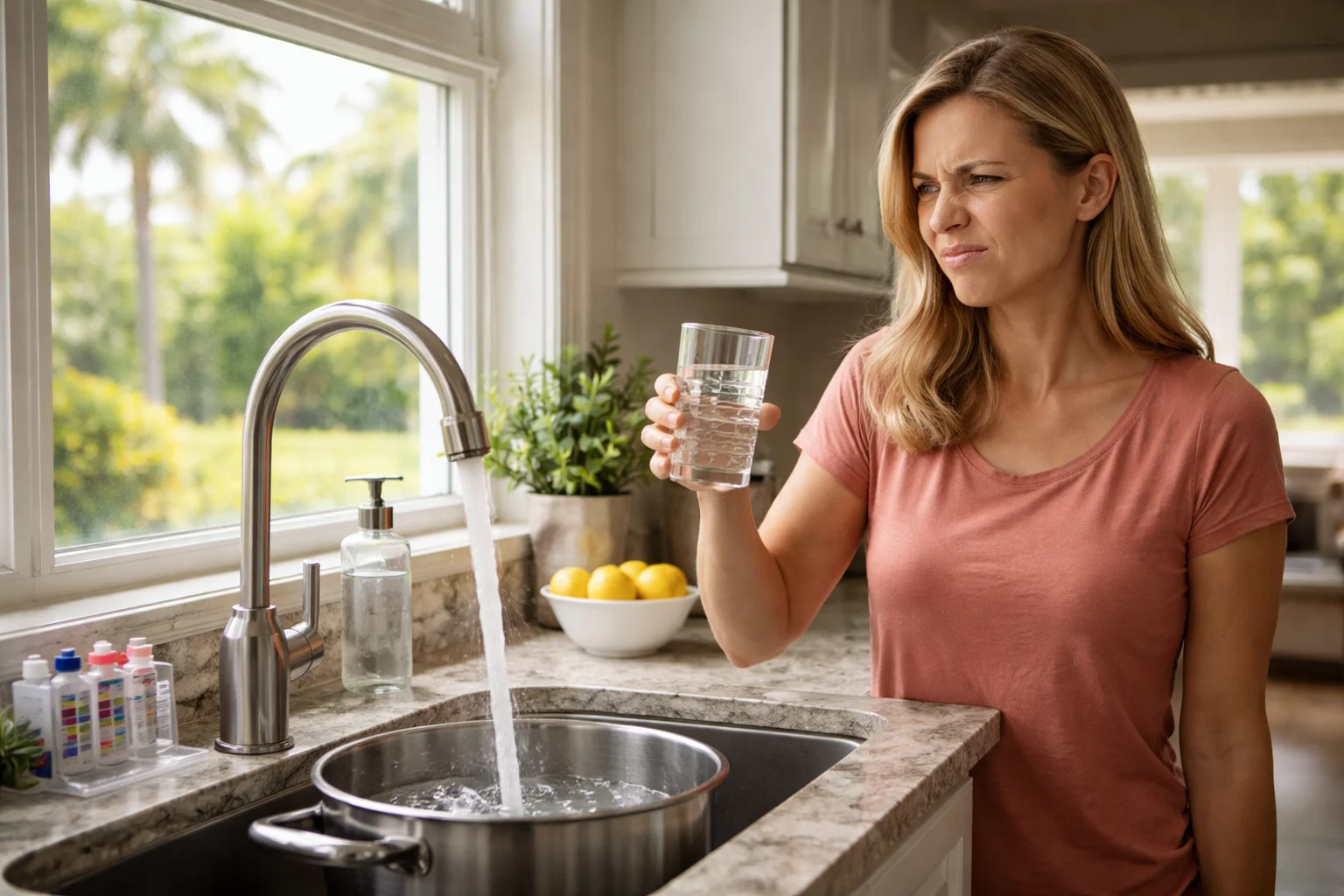
Many Treasure Coast residents notice a sharp, pool-like smell or lingering aftertaste from chlorine at the faucet. Water utilities commonly add chlorine as a disinfectant to protect water as it moves through distribution lines, and some of that disinfectant can remain in finished water you use for drinking, cooking and bathing. In coastal communities with older plumbing and occasional storm-related supply interruptions, those taste and odor concerns can be more noticeable, making everyday water use less pleasant.
A chlorine taste can show up in cold tap water, ice cubes and brewed beverages, and it often seems stronger after water has been sitting in home plumbing. The familiar chlorine odor tends to be more noticeable in hot water and during steamy showers as the smell releases into the air. Some Treasure Coast homeowners also report drier-feeling skin or hair after bathing when disinfectant levels are more noticeable. If you’d like water that smells and tastes more neutral throughout your house, reducing chlorine is a common and effective next step.
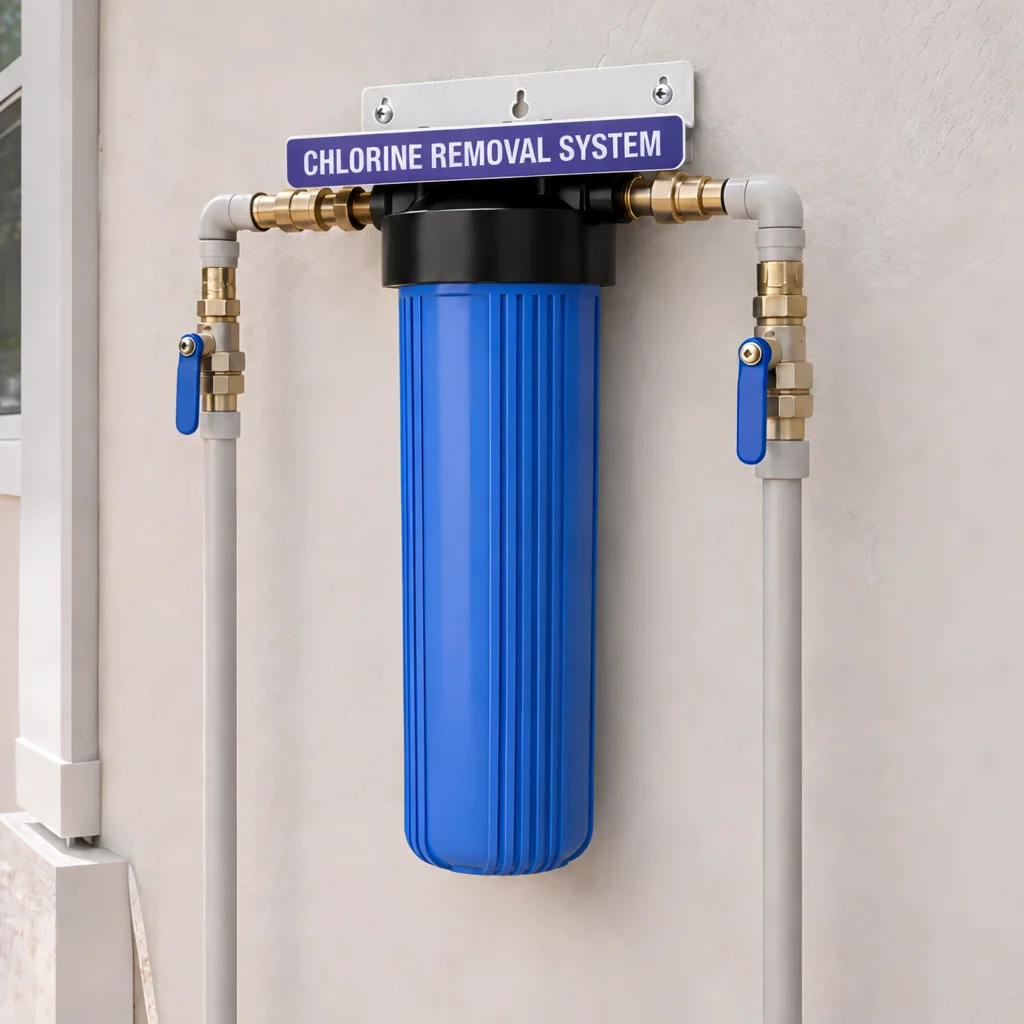
For whole-house chlorine reduction, a single tank-style activated carbon filter is generally the most effective one-filter option. Catalytic carbon, especially, is built to handle disinfectants like chlorine efficiently while maintaining good flow for showers, laundry, and multiple fixtures around your Treasure Coast home. Unlike small under-sink cartridges, a correctly sized whole-home carbon system treats water before it reaches the rest of your plumbing—helping control chlorine taste and chlorine odor at every tap instead of at only one sink.
Mr. Pure Water installs whole-house catalytic carbon systems to reduce chlorine as water enters Treasure Coast homes, improving taste and smell in kitchens, bathrooms and outdoor spigots. These systems remove chlorine by adsorbing it into the carbon media—no added chemicals—so you get cleaner-smelling showers and better-tasting water across the house. Proper sizing is important for performance, since contact time and flow rate determine how well the system handles your household’s demand.
 772-290-5223
 info@bestwaterheater.com

