 Phone: 305-404-8790
 info@bestwaterheater.com
Phone: 305-404-8790
info@bestwaterheater.com
info@bestwaterheater.com
Phone: 305-404-8790
info@bestwaterheater.com
 Phone: 305-404-8790
info@bestwaterheater.com
Phone: 305-404-8790
info@bestwaterheater.com

Including filter system and high-performance Chromium-6 filter.


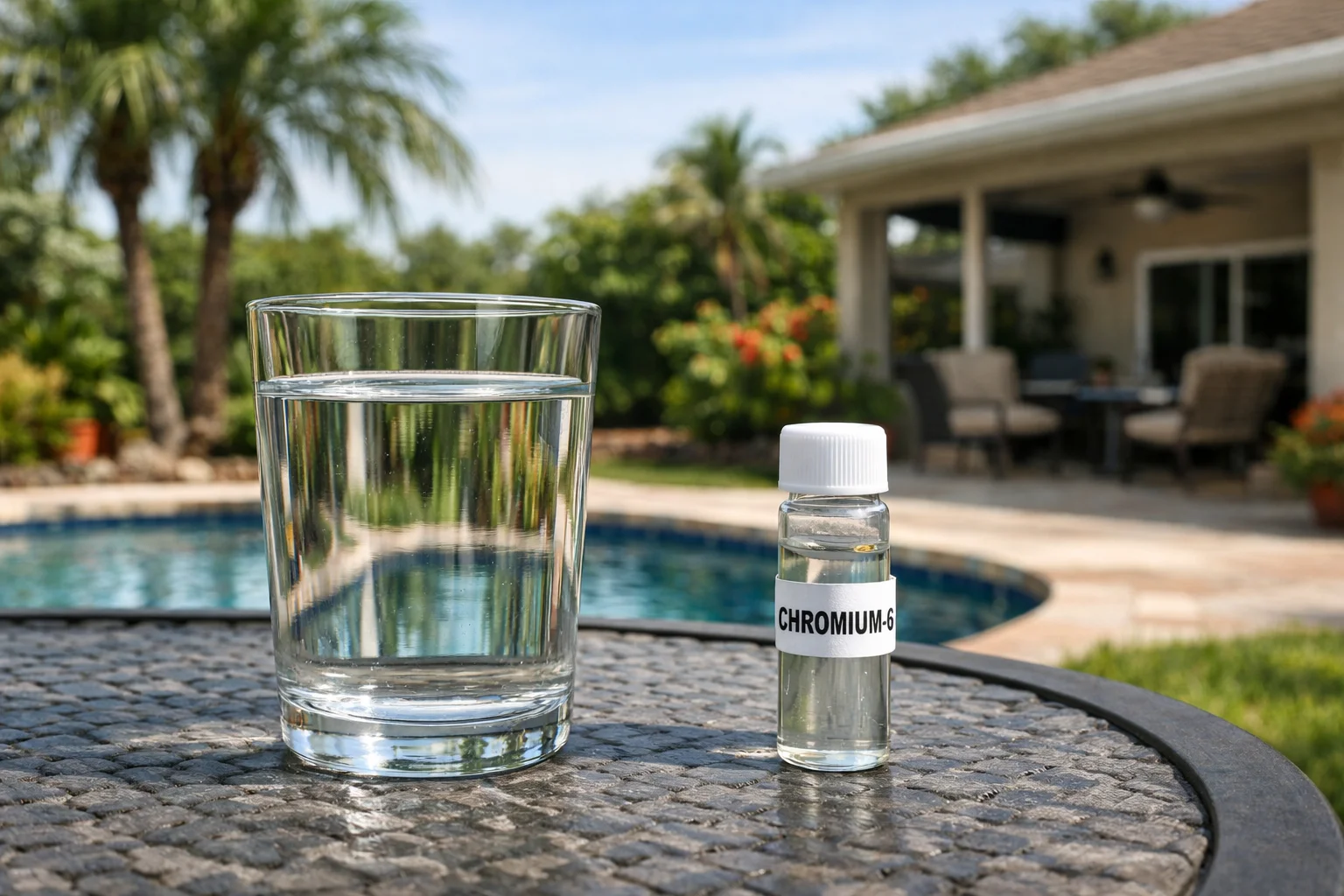
Chromium-6, sometimes called hexavalent chromium, is a dissolved form of chromium that can be present in tap water without any taste, smell, or visible sign. Many Biscayne Gardens homeowners don’t detect it during everyday use, which is why concerns usually arise after reviewing a water quality report or test results. Chromium-6 can enter water through industrial sources or certain manufacturing processes, or when water contacts chromium-containing materials. Understanding how it behaves and the ways it’s treated can give you more confidence in the water coming from every tap in your Miami-Dade County home.
Because chromium-6 stays dissolved, it won’t be removed by a basic sediment or particle filter. Many local properties around Biscayne Boulevard and Biscayne Gardens already use filters for chlorine taste or to catch scale from hard Miami-Dade water, but those systems don’t necessarily address hexavalent chromium. Treating it requires media designed for dissolved contaminants so the material can bind or convert the chromium. A whole-house system treats water at the point of entry, protecting showers, sinks, and appliances throughout your home instead of relying on a single faucet unit.
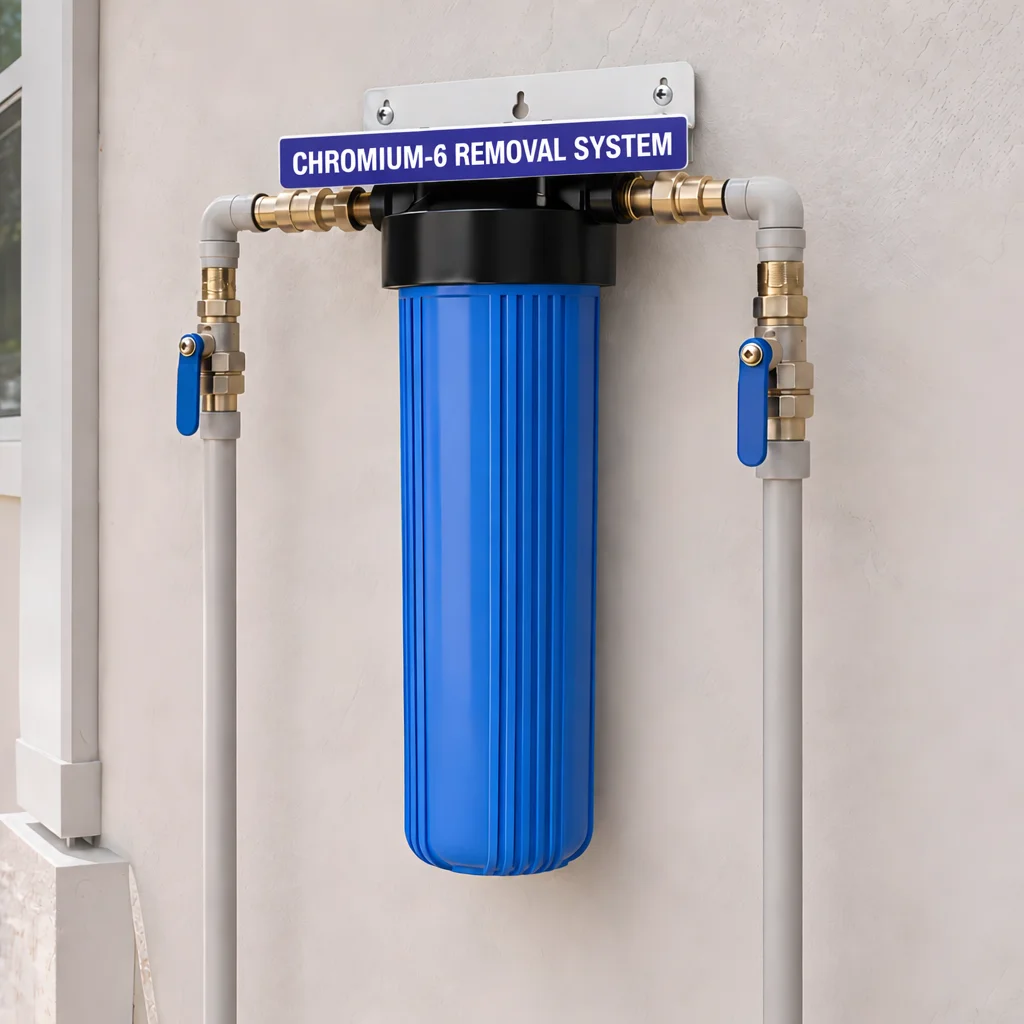
The single whole-house filter type most commonly used for chromium-6 is a catalytic activated carbon system formulated specifically for chromium reduction. This catalytic carbon is engineered to help convert chromium-6 into a form the media can capture as water passes through the tank. Beyond targeting hexavalent chromium, it offers the broad everyday benefits homeowners expect—improved water quality across bathrooms, kitchens, and laundry. The important distinction is choosing catalytic carbon media selected for chromium-6 performance, not just standard carbon meant for taste and odor.
Contact time and correct flow sizing are as important as the media itself in a whole-house catalytic carbon system. Mr. Pure Water sizes and configures systems for Biscayne Gardens homes so the filter provides enough capacity and exposure time to treat dissolved contaminants like chromium-6, while also handling the region’s hard water and potential mineral scale from limestone aquifers. Treating at the point of entry protects every bathroom, kitchen, and laundry line without constant upkeep, making a whole-house catalytic carbon system a practical, low-maintenance choice for many local homeowners.
 305-404-8790
 info@bestwaterheater.com

