 Phone: 305-404-8790
 info@bestwaterheater.com
Phone: 305-404-8790
info@bestwaterheater.com
info@bestwaterheater.com
Phone: 305-404-8790
info@bestwaterheater.com
 Phone: 305-404-8790
info@bestwaterheater.com
Phone: 305-404-8790
info@bestwaterheater.com

Including filter system and high-performance Chromium-6 filter.


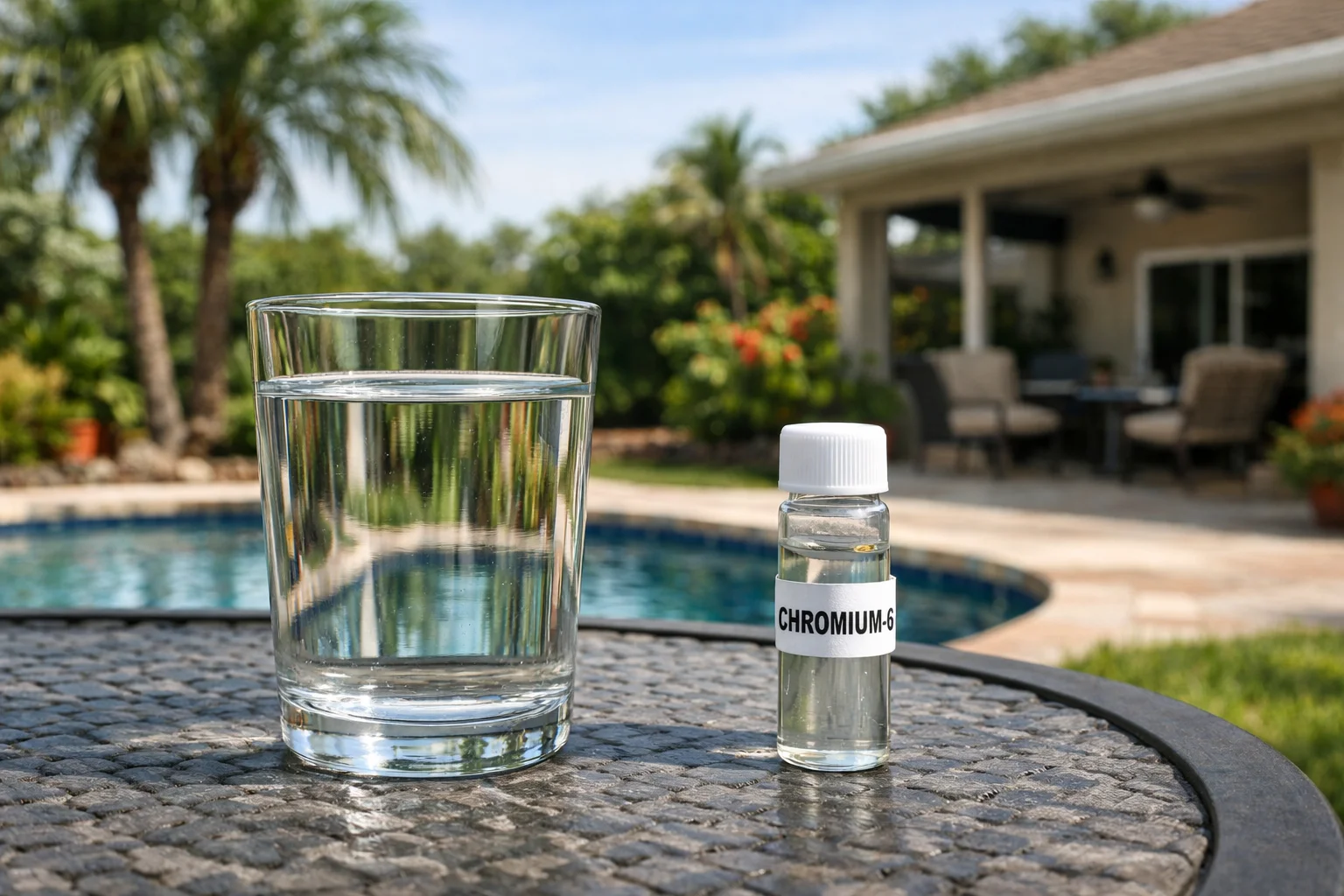
Chromium-6, sometimes listed as hexavalent chromium, is a dissolved form of chromium that can be present in tap water without any taste, smell, or visible sign. Because you can’t detect it at the faucet, homeowners in Fountainebleau often only learn about it from water testing or a utility report. It can enter water supplies through industrial processes or contact with chromium-containing materials, so understanding how it behaves and how it’s treated gives local homeowners more confidence in their water across the Miami-Dade area.
Dissolved contaminants like chromium-6 won’t be captured by a basic sediment cartridge or a simple particle filter. Many Fountainebleau houses already have filters for chlorine taste or to remove scale from our hard Miami-Dade water, but those systems aren’t designed specifically for hexavalent chromium. Treating dissolved chromium requires media engineered to attract and hold it; a whole-house system treats water at the point of entry so every shower, sink, and appliance in your home benefits rather than relying on a single under-sink faucet filter.
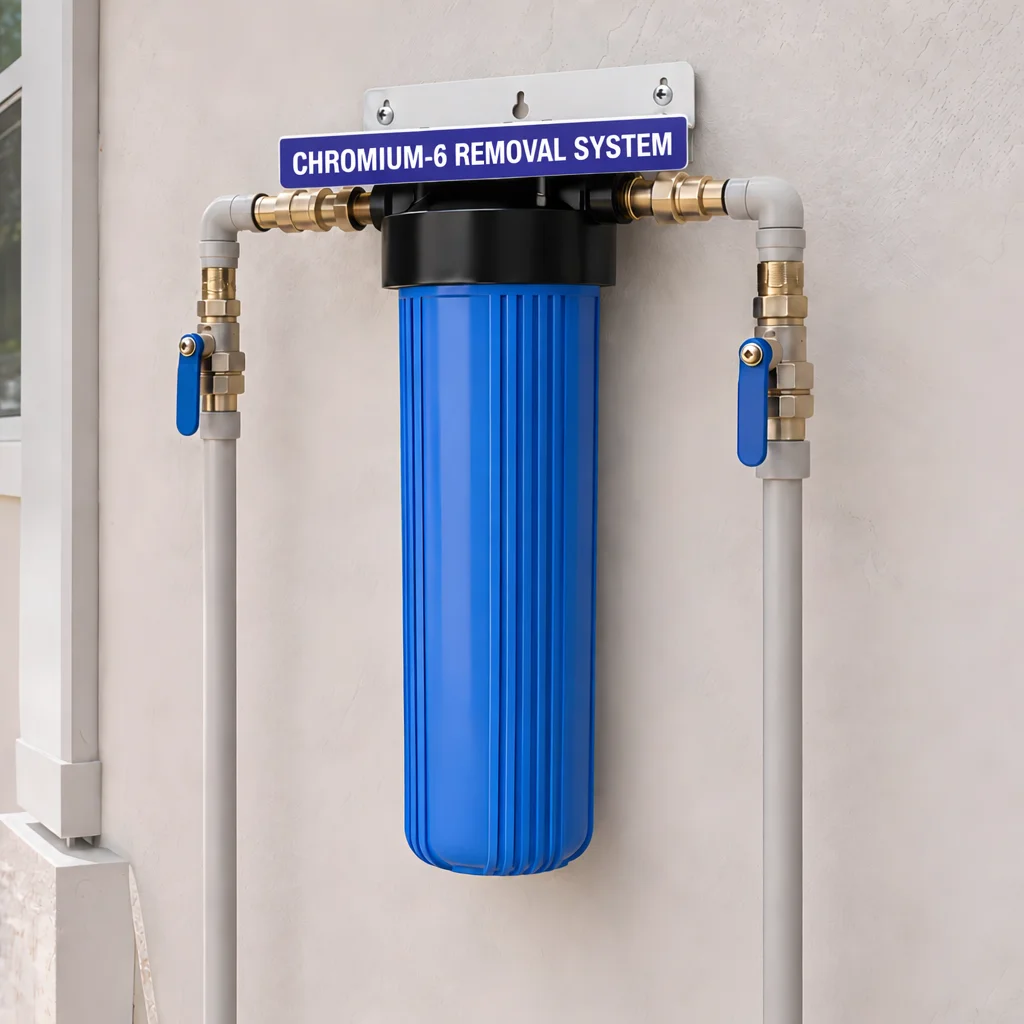
The single whole-house filter type most commonly used to address chromium-6 is a catalytic activated carbon system formulated for chromium reduction. This specialized carbon can help convert chromium-6 into a form the media can capture as water passes through the tank, while also delivering the everyday water-quality improvements Miami-Dade homeowners expect. It’s important to use carbon media selected for chromium-6 performance rather than standard taste-and-odor carbon so the system can target hexavalent chromium effectively.
Performance in a catalytic carbon whole-house filter depends on flow rate and how long water contacts the media, especially in hard-water areas like Fountainebleau where mineral scale can affect equipment over time. Mr. Pure Water sizes systems to provide adequate contact time and capacity so dissolved contaminants, including chromium-6, are treated at the point of entry, protecting bathrooms, kitchens, and laundry lines without added daily maintenance. For many local homeowners, a properly designed catalytic carbon system offers a practical, set-and-forget approach to reducing hexavalent chromium.
 305-404-8790
 info@bestwaterheater.com

