 Phone: 954-208-3500
 info@bestwaterheater.com
Phone: 954-208-3500
info@bestwaterheater.com
info@bestwaterheater.com
Phone: 954-208-3500
info@bestwaterheater.com
 Phone: 954-208-3500
info@bestwaterheater.com
Phone: 954-208-3500
info@bestwaterheater.com

Including filter system and high-performance Chromium-6 filter.


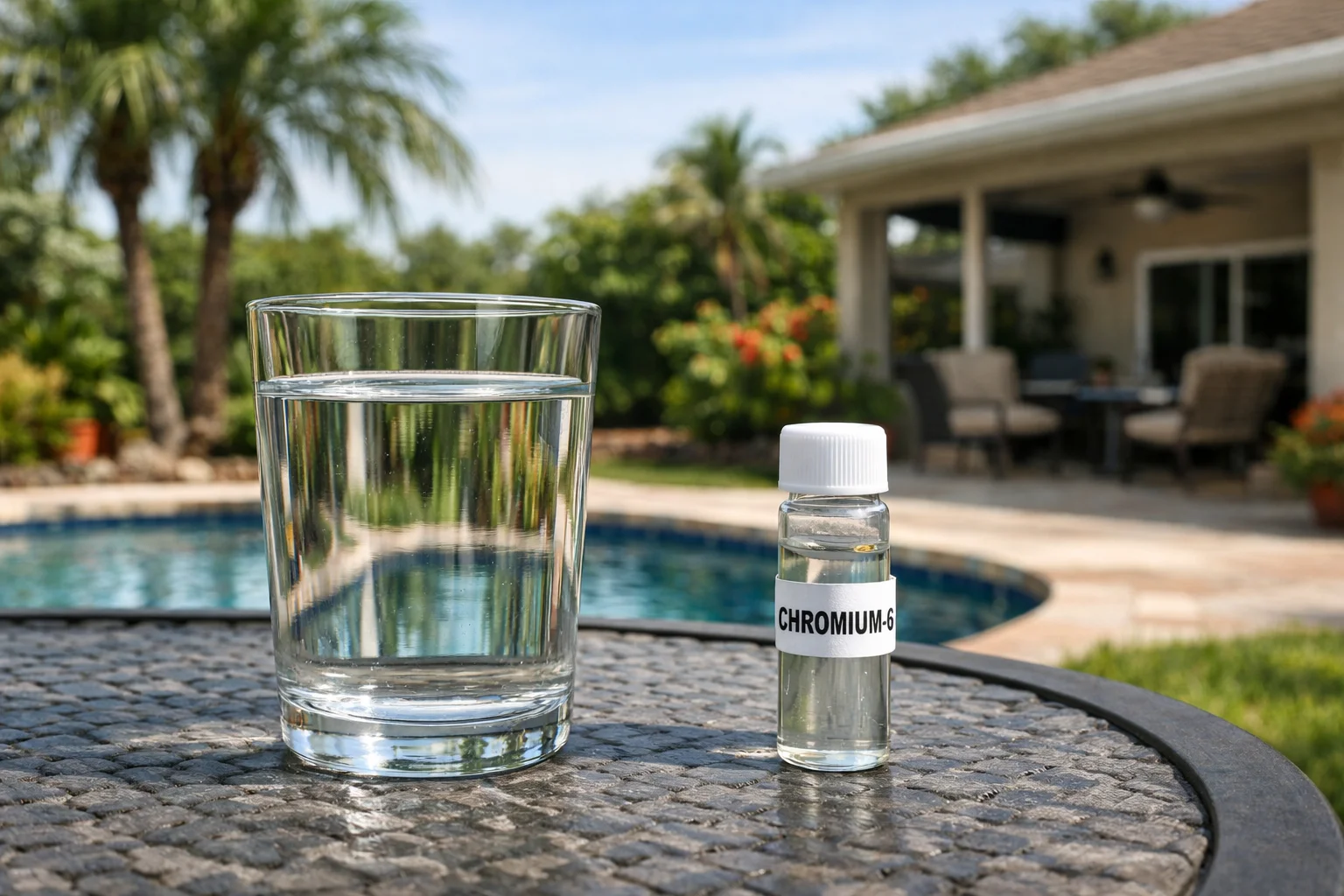
Chromium-6, also known as hexavalent chromium, is a dissolved form of chromium that can appear in tap water without obvious signs — no unusual taste, smell, or color to warn you. Homeowners in Golf Estates often first learn about it from water testing or a utility report rather than by noticing anything at the faucet. It can reach drinking water via industrial sources or when water contacts chromium-containing materials, so understanding how it behaves and how professionals treat it can give you greater confidence in the water running through your home.
Because chromium-6 stays dissolved, a simple sediment or particle filter won’t remove it effectively. Many Golf Estates homes already use systems to tackle chlorine taste or to trap scale and particles caused by hard, mineral-rich groundwater, but those solutions don’t reliably address hexavalent chromium. Removing dissolved contaminants requires media specifically formulated to attract and hold them, and a whole-house system treats water at every tap instead of depending on a single point-of-use unit.
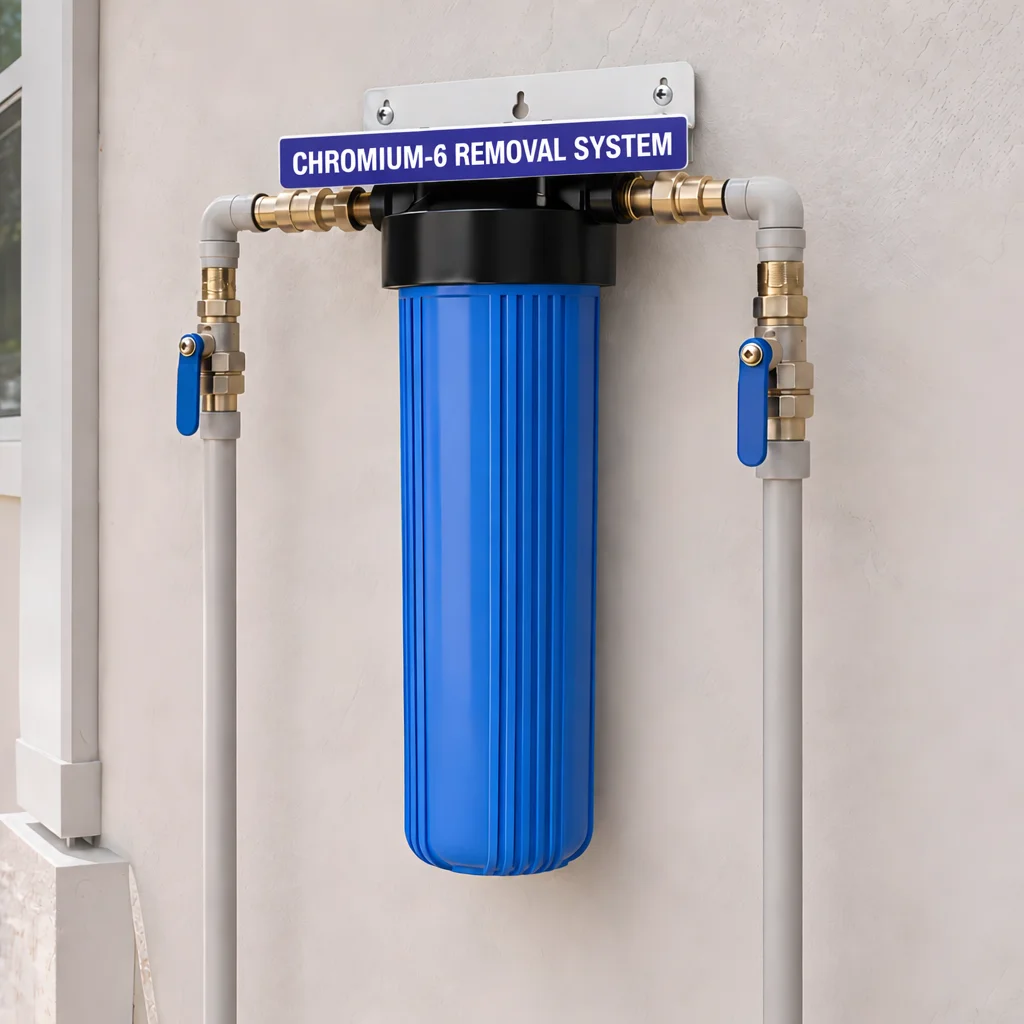
The single whole-house filter type most consistently used for chromium-6 reduction is a catalytic activated carbon system designed for that purpose. This specialized carbon is engineered to help convert chromium-6 into a form the media can capture as water flows through the filter, while also delivering everyday improvements in water quality for showers, sinks, and appliances. The important distinction is using catalytic carbon selected for chromium-6 performance, not generic carbon intended only for taste and odor.
Effective whole-house catalytic carbon systems depend on proper sizing, contact time, and flow rate so the media can treat dissolved contaminants reliably; Mr. Pure Water configures systems for Golf Estates homes with those factors in mind. Treating water at the point of entry protects every bathroom, kitchen and laundry line and fits well with local needs—especially in humid South Florida homes that contend with hard water and mineral buildup. For many homeowners, a correctly designed catalytic carbon system is a practical, low-maintenance way to reduce chromium-6 exposure throughout the house.
 954-208-3500
 info@bestwaterheater.com

