 Phone: 772-290-5223
 info@bestwaterheater.com
Phone: 772-290-5223
info@bestwaterheater.com
info@bestwaterheater.com
Phone: 772-290-5223
info@bestwaterheater.com
 Phone: 772-290-5223
info@bestwaterheater.com
Phone: 772-290-5223
info@bestwaterheater.com

Including filter system and high-performance Chromium-6 filter.


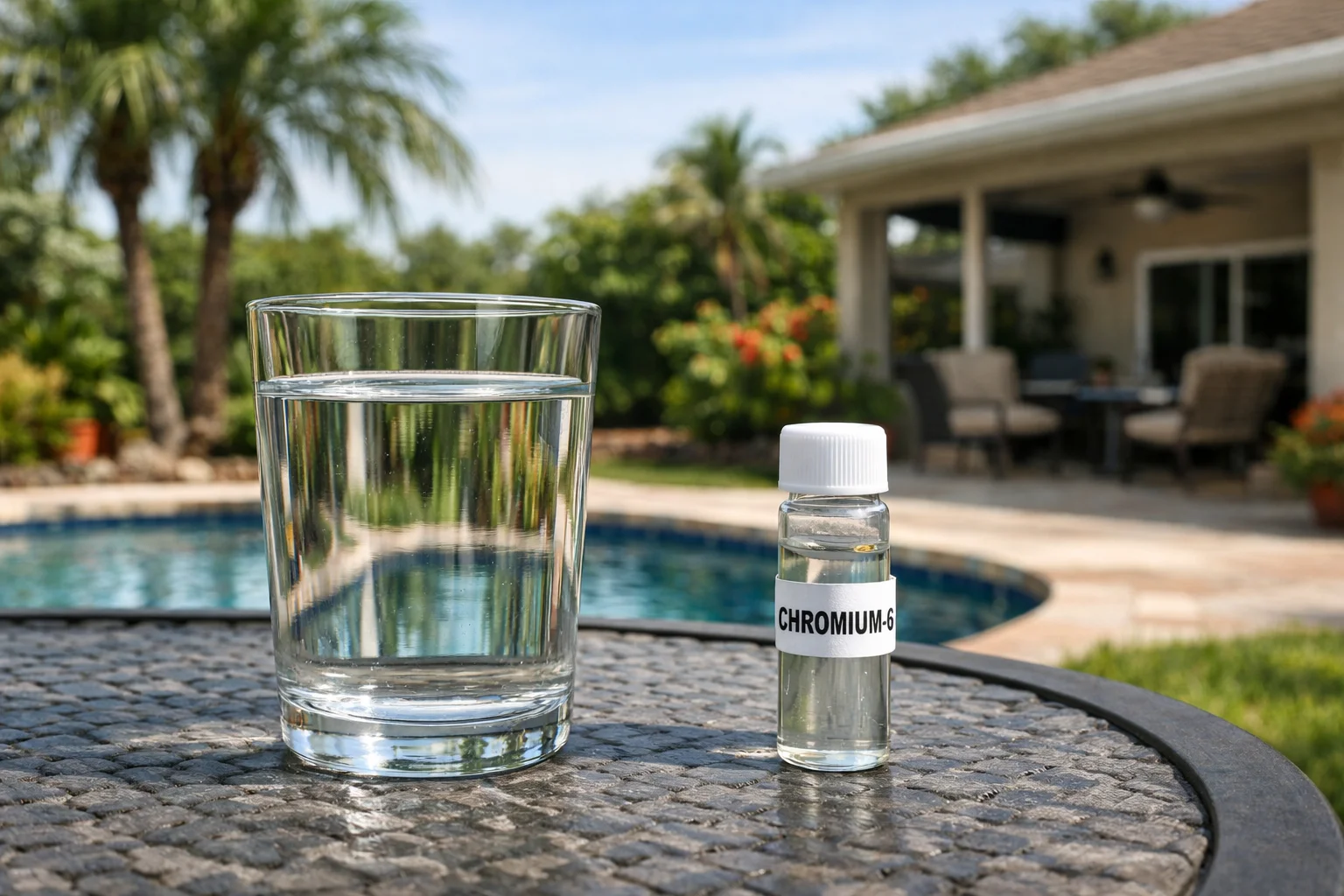
Chromium-6, often called hexavalent chromium, is a dissolved form of chromium that can occur in tap water without any noticeable taste, smell, or cloudiness. Because it’s not obvious to the senses, many Stuart homeowners only become aware of it after reviewing a water test or report. Sources can include industrial processes or contact between water and chromium-containing materials, so it helps to know how the contaminant behaves and what treatment options work best for household plumbing in Martin County.
Dissolved contaminants like chromium-6 won’t be caught by a simple sediment or particle filter, and many common home filters aimed at chlorine or visible particles won’t address hexavalent chromium. To reduce it effectively you need filtration media designed to target dissolved species. For Stuart homes — where hard water and mineral scale are common — a whole-house system treats every fixture and appliance, so you’re protected across showers, sinks and the laundry rather than relying on a single-point faucet filter.
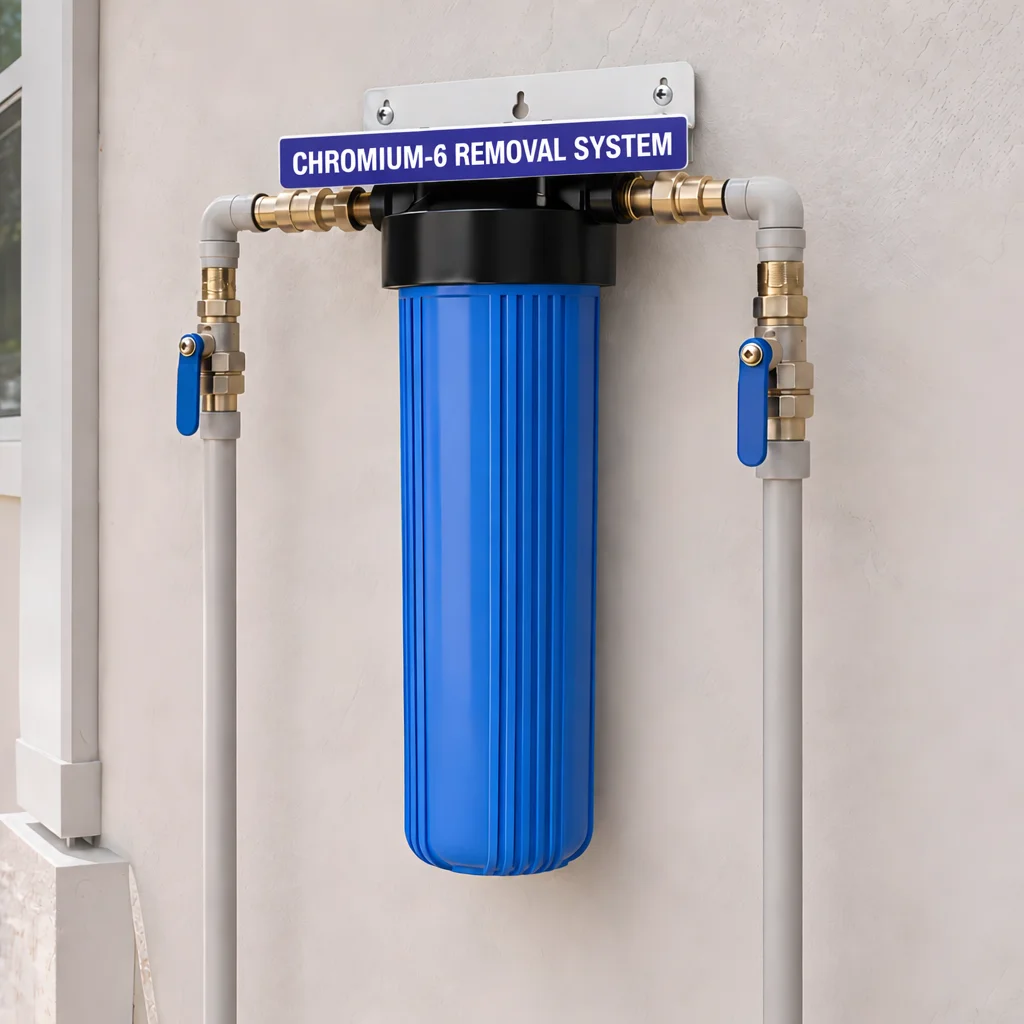
The single filter type most often used for whole-house chromium-6 reduction is a catalytic activated carbon system specifically formulated for chromium performance. This kind of carbon can be engineered to transform chromium-6 into a form the media can retain as water passes through the tank, while also delivering the everyday quality improvements homeowners appreciate. In Stuart, selecting carbon media chosen for chromium-6 effectiveness — not just standard taste-and-odor carbon — is the important distinction.
Effectiveness comes from the right sizing and contact time as much as from the media itself; Mr. Pure Water configures whole-house catalytic carbon filters to provide sufficient flow characteristics for treating dissolved contaminants like chromium-6. Treating water at the point of entry protects every bathroom, kitchen and laundry line in Martin County homes and helps limit mineral scale impacts common in hard Stuart water. For many local homeowners, a properly designed catalytic carbon whole-house system is a practical, low-maintenance way to reduce exposure to hexavalent chromium.
 772-290-5223
 info@bestwaterheater.com

