 Phone: 407-214-2646
 info@bestwaterheater.com
Phone: 407-214-2646
info@bestwaterheater.com
info@bestwaterheater.com
Phone: 407-214-2646
info@bestwaterheater.com
 Phone: 407-214-2646
info@bestwaterheater.com
Phone: 407-214-2646
info@bestwaterheater.com

Including filter system and high-performance Chromium-6 filter.


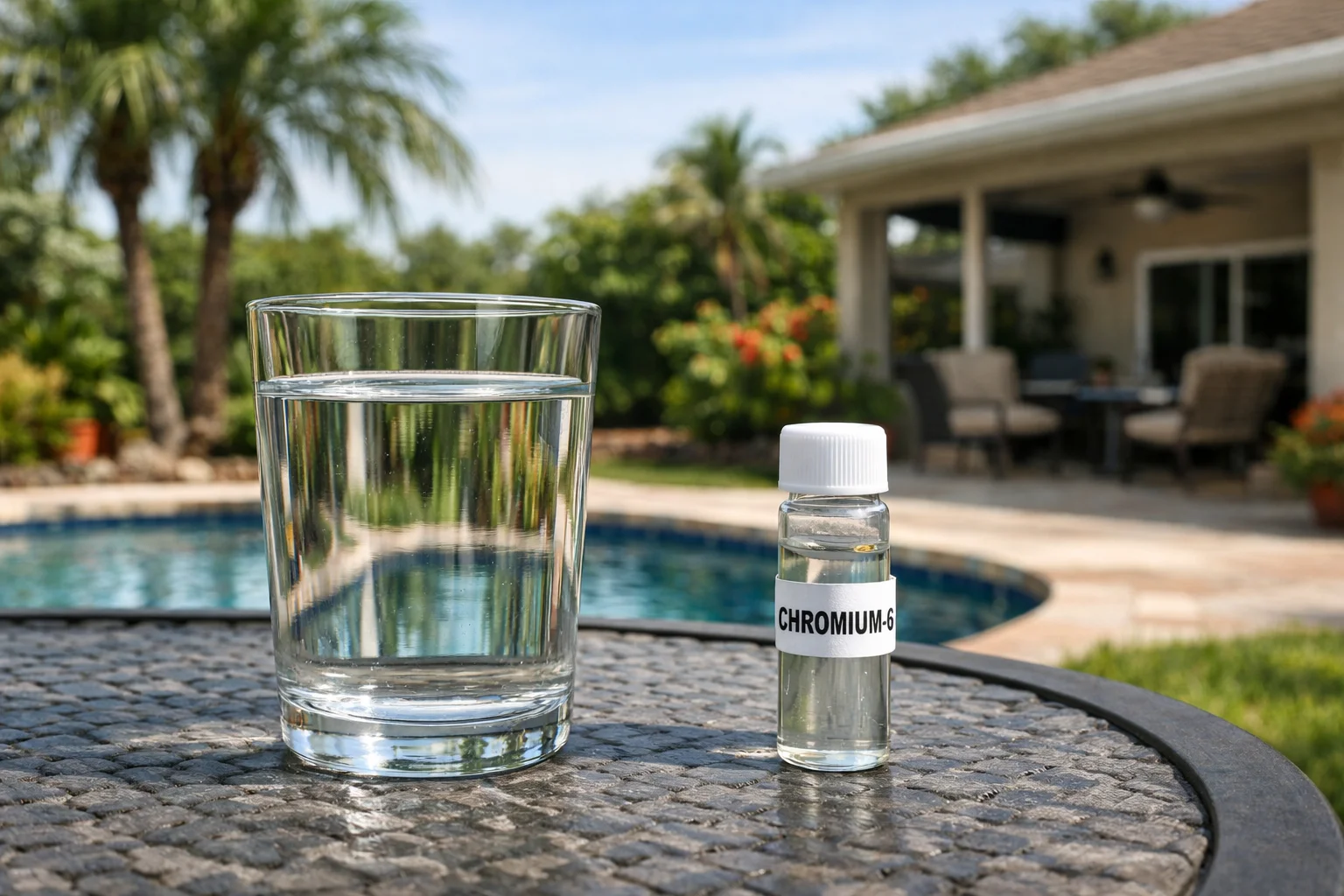
Chromium-6, sometimes called hexavalent chromium, is a dissolved form of chromium that can appear in tap water without obvious taste, smell, or color. Homeowners in Winter Springs often only discover it after reviewing a water test or report, since it isn’t detectable by sight or smell. It can enter water supplies through industrial sources, certain manufacturing pathways, or from contact with chromium-bearing materials, so understanding how it behaves is a useful step toward better water confidence around your house.
Because chromium-6 stays dissolved, simple sediment cartridges won’t remove it; many systems that address chlorine taste or visible particles won’t capture this contaminant either. In Winter Springs — where hard, mineral-rich groundwater and scale buildup are common concerns — you’ll want a strategy that targets dissolved contaminants specifically. A whole-house system treats water at the point of entry, protecting showers, kitchen taps, and appliances rather than relying on a single under-sink or pitcher filter.
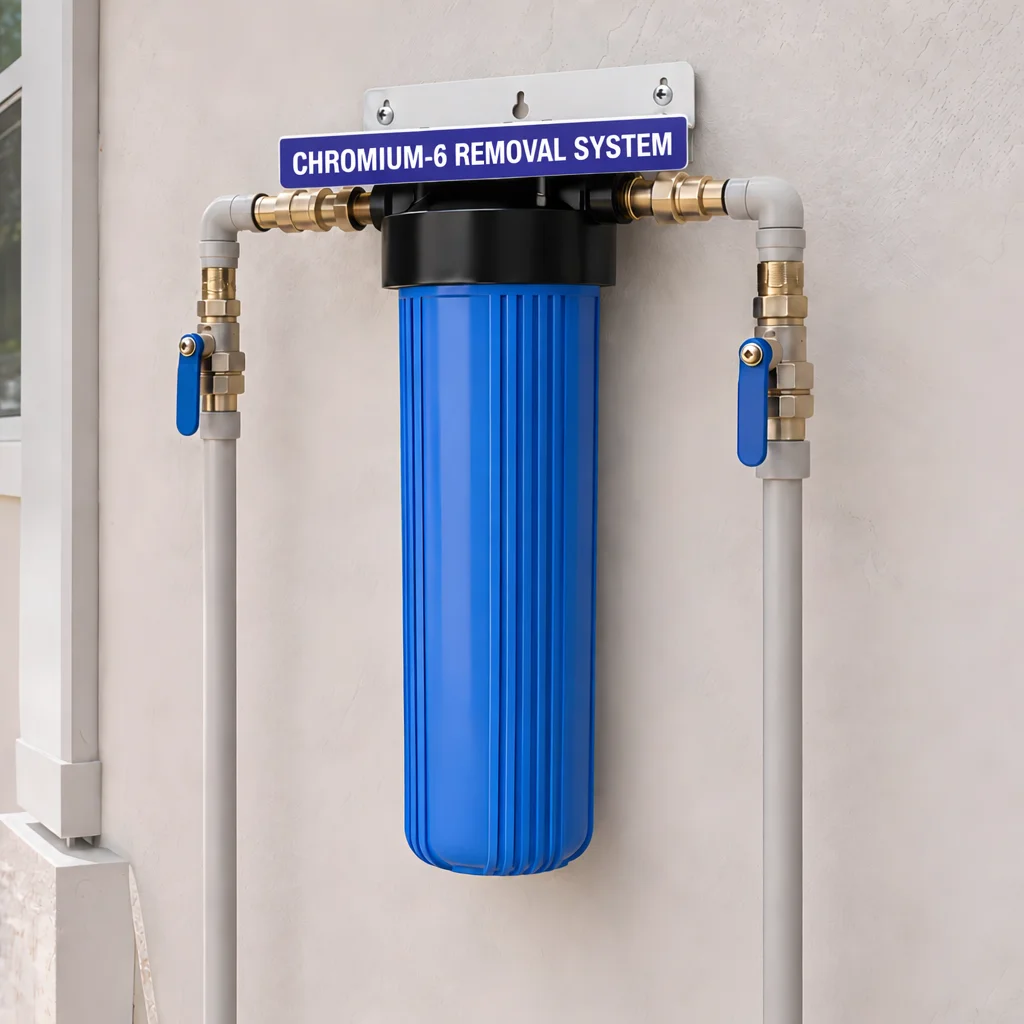
The single filter type most often used for whole-house chromium-6 reduction is a catalytic activated carbon system engineered for chromium performance. These carbon media can be formulated to help transform chromium-6 into a form the media can capture as water passes through, reducing hexavalent chromium while also improving overall water quality throughout the home. For Winter Springs homeowners, choosing carbon specifically selected and sized for chromium-6 is important — standard taste-and-odor carbon isn’t enough.
Contact time and flow rate are as important as the media itself in a correctly sized catalytic carbon whole-house filter. Mr. Pure Water configures systems for Winter Springs residences so the filter offers sufficient capacity and exposure time to address dissolved contaminants like chromium-6 while handling hard local groundwater and typical household demand. Treating water at the point of entry protects bathrooms, the kitchen, and laundry lines with minimal upkeep, making a whole-house catalytic carbon system a practical, low-maintenance option for many local homes.
 407-214-2646
 info@bestwaterheater.com

