 Phone: 407-214-2646
 info@bestwaterheater.com
Phone: 407-214-2646
info@bestwaterheater.com
info@bestwaterheater.com
Phone: 407-214-2646
info@bestwaterheater.com
 Phone: 407-214-2646
info@bestwaterheater.com
Phone: 407-214-2646
info@bestwaterheater.com

Including filter system and high-performance Cloudiness filter.



Cloudiness in home water can make glasses and sinks look milky even when the supply otherwise seems fine. Often called turbidity, this haze comes from tiny suspended particles such as sand, silt, or clay stirred up by line work or pressure shifts. In some cases microbubbles cause a temporary cloudiness that clears if you let the water sit, while persistent milky water usually means real particulate matter is present.
Beyond how it looks, cloudy water can leave films on fixtures, make cooking water appear unclear, and make ice cubes cloudy. Turbidity can increase when scale or corrosion flakes inside plumbing shed fine rust-colored or gray particles — a concern in many hard-water homes around Christmas and the greater Orange County area. For some households the issue is seasonal or tied to local usage; for others it’s constant. Identifying whether air or sediment is the main cause is an important first step toward the right fix.
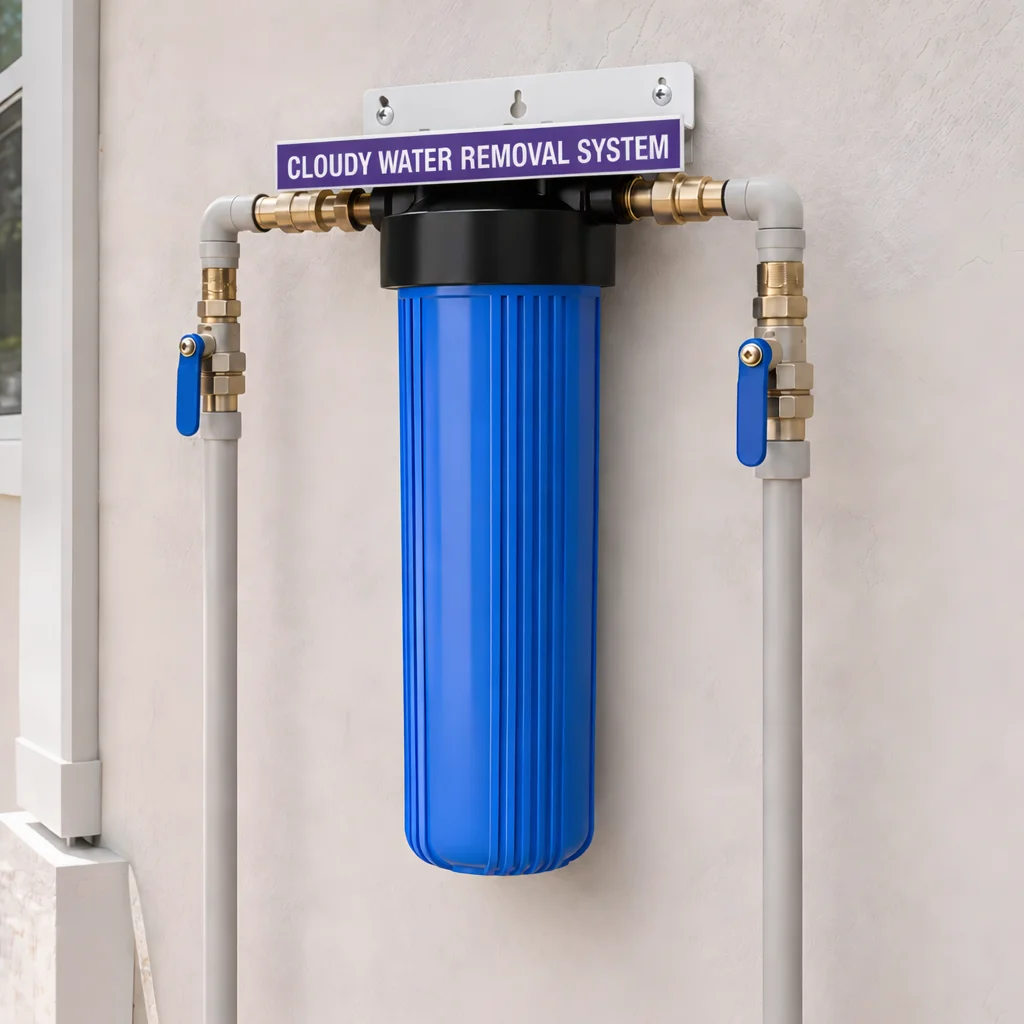
When cloudiness is particle-based, the single most effective filter is a whole-house sediment filter. A pleated cartridge with a high surface area captures silt and grit before water reaches showers, faucets, and appliances, protecting everything inside your Christmas home. Installed at the main line, this filter treats all incoming water and helps prevent downstream buildup in equipment and plumbing.
Picking the right micron rating is key: you want a fine enough stage to catch the small particles causing turbidity but not so tight that it chokes flow. Many Christmas-area homeowners find success with a fine sediment stage paired with a larger pleated cartridge for longer life, which is helpful in our hard-water, rural-well environment where iron or sulfur odors can also occur. Because turbidity can spike after maintenance or heavy use, consistent whole-house filtration and routine cartridge changes keep water clear and pressure steady.
 407-214-2646
 info@bestwaterheater.com

