 Phone: 772-290-5223
 info@bestwaterheater.com
Phone: 772-290-5223
info@bestwaterheater.com
info@bestwaterheater.com
Phone: 772-290-5223
info@bestwaterheater.com
 Phone: 772-290-5223
info@bestwaterheater.com
Phone: 772-290-5223
info@bestwaterheater.com

Including filter system and high-performance Cloudiness filter.



Cloudiness in household water can make glasses and pitchers look milky or dull even when water feels otherwise normal. Often called turbidity, this clouded appearance comes from tiny suspended particles — things like sand, silt, clay or other stirred-up debris — and sometimes from microbubbles that clear after a few minutes. In coastal St. Lucie County homes, line work, pressure changes, or disturbances in groundwater-fed supplies can stir up these particles and produce that hazy look.
Besides being unattractive, cloudy water can leave film on faucets and fixtures, make ice and beverages look unclear, and generally make kitchen tasks less pleasant. Turbidity can be worse if corrosion or hard-water scale breaks free inside plumbing, sending fine rust-colored or gray flecks through pipes. Some Fort Pierce South households notice the issue more at certain times of year or after heavy local water use; others see a persistent haze. Finding out whether the cloudiness is mostly sediment or simply air bubbles is the practical first step toward fixing it.
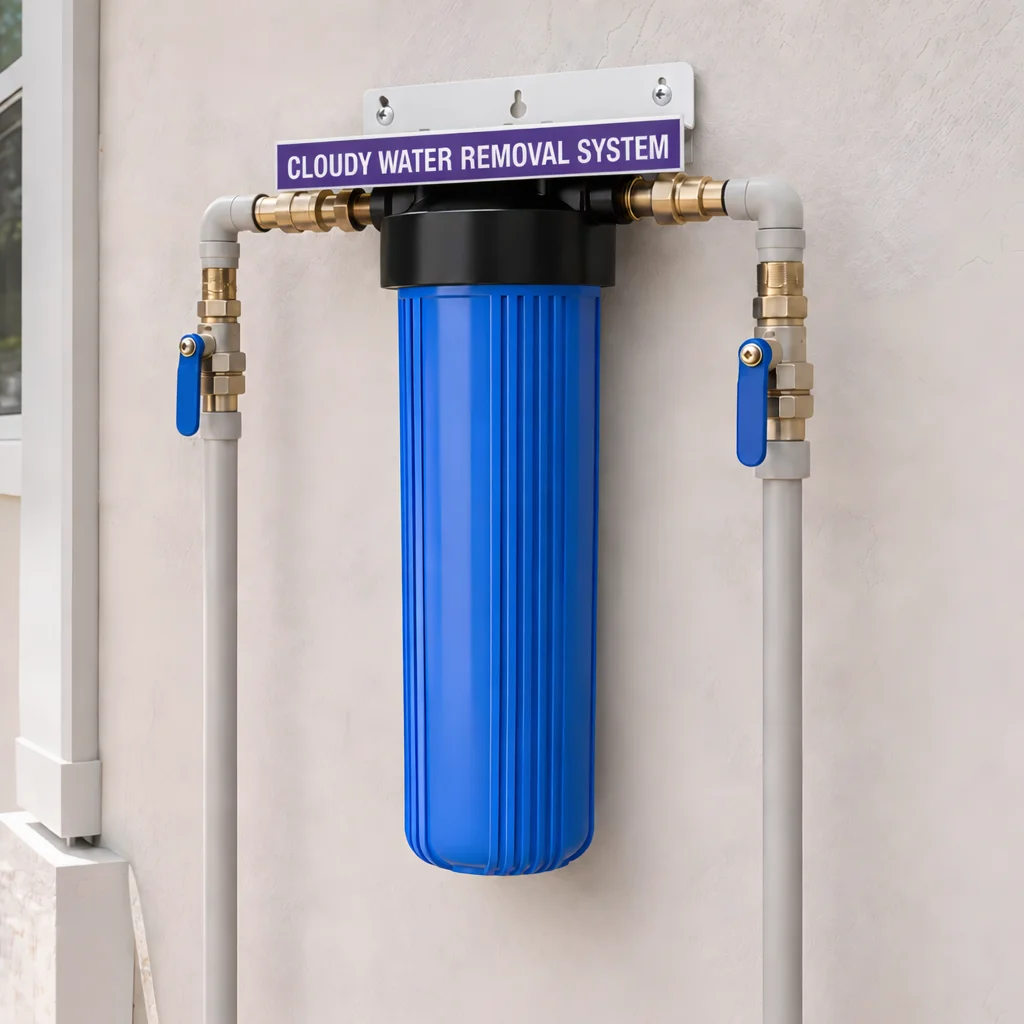
When particles are the cause, the single most effective home filter is a whole-house sediment filter built for turbidity removal. A pleated cartridge with high surface area captures fine silt and grit before water reaches showers, faucets and appliances, and installed at the main line it protects every tap in your Fort Pierce South house. This kind of whole-home filtration also reduces debris that can accelerate scale buildup in hard groundwater systems common on the Treasure Coast.
Getting reliable cloudiness removal means picking the right micron rating so you catch the particles without choking water pressure. Many homeowners pair a fine sediment stage that removes very small particles with a larger pleated cartridge for longer life and steady flow — a good approach for Fort Pierce South residences where hard, groundwater-based supplies can produce scale and occasional turbidity spikes. Change cartridges on schedule to avoid clogging and keep the system performing well when local maintenance or heavy use stirs up sediment.
 772-290-5223
 info@bestwaterheater.com

