 Phone: 561-300-5075
 info@bestwaterheater.com
Phone: 561-300-5075
info@bestwaterheater.com
info@bestwaterheater.com
Phone: 561-300-5075
info@bestwaterheater.com
 Phone: 561-300-5075
info@bestwaterheater.com
Phone: 561-300-5075
info@bestwaterheater.com

Including filter system and high-performance Cloudiness filter.



Cloudiness in your tap water can make a glass look cloudy or milky even when it’s otherwise usable. Often called turbidity, this appearance comes from tiny suspended particles—sand, silt, clay or other sediment—or sometimes from microbubbles that dissipate if the water sits. In Gulf Stream and nearby Palm Beach County, pressure changes from line work or local plumbing disturbances can stir up debris that causes this hazy look.
Besides being unattractive, cloudy water can leave films on fixtures, make ice and cooking water look less clear, and cause fine gritty residue in appliances—especially in hard-water areas like Gulf Stream where mineral scale already affects plumbing. Turbidity can also increase when corrosion or scale flakes off inside pipes, producing rust-colored or gray particles. For some households the issue is intermittent with seasonal shifts or heavy system use; for others it’s a daily nuisance. Figuring out whether the cloudiness is air or sediment is the first step toward the right solution.
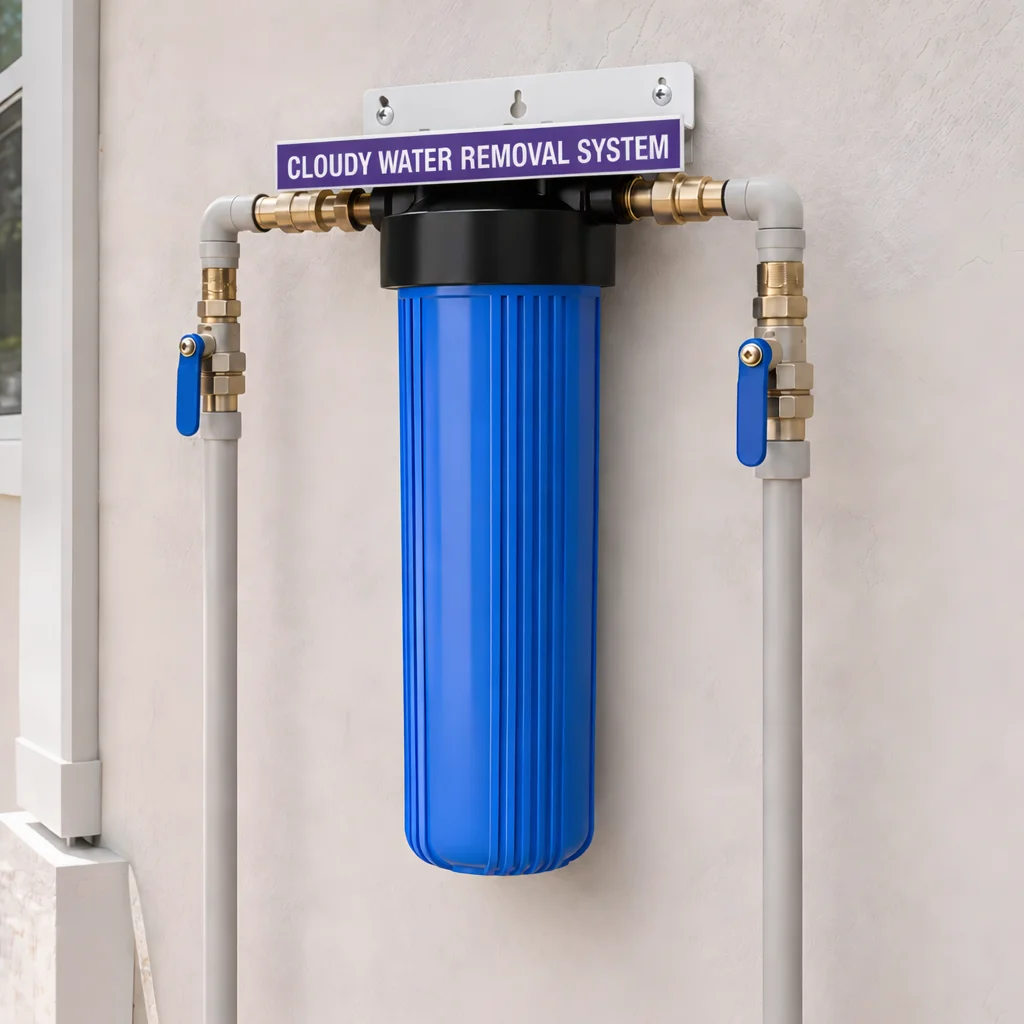
When particles are the main cause, a whole-house sediment filter is the single most effective filter type to address turbidity. A pleated cartridge with a high surface area captures silt and grit before water reaches showers, faucets, and appliances, and installing it at the main line protects every tap in your Gulf Stream home. This pre-filtration also reduces wear on downstream equipment by trapping debris early.
Reliable removal comes down to picking the right micron rating so you catch the particles you’re seeing without sacrificing water pressure. Many Gulf Stream homeowners find success with a fine sediment stage that removes small particles while using a larger pleated cartridge for longer service life. Because turbidity can spike after maintenance or heavy neighborhood use, a whole-house sediment filter gives steady protection; changing cartridges on schedule prevents trapped sediment from re-entering the system.
 561-300-5075
 info@bestwaterheater.com

