 Phone: 407-214-2646
 info@bestwaterheater.com
Phone: 407-214-2646
info@bestwaterheater.com
info@bestwaterheater.com
Phone: 407-214-2646
info@bestwaterheater.com
 Phone: 407-214-2646
info@bestwaterheater.com
Phone: 407-214-2646
info@bestwaterheater.com

Including filter system and high-performance Cloudiness filter.



Cloudiness in household water can make faucets and glasses look milky even when the water is otherwise usable. Known as turbidity, this cloudy appearance usually comes from tiny suspended particles such as sand, silt, clay or stirred-up debris after line work or pressure shifts. In some cases air microbubbles cause a brief foggy look that clears after a few minutes, but if the haze persists it’s more likely caused by fine particulate matter.
Beyond aesthetics, cloudy water can leave residue on fixtures, make ice and drinks look cloudy, and reduce clarity while cooking. Turbidity can rise when corrosion or mineral scale—common with the hard groundwater in St. Johns County—breaks loose inside plumbing, introducing fine rust-colored or gray particles. Some Saint Augustine South households see the issue fluctuate with seasons, humidity, or heavy water use; others experience it more frequently. Identifying whether the cloudiness is from sediment or trapped air is the best first step toward the right fix.
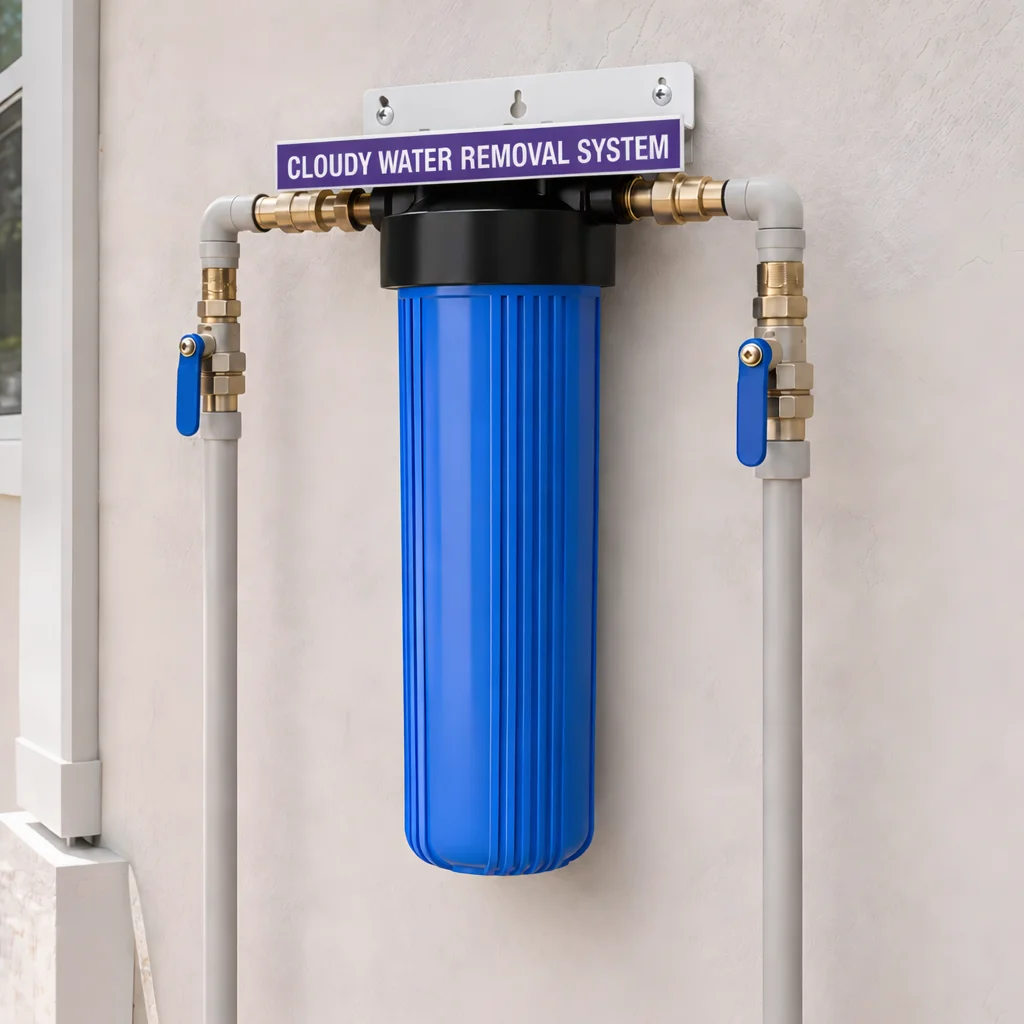
For particle-driven cloudiness, a whole-house sediment filter is the single most effective filter type to address turbidity. A pleated cartridge with a high surface area and fine filtration captures silt and grit before water reaches showers, faucets, and appliances. Installed on the main line into your Saint Augustine South home, this setup treats all incoming water and helps protect downstream equipment from scale and debris build-up.
Removing cloudiness reliably depends on choosing the right micron rating so particles are captured without hurting flow. Many homeowners pair a fine sediment stage that traps very small particles with a larger pleated cartridge for extended life—especially useful here where hard municipal groundwater and coastal humidity can contribute to scale and occasional spikes in turbidity. Regular cartridge changes keep filtration effective and prevent trapped sediment from accumulating.
 407-214-2646
 info@bestwaterheater.com

