 Phone: 561-300-5075
 info@bestwaterheater.com
Phone: 561-300-5075
info@bestwaterheater.com
info@bestwaterheater.com
Phone: 561-300-5075
info@bestwaterheater.com
 Phone: 561-300-5075
info@bestwaterheater.com
Phone: 561-300-5075
info@bestwaterheater.com

Including filter system and high-performance Cylindrospermopsin filter.



Cylindrospermopsin is a toxin made by certain freshwater cyanobacteria, commonly referred to as blue‑green algae. When sunlight and warm, nutrient‑rich conditions fuel algal growth, these organisms can release cyanotoxins into source water that may make their way to the tap. Because this contaminant doesn’t always change taste, smell, or appearance, many Tropic Isle homeowners choose treatments that target specific trace contaminants in addition to improving how their water looks and feels.
Cylindrospermopsin problems often follow algal blooms, so concentrations can rise and fall with seasons or storm events in Palm Beach County. Boiling is a common question, but heat won’t reliably remove this toxin and can sometimes complicate matters. For Tropic Isle families, the safer option is whole‑house filtration that treats every drop entering your plumbing so water used for cooking, bathing and brushing teeth receives consistent protection.
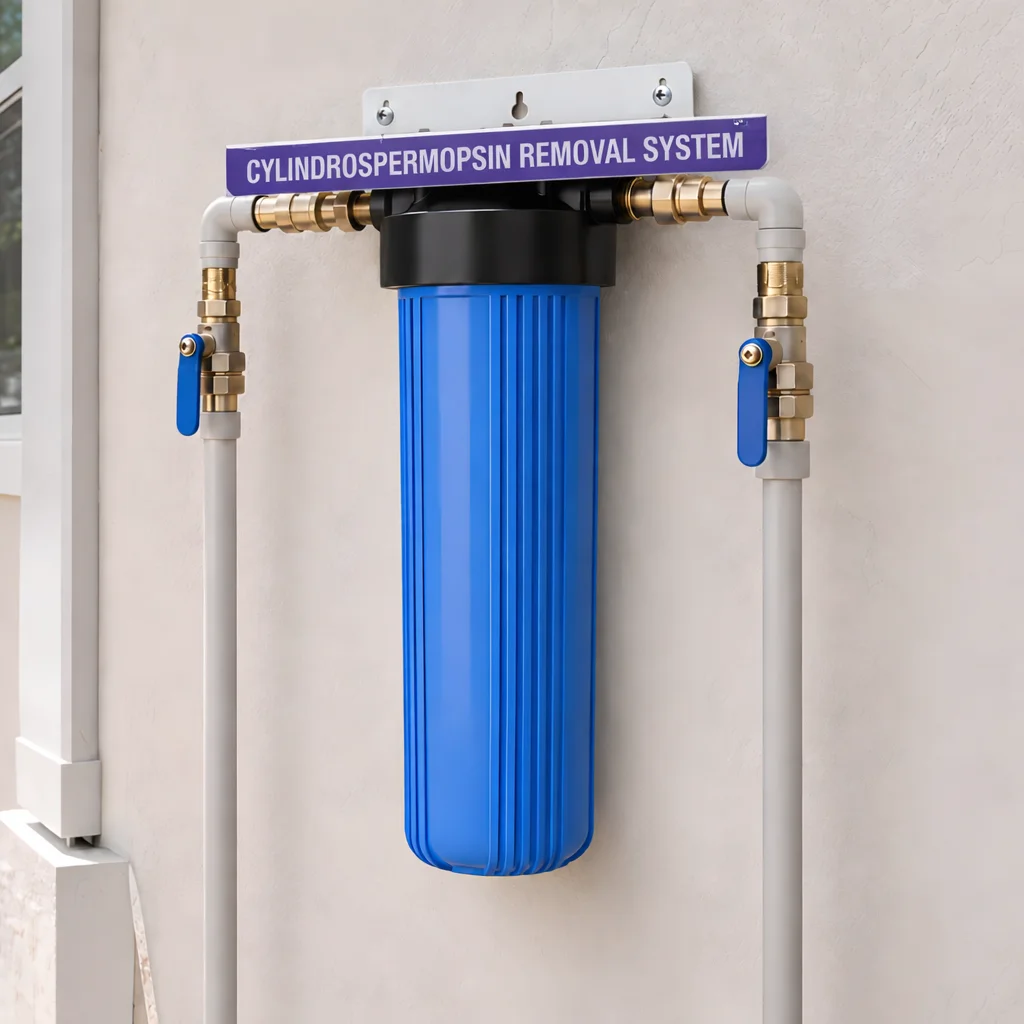
To reduce cylindrospermopsin at the point of entry, a whole‑house activated carbon system is generally the most effective single‑filter solution. High‑quality carbon media adsorbs many organic contaminants, including certain cyanotoxins and common taste-and-odor compounds, and when sized for whole‑house flow it treats every faucet without changing how you use your Delray Beach area home. Success depends on selecting the appropriate carbon type and ensuring sufficient contact time for your household’s demand.
Mr. Pure Water usually recommends a correctly sized whole‑house carbon tank over small cartridges when lowering trace contaminants like cylindrospermopsin is the goal. Larger media beds provide the longer contact time adsorption needs, and in hard municipal water typical of Tropic Isle they’re less prone to rapid restriction. Installing a sediment pre‑filter helps protect the carbon from clogging and channeling, and with proper design and routine maintenance a carbon whole‑house system delivers steady treatment across every faucet without multiple under‑sink units.
 561-300-5075
 info@bestwaterheater.com

