 Phone: 407-214-2646
 info@bestwaterheater.com
Phone: 407-214-2646
info@bestwaterheater.com
info@bestwaterheater.com
Phone: 407-214-2646
info@bestwaterheater.com
 Phone: 407-214-2646
info@bestwaterheater.com
Phone: 407-214-2646
info@bestwaterheater.com

Including filter system and high-performance DDT filter.


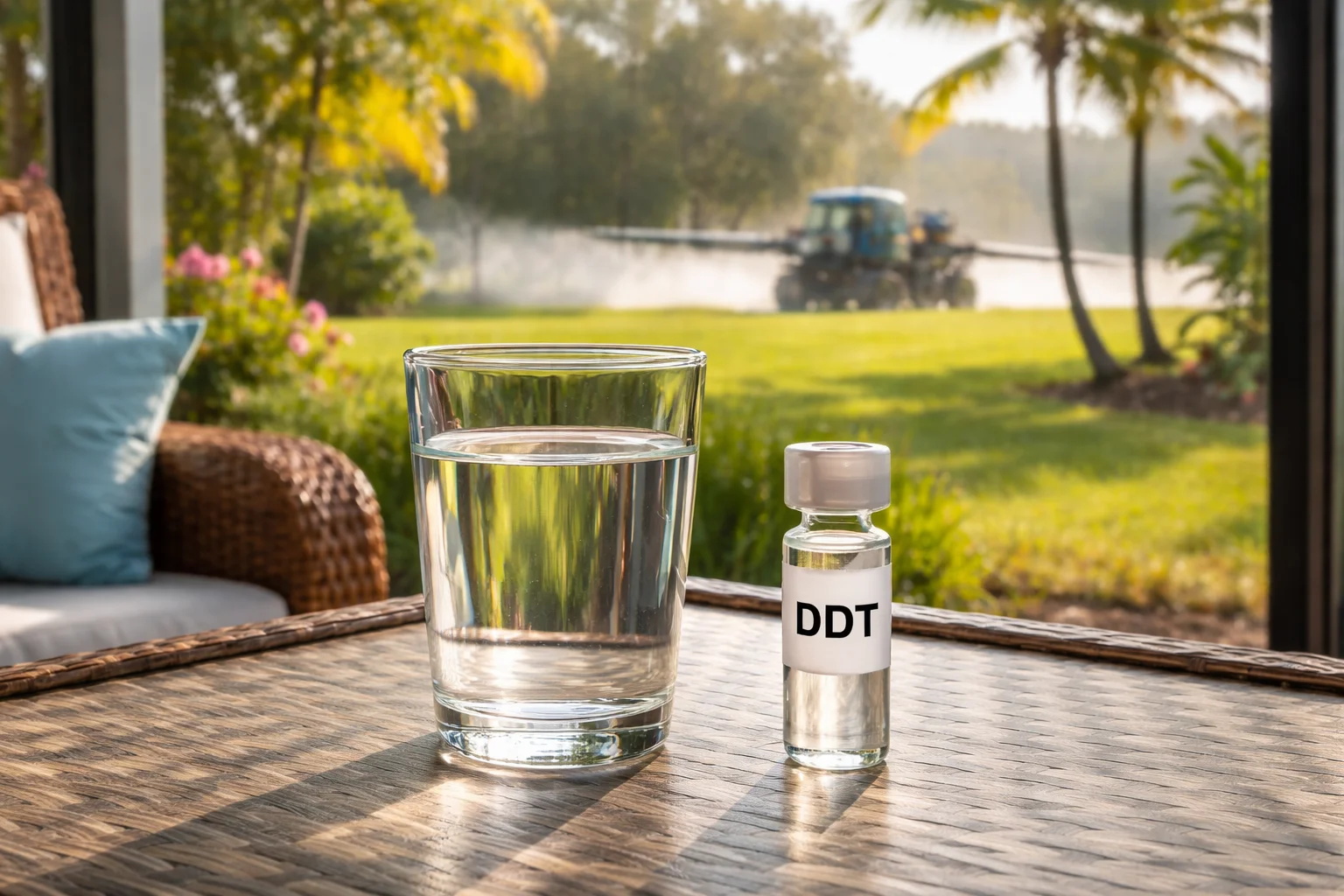
DDT is a persistent pesticide that can remain in the environment long after its use has stopped. Because it doesn’t break down quickly, tiny amounts can enter water supplies through runoff or disturbed soils and sediments, and you often won’t detect it by taste or smell. If you live in Belle Isle or nearby Orange County neighborhoods and worry about legacy contaminants, a focused filtration plan can help reduce potential DDT exposure at every tap.
Clear water isn’t always contaminant-free, and DDT is commonly discussed among long-lasting organic chemicals that cling to particles or bind with natural organic matter. Those behaviors influence how it travels in water and the treatment approaches that work best. Testing is the only way to know what’s present—especially if your home is on a private well or you want extra assurance beyond standard municipal treatment—while whole-house filtration treats water before it reaches showers, the kitchen, and laundry in Belle Isle homes.
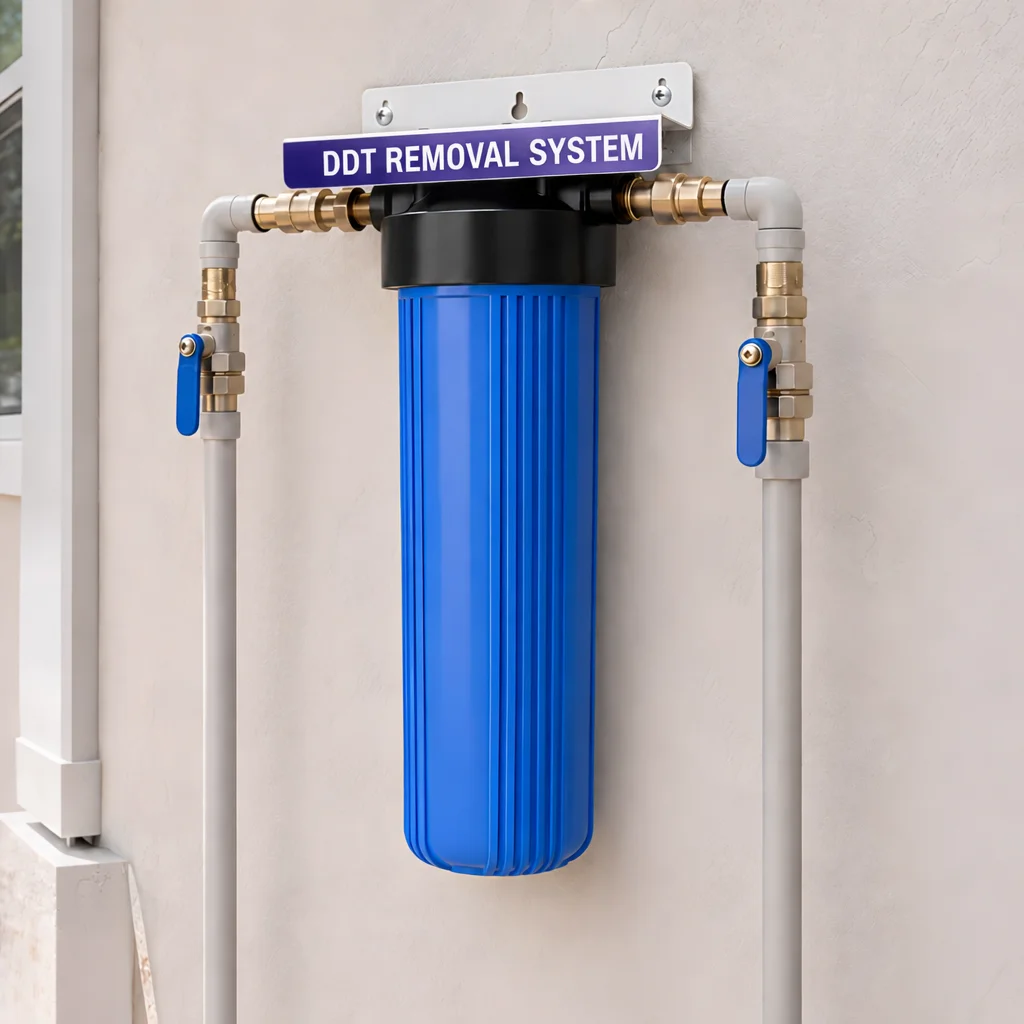
To reduce DDT, the most effective single-filter whole-house option is an activated carbon system. Because DDT is hydrophobic, it adsorbs well onto high-quality carbon media, and a correctly sized carbon tank can protect all household water—cooking, bathing, and washing—not just drinking water. In Belle Isle’s humid subtropical climate and with typically hard Central Florida water, a continuous whole-house carbon filter provides broad protection without adding chemicals.
Not all carbon filters perform the same, so media type, contact time, and proper sizing matter for DDT reduction. Granular activated carbon (GAC) with adequate media volume and slower flow rates gives water enough contact time for adsorption, and replacing the media on schedule keeps the system working well. Mr. Pure Water can assess your Belle Isle home—considering local water hardness and household flow—to recommend and size a whole-house carbon system that reduces DDT as part of daily water use.
 407-214-2646
 info@bestwaterheater.com

