 Phone: 321-400-9302
 info@bestwaterheater.com
Phone: 321-400-9302
info@bestwaterheater.com
info@bestwaterheater.com
Phone: 321-400-9302
info@bestwaterheater.com
 Phone: 321-400-9302
info@bestwaterheater.com
Phone: 321-400-9302
info@bestwaterheater.com

Including filter system and high-performance DDT filter.


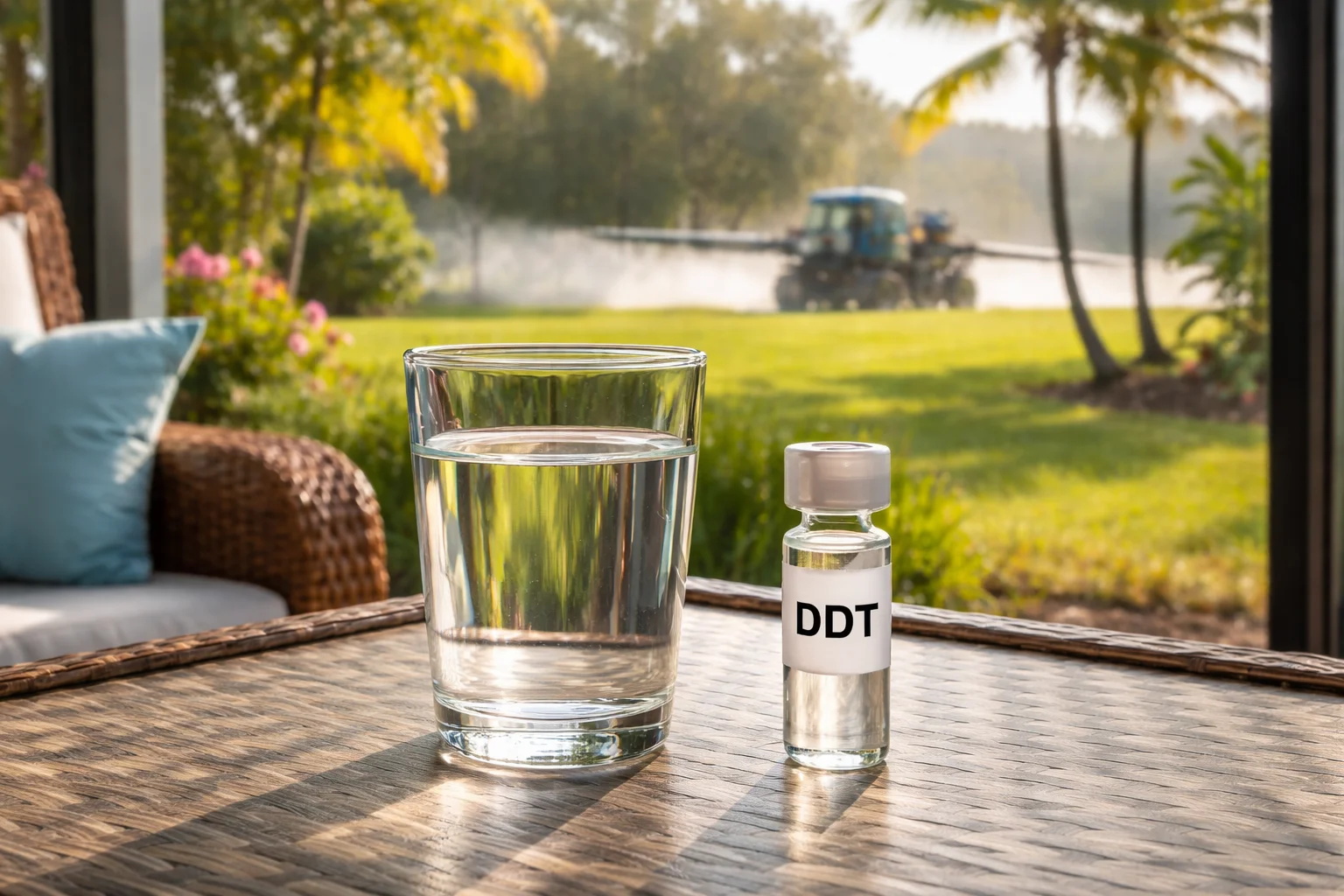
DDT is a legacy pesticide that can persist in the environment long after its use has stopped. Because it breaks down slowly, tiny amounts can occasionally enter water sources from runoff or disturbed soils and sediments, and you usually can’t taste or smell it. If you live in North Merritt Island and use municipal or private well water, a targeted filtration strategy can help reduce potential exposure at every tap in your Brevard County home.
Clear water doesn’t always mean the absence of trace contaminants; DDT is one of those long-lasting organic compounds that can bind to particles or natural organic matter, changing how it moves and how it should be treated. That’s why testing is important—especially for North Merritt Island homes on private wells or anyone seeking extra assurance beyond basic treatment. A whole-house system treats water before it reaches your showers, kitchen, and appliances, which is useful in our humid subtropical climate where hard water can also cause scale buildup in plumbing and water heaters.
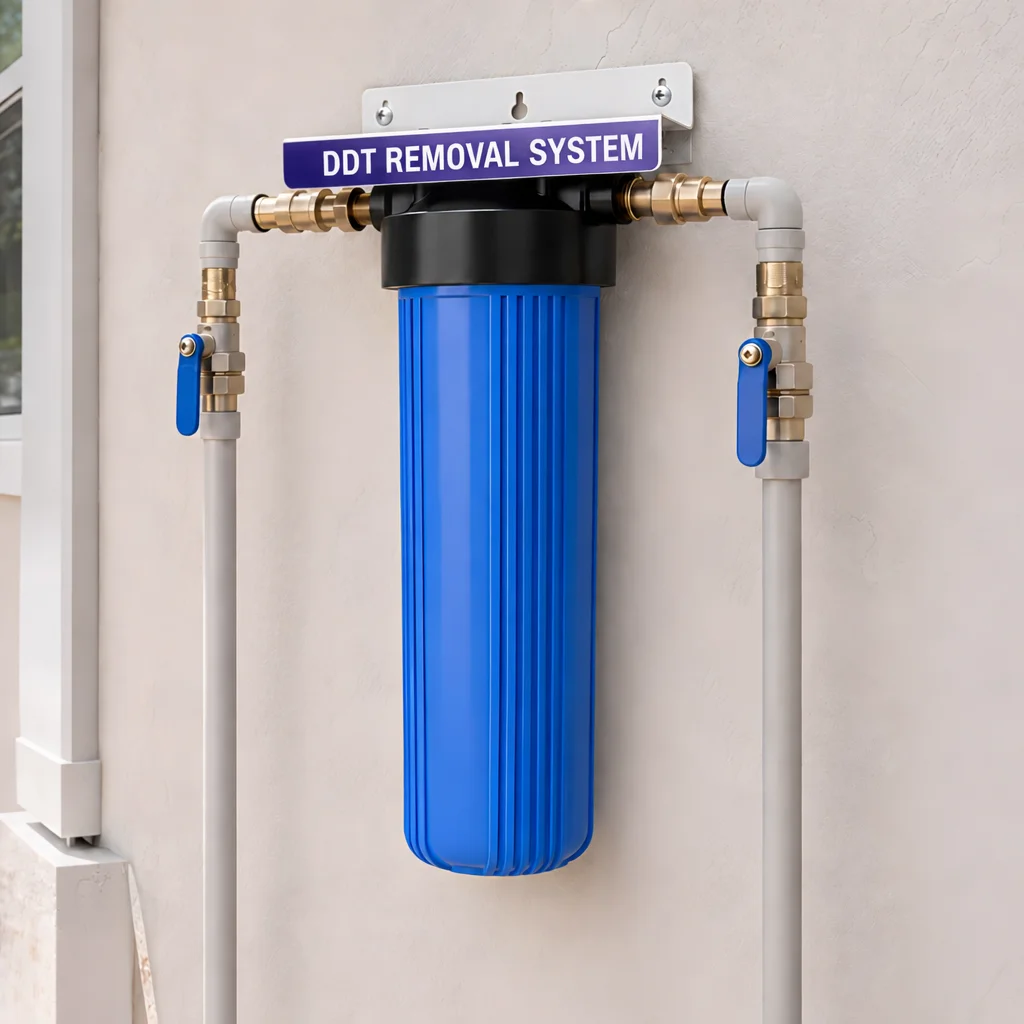
To reduce DDT, the most effective single-filter whole-house option is an activated carbon system. DDT is hydrophobic and readily adsorbs onto high-quality carbon media, so a properly sized carbon tank can protect every faucet in your North Merritt Island residence—helping with cooking, bathing, and laundry rather than only treating drinking water. These systems operate continuously without adding chemicals to the supply.
Not all carbon filters perform the same, so for DDT reduction you want granular activated carbon (GAC) with enough media volume and contact time. Proper sizing to match your household flow prevents water from passing too quickly to be treated effectively, and routine media replacement keeps the system working as expected. Mr. Pure Water can assess North Merritt Island homes—whether in South Merritt Estates, Newfound Harbor, Villa de Palmas, or elsewhere on the island—and recommend a whole-house carbon setup tailored to your water demands and hardness.
 321-400-9302
 info@bestwaterheater.com

