 Phone: 407-214-2646
 info@bestwaterheater.com
Phone: 407-214-2646
info@bestwaterheater.com
info@bestwaterheater.com
Phone: 407-214-2646
info@bestwaterheater.com
 Phone: 407-214-2646
info@bestwaterheater.com
Phone: 407-214-2646
info@bestwaterheater.com

Including filter system and high-performance E. coli filter.


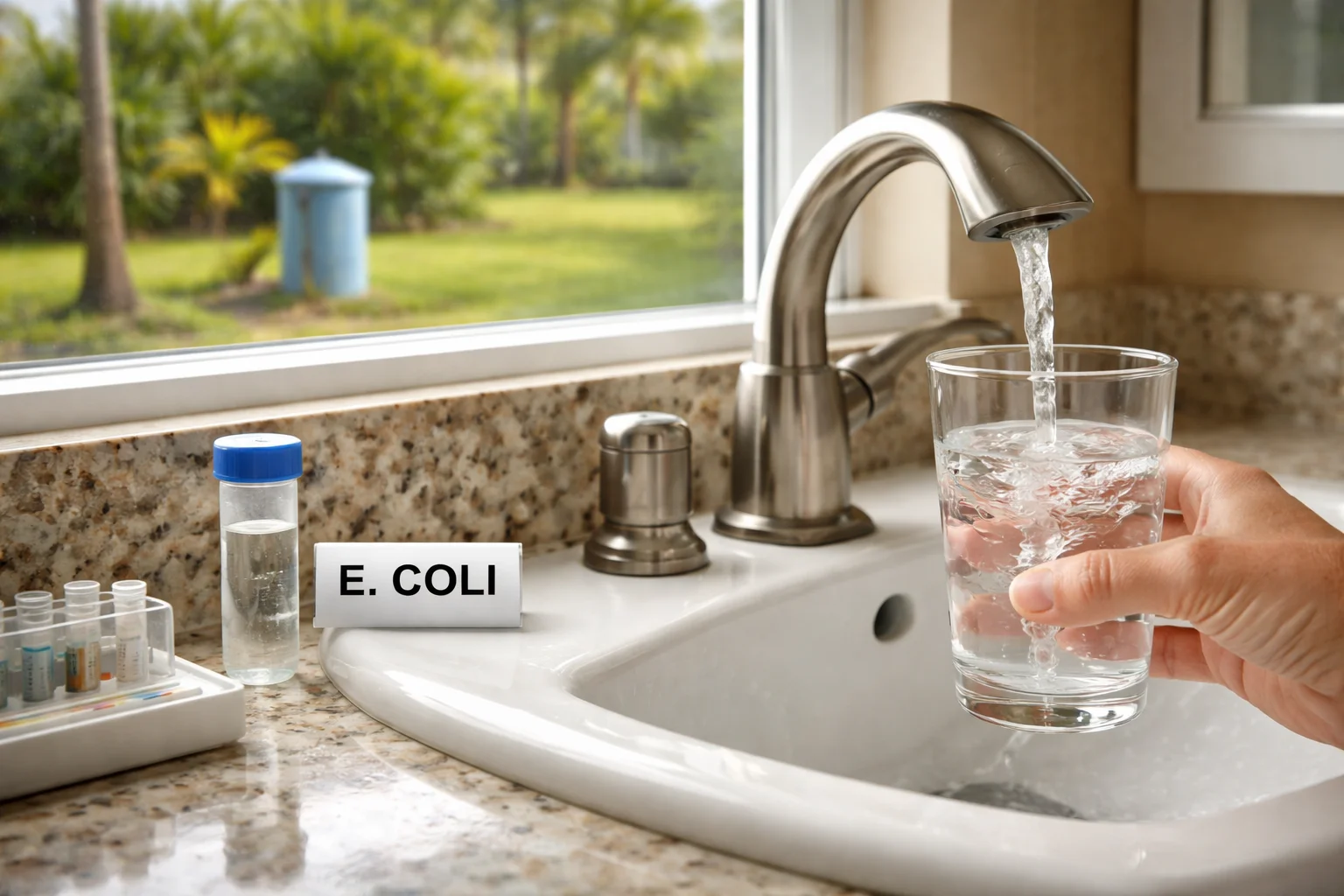
Finding E. coli in household water signals that bacteria may be entering the system somewhere between the source and your taps. In Goldenrod and surrounding Seminole County neighborhoods, contamination can come from damaged distribution lines, plumbing cross-connections, or vulnerable private wells — and hard municipal groundwater here can hide issues until they’re tested. Even crystal-clear water can carry microbes, so many residents only discover a problem after a lab result, advisory, or repeated taste and odor complaints.
You may hear the name E. coli O157, a strain often mentioned because it can cause more serious illness; whether it’s that strain or general E. coli, the aim is the same: stop bacteria from reaching the water you drink, cook with, and bathe in. Short-term measures like boiling work for a single faucet, but they don’t protect showers, washing machines, or outdoor spigots. For Goldenrod homes — from those near Greenwood Lakes Park to properties closer to Red Bug Lake Park — a whole-house solution keeps treated water consistent throughout the entire plumbing system.
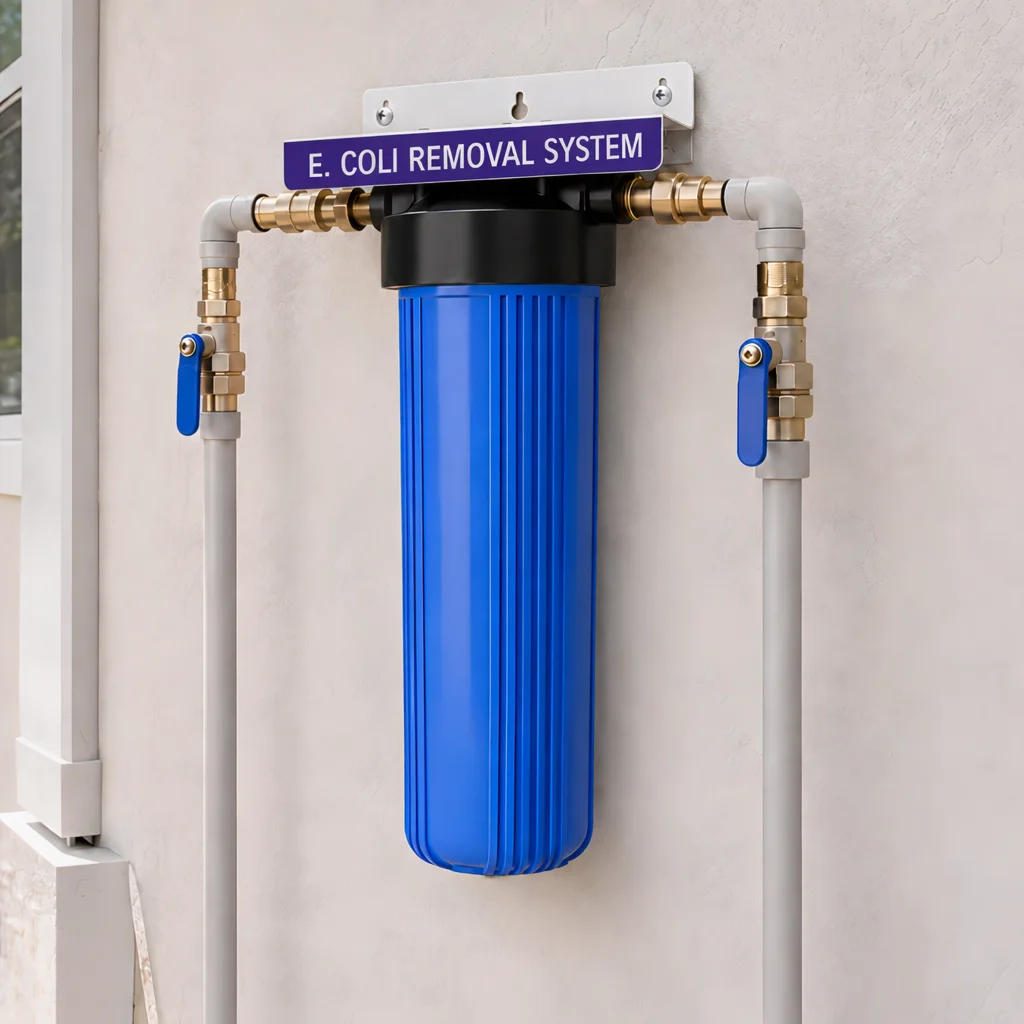
The most effective single-filter option for treating E. coli where water enters a home is a whole-house ultraviolet (UV) disinfection system. Installed at the main line, a UV unit exposes flowing water to germicidal light that inactivates microorganisms without adding chemicals. Because it protects every outlet — kitchen, baths, laundry and outdoor hoses — UV is a practical choice for Goldenrod residents who want bacteria protection across the whole property rather than at one tap.
UV systems perform best when water is free of cloudiness, so installers often add a sediment prefilter to remove particles that could shield microbes — an important consideration with Goldenrod’s hard municipal groundwater and potential for mineral or scale carryover. When sized for your home’s peak flow and maintained with periodic lamp and sleeve service, whole-house UV provides continuous bacterial control without imparting a disinfectant taste, making it a common first choice when the priority is protecting against E. coli and similar bacteria.
 407-214-2646
 info@bestwaterheater.com

