 Phone: 850-772-1365
 info@bestwaterheater.com
Phone: 850-772-1365
info@bestwaterheater.com
info@bestwaterheater.com
Phone: 850-772-1365
info@bestwaterheater.com
 Phone: 850-772-1365
info@bestwaterheater.com
Phone: 850-772-1365
info@bestwaterheater.com

Including filter system and high-performance E. coli filter.


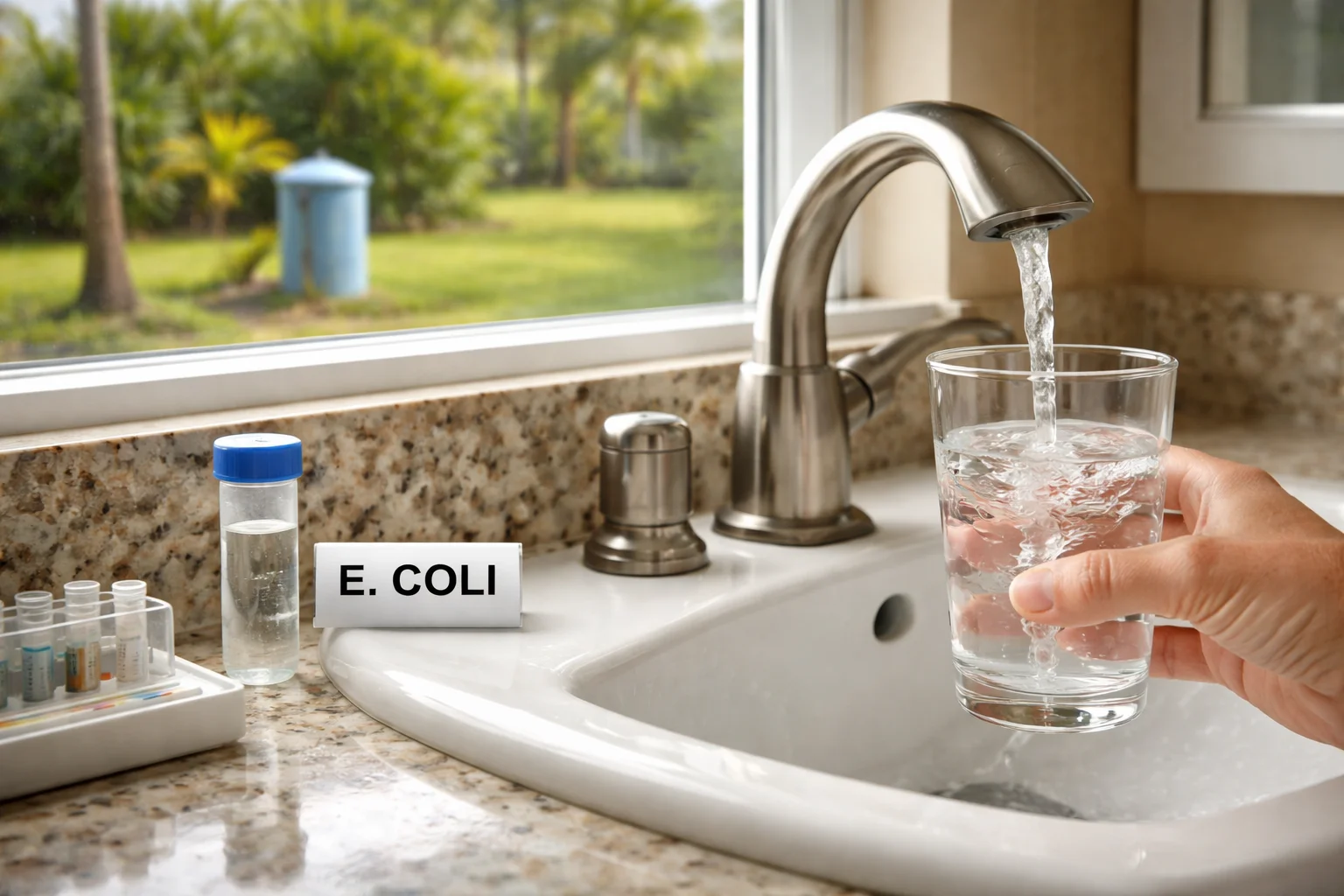
Finding E. coli in household water is a warning that microbes may be entering the supply somewhere between source and tap. In Prosperity, that can happen for the same reasons homeowners everywhere see contamination — breaks in distribution lines, plumbing cross-connections, or vulnerable private wells that allow human or animal waste to reach the water. Bacteria are often invisible, so water that looks clear can still be unsafe; many Prosperity residents only discover a problem after testing, receiving an advisory, or noticing repeated water-quality issues.
You may also hear about E. coli O157, a strain singled out because it can cause more serious illness. Whether the concern is general E. coli or E. coli O157, the household goal remains the same: prevent bacteria from getting into the water you drink, cook with, and bathe in. Short-term steps like boiling water can treat a single faucet, but they don’t protect every outlet in a Prosperity home. A whole-house solution delivers consistent treated water throughout the house, avoiding the patchwork protection of point fixes.
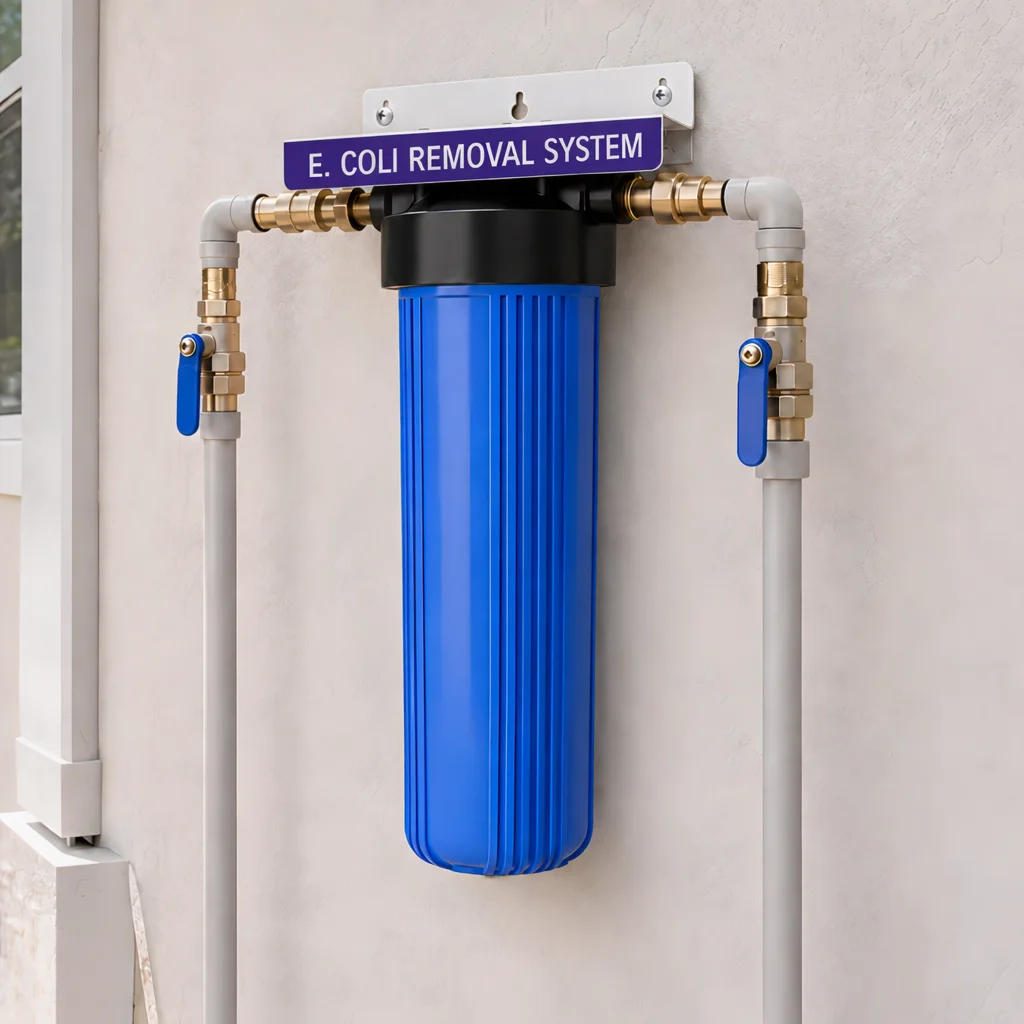
For treating E. coli where water enters a Prosperity residence, the most effective single-filter option is whole-house ultraviolet (UV) disinfection. A UV system is installed inline and exposes passing water to UV light, inactivating microorganisms without chemicals. Because it works continuously, a properly sized UV unit can protect kitchen taps, showers, laundry, and other outlets at once — a good match when bacterial contamination, rather than taste or hard-water minerals, is the main concern.
UV disinfection performs best when water is clear enough for light to reach microbes, so it’s commonly paired with a sediment prefilter to remove cloudiness. With the correct flow-rate sizing for your Prosperity home and routine lamp and sleeve maintenance, a UV system can provide ongoing protection against E. coli and similar bacteria without adding a disinfectant taste. If you want whole-house filtration that directly targets bacterial risk, UV is typically the first technology we recommend.
 850-772-1365
 info@bestwaterheater.com

