 Phone: 407-214-2646
 info@bestwaterheater.com
Phone: 407-214-2646
info@bestwaterheater.com
info@bestwaterheater.com
Phone: 407-214-2646
info@bestwaterheater.com
 Phone: 407-214-2646
info@bestwaterheater.com
Phone: 407-214-2646
info@bestwaterheater.com

Including filter system and high-performance Enterococci filter.


Enterococci are bacteria that can appear in water when sources are affected by environmental contamination. Because they’re microscopic, you won’t taste, smell, or see them — your water can look clear yet still be a concern. These bacteria are often used as indicators of possible fecal contamination, so they’re important to consider for household water safety. In Holopaw and nearby rural pockets of Osceola County where many homes rely on groundwater or private wells, regular testing is a practical step to know what’s in your water.
As a homeowner, you want safe water for drinking, cooking, and bathing. Enterococci can get into a home’s supply through surface water intrusion, well flooding, faulty well caps, or plumbing situations that allow contaminants in. Even short-lived events can leave you unsure about using every tap. Treating water at the point where it enters your Holopaw house gives you protection for showers, appliances, and all faucets so you can feel confident about daily water use.
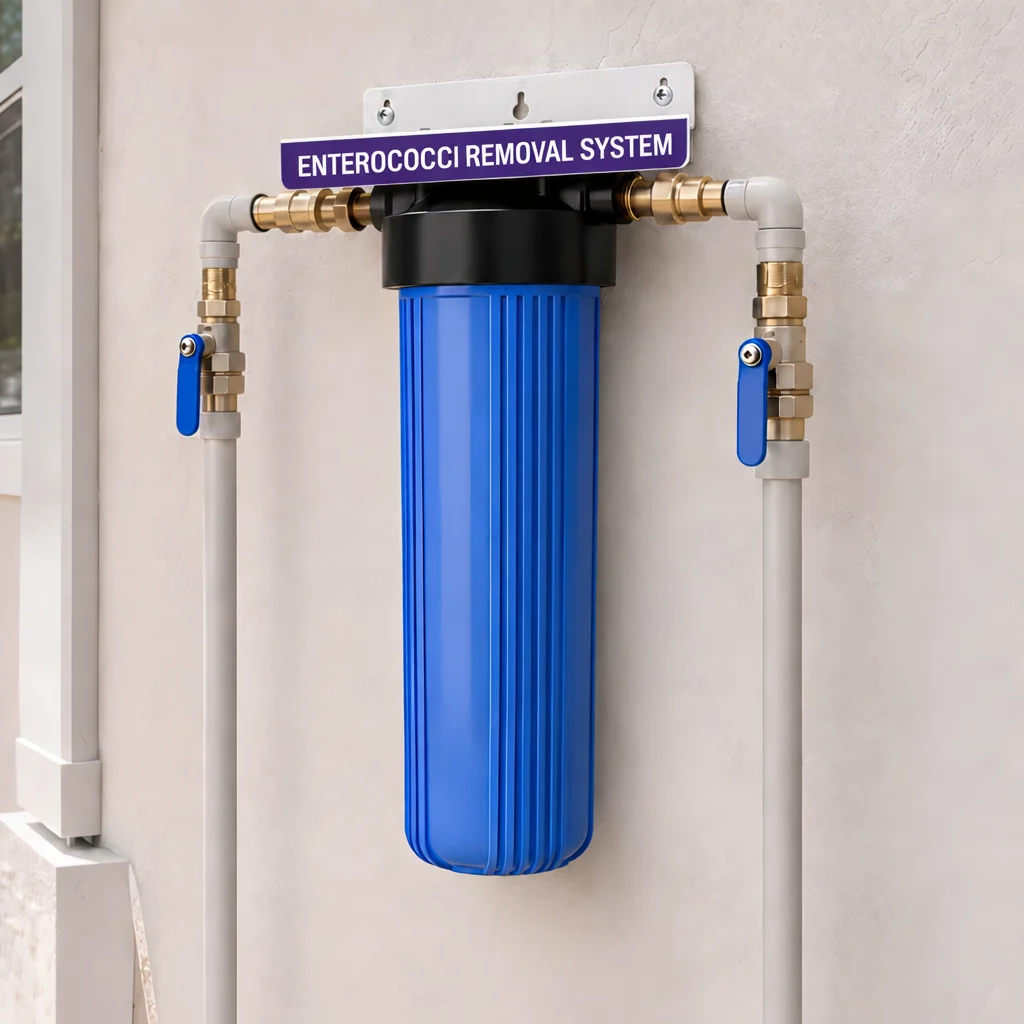
The most effective single filter for addressing enterococci is a whole-house ultraviolet (UV) disinfection system installed on the main service line. UV doesn’t capture bacteria like a media filter; it inactivates microorganisms as water flows through the UV chamber, preventing them from reproducing. Because a point-of-entry UV unit treats all incoming water, it safeguards every fixture in your home rather than just one sink — a sensible whole-home option when bacterial contamination is the concern.
For UV to perform well, incoming water needs to be clear enough for light to penetrate, since sediment or turbidity can reduce effectiveness. Many Holopaw households — especially those dealing with moderate mineral content or occasional staining from well water — pair a sediment prefilter ahead of the UV unit. Proper sizing for your home’s flow rate plus routine lamp and sleeve maintenance keep disinfection consistent. With the right prefilter and installation, UV provides continuous, chemical-free protection against bacteria at the point of entry.
 407-214-2646
 info@bestwaterheater.com

