 Phone: 772-290-5223
 info@bestwaterheater.com
Phone: 772-290-5223
info@bestwaterheater.com
info@bestwaterheater.com
Phone: 772-290-5223
info@bestwaterheater.com
 Phone: 772-290-5223
info@bestwaterheater.com
Phone: 772-290-5223
info@bestwaterheater.com

Including filter system and high-performance Estradiol filter.



Estradiol is a natural hormone that can appear in water sources after passing through people, animals, and wastewater systems. Because it can be active at very low concentrations, many Rio homeowners prefer to minimize potential exposure where practical. It has no taste, smell, or color, so you wouldn’t detect it by sight or sampling your tap; proper laboratory testing is the only way to know if it’s present in your water.
For households in Rio, managing estradiol can be part of a broader plan to control what’s in your drinking and bathing water. Estradiol belongs to a group often called hormones or endocrine active compounds that may be present in trace amounts. Even when utility or well water meets standard measures, some families in our humid subtropical area choose added treatment—especially with coastal salt-air and corrosion considerations—to create consistent protection at every faucet.
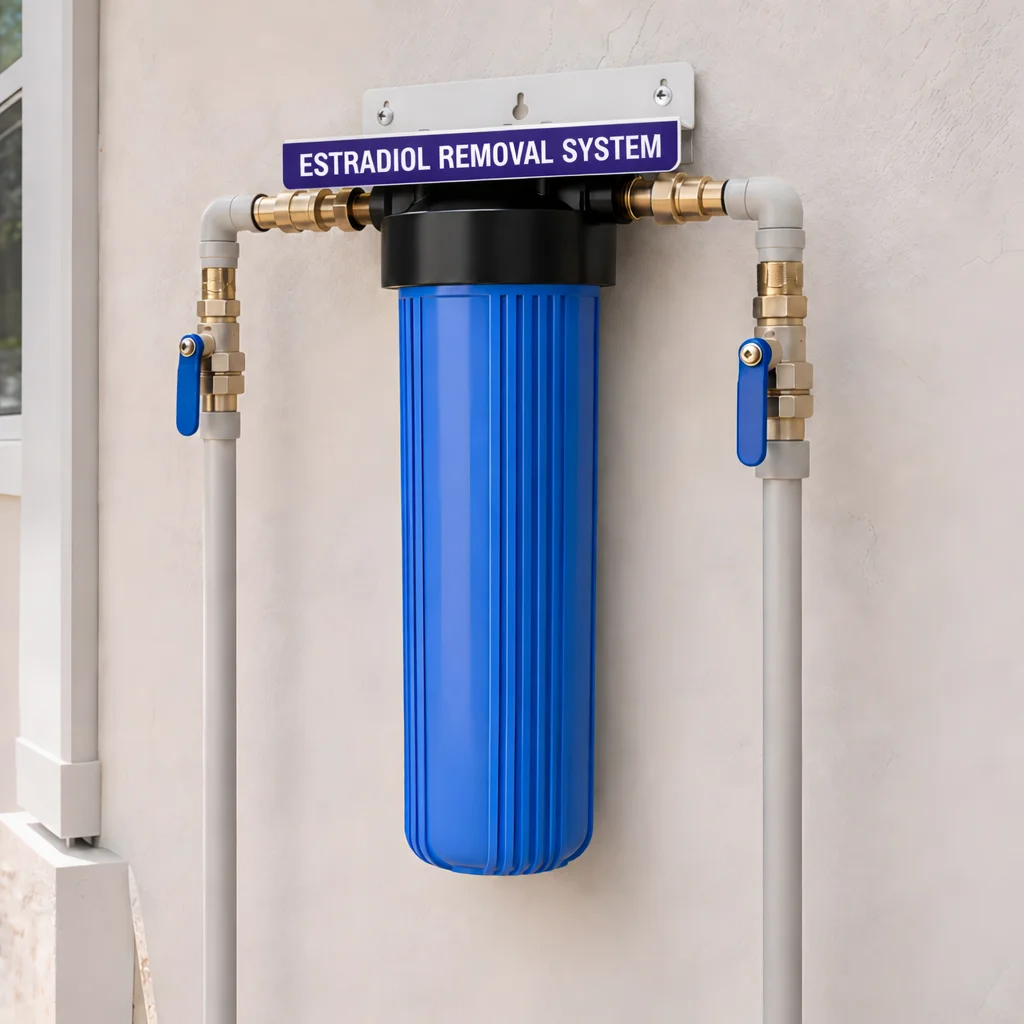
The most effective single-filter choice for reducing estradiol is a whole-house activated carbon system. Because estradiol is an organic compound, high-quality activated carbon removes it through adsorption as water passes through the media. Compared with basic sediment cartridges, a carbon system addresses a broader range of low-level organic contaminants and, when installed where water enters your Rio home, treats water used for showers, sinks, laundry and cooking.
To work well against estradiol, a whole-house carbon filter needs sufficient media volume and contact time—not just a small point-of-use cartridge. Systems using catalytic carbon or premium granular activated carbon are commonly chosen because they deliver stronger adsorption and wider chemical reduction. These media do require periodic replacement so they don’t become exhausted; Mr. Pure Water can help Rio homeowners select a whole-house carbon system sized for your household flow and local water conditions, including salt-air and corrosion considerations.
 772-290-5223
 info@bestwaterheater.com

