 Phone: 850-772-1365
 info@bestwaterheater.com
Phone: 850-772-1365
info@bestwaterheater.com
info@bestwaterheater.com
Phone: 850-772-1365
info@bestwaterheater.com
 Phone: 850-772-1365
info@bestwaterheater.com
Phone: 850-772-1365
info@bestwaterheater.com

Including filter system and high-performance Foul Odor filter.



A persistent foul odor in your water can make simple chores unpleasant — from filling a glass to showering. Homeowners often describe the smell as rotten egg, musty, or chemical-like, and it may appear in hot water, cold water, or both. In Argyle, the scent might come and go with changes in temperature or when water sits idle in pipes. While an odor alone doesn’t always indicate a health risk, it’s a clear sign your household plumbing or water supply needs a closer look.
Odors commonly stem from naturally occurring sulfur compounds, reactions with disinfectants, or organic matter that encourages bacterial growth inside plumbing. Water heaters can intensify smells because warm water releases gases more readily, and odors may be worse where sediment or stagnant sections of pipe exist. If you notice foul odor in Argyle, start by checking whether it affects the whole house or only one faucet — that distinction helps pinpoint the likely cause and the right remedy.
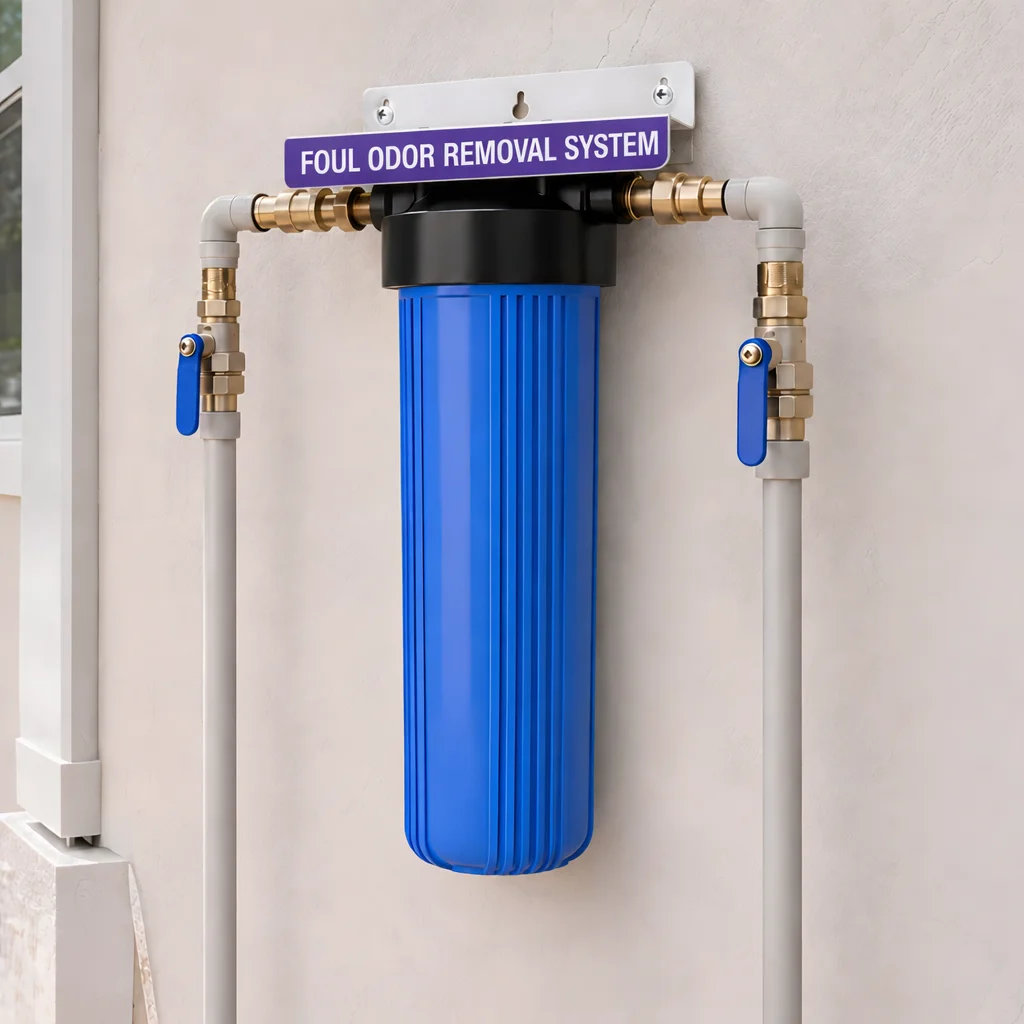
For most homeowners the best whole-house solution for foul odor is a backwashing catalytic carbon system. Catalytic carbon adsorbs odor-causing compounds more effectively than standard carbon, particularly when smells are related to chlorine byproducts or organic contaminants. The backwashing feature keeps the media bed clean to prevent channeling and sustain performance. Installed at the point of entry, this approach treats water for the entire Argyle home, not just a single tap.
A whole-house catalytic carbon filter can noticeably reduce odor in showers, laundry, and drinking water so your Argyle home feels fresher throughout. It’s a convenient single-system option when the smell is widespread instead of limited to one fixture. For sulfur-like odors, catalytic carbon is often combined with appropriate pre-treatment based on your water, while the carbon tank remains the primary odor-control component. Mr. Pure Water can assess your situation in Argyle and recommend the right catalytic carbon setup to address the problem at its source.
 850-772-1365
 info@bestwaterheater.com

