 Phone: 772-290-5223
 info@bestwaterheater.com
Phone: 772-290-5223
info@bestwaterheater.com
info@bestwaterheater.com
Phone: 772-290-5223
info@bestwaterheater.com
 Phone: 772-290-5223
info@bestwaterheater.com
Phone: 772-290-5223
info@bestwaterheater.com

Including filter system and high-performance Foul Odor filter.



A persistent foul odor in your water can make simple things—pouring a glass, washing dishes, or showering—unpleasant. Homeowners often describe the smell as rotten egg, musty, or chemical-like, and it may appear in hot water, cold water, or both. In Port St. Lucie the odor might vary by season or grow stronger after water sits in pipes or a water heater; while a smell doesn’t always signal a health hazard, it does mean something in your plumbing or water chemistry should be checked.
Typical causes include naturally occurring sulfur compounds, reactions with disinfectants, and organic material that encourages bacteria in plumbing. Water heaters can sometimes intensify smells as warm water releases gases more readily. Sediment, stagnant stretches of pipe, or shifts in water chemistry can also make odors more noticeable. In Port St. Lucie and elsewhere in St. Lucie County, determining whether the smell is throughout the house or limited to one faucet is an important step toward the right solution.
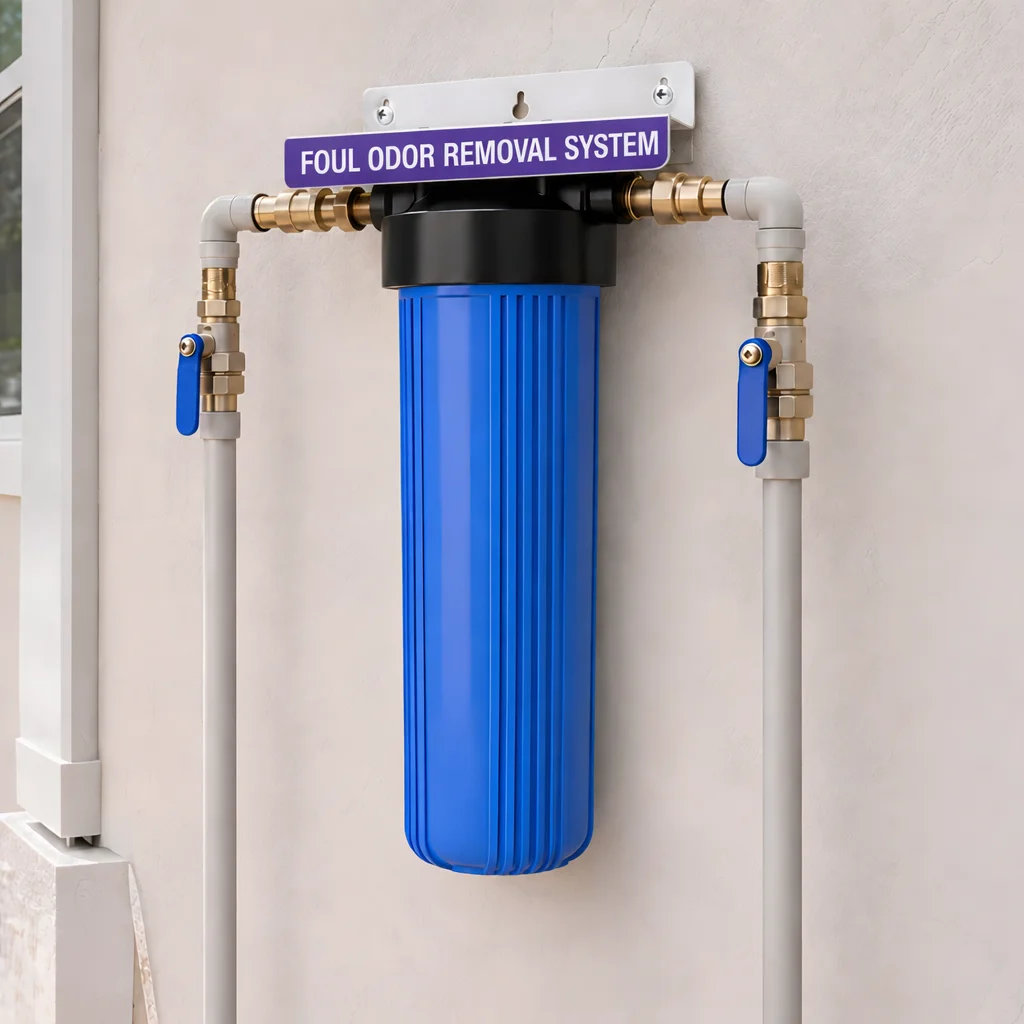
For most homeowners the most effective whole-house option for foul odor is a backwashing catalytic carbon system. Catalytic carbon adsorbs odor-causing compounds more effectively than standard carbon, particularly for chlorine-related byproducts and organic compounds that create musty or chemical smells. The backwashing feature keeps the media bed clean to prevent channeling and preserve performance, and because the system treats water at the point of entry it helps reduce odors at every tap in Port St. Lucie homes.
A whole-house catalytic carbon filter can noticeably reduce odors in showers, laundry, and drinking water, making life in neighborhoods like St. Lucie West, Tradition, or Port St. Lucie Gardens more comfortable. When smells are sulfur-like, catalytic carbon is often used with the right pre-treatment based on your water chemistry, but the carbon tank remains the central odor-control component. Mr. Pure Water in Port St. Lucie can assess your home—especially with South Florida’s hard water and potential mineral buildup—and recommend the catalytic carbon system that fits your needs.
 772-290-5223
 info@bestwaterheater.com

