 Phone: 305-404-8790
 info@bestwaterheater.com
Phone: 305-404-8790
info@bestwaterheater.com
info@bestwaterheater.com
Phone: 305-404-8790
info@bestwaterheater.com
 Phone: 305-404-8790
info@bestwaterheater.com
Phone: 305-404-8790
info@bestwaterheater.com

Including filter system and high-performance GenX filter.


GenX is a member of the PFAS family that can enter drinking water when industrial compounds reach waterways and sources. Also called HFPO-DA, it’s grouped with other persistent “forever chemicals” because it doesn’t break down easily in the environment. You won’t detect GenX by sight or taste, so many North Miami homeowners only learn about it through testing. When people find concerning levels, they often look for solutions that reduce exposure at every tap, from kitchen faucets to showerheads.
Because GenX is usually present at very low concentrations, removal requires treatment aimed at PFAS rather than basic taste-and-odor cartridges. A point-of-use filter can protect one sink for drinking and cooking, but it won’t cover showers, laundry, ice makers, or toothbrushing — everyday uses common in Miami-Dade County homes. Whole-house filtration treats water as it enters your North Miami property so all outlets receive the same reduction; the key is a system sized and maintained for your household’s flow and demand.
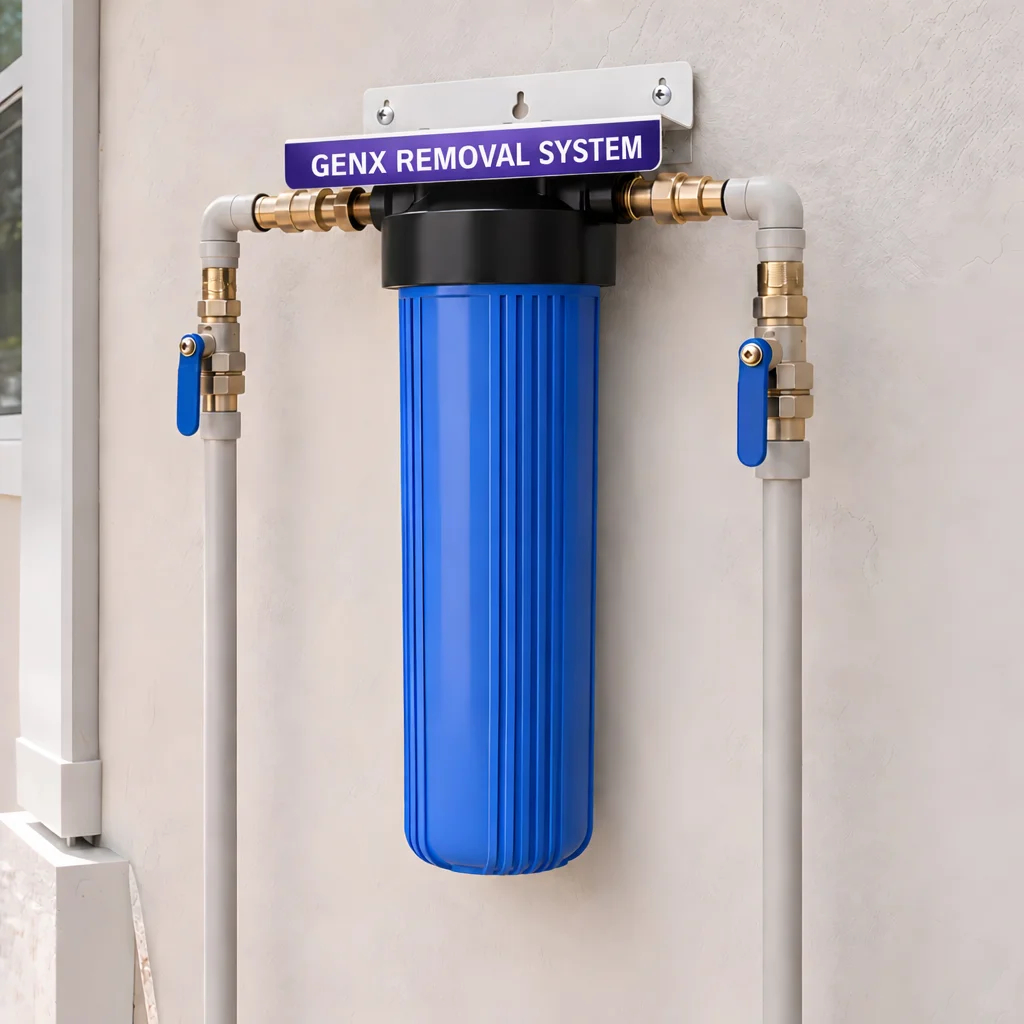
For whole-house systems, the single filter media most effective for GenX (HFPO-DA) and other PFAS is a properly designed granular activated carbon (GAC) bed using high-quality carbon and adequate contact time. GenX can be harder to adsorb than some long-chain PFAS, so carbon type, bed depth, and flow rate — plus how quickly the media becomes exhausted — are important. A GAC tank installed at the main line treats incoming water to reduce GenX at showers and faucets throughout your North Miami home without adding chemicals.
Activated carbon works by adsorption, so performance depends on providing sufficient contact time and replacing media on schedule. Hard municipal water in the North Miami area can contribute to scale and may affect carbon life; higher household use and competing contaminants also shorten service intervals. Mr. Pure Water sizes whole-house GAC systems for local plumbing and usage patterns to keep GenX reduction consistent, and periodic testing can confirm results and indicate when maintenance or media replacement is needed.
 305-404-8790
 info@bestwaterheater.com

