 Phone: 850-772-1365
 info@bestwaterheater.com
Phone: 850-772-1365
info@bestwaterheater.com
info@bestwaterheater.com
Phone: 850-772-1365
info@bestwaterheater.com
 Phone: 850-772-1365
info@bestwaterheater.com
Phone: 850-772-1365
info@bestwaterheater.com

Including filter system and high-performance HPC Bacteria filter.


HPC bacteria are a broad mix of naturally occurring microorganisms that can live in water and inside plumbing systems. You may also see this group called heterotrophic plate count, a lab method used to estimate overall bacterial growth rather than identify a single pathogen. Elevated HPC results can indicate conditions that let bacteria multiply, and homeowners in Cluster Springs may notice musty smells, slimy buildup, or faster biofilm on faucets and showerheads when that happens.
Levels measured by heterotrophic plate count can increase when water sits in pipes, when sediment or organic matter is present, or when plumbing allows biofilm to develop. These general bacterial conditions often bring taste or odor changes, and while many heterotrophic bacteria aren’t known to cause illness, higher HPC counts suggest your household water system could use attention. A whole-house approach, focused where water enters your Cluster Springs home, helps reduce regrowth and treats the water before it reaches fixtures and appliances.
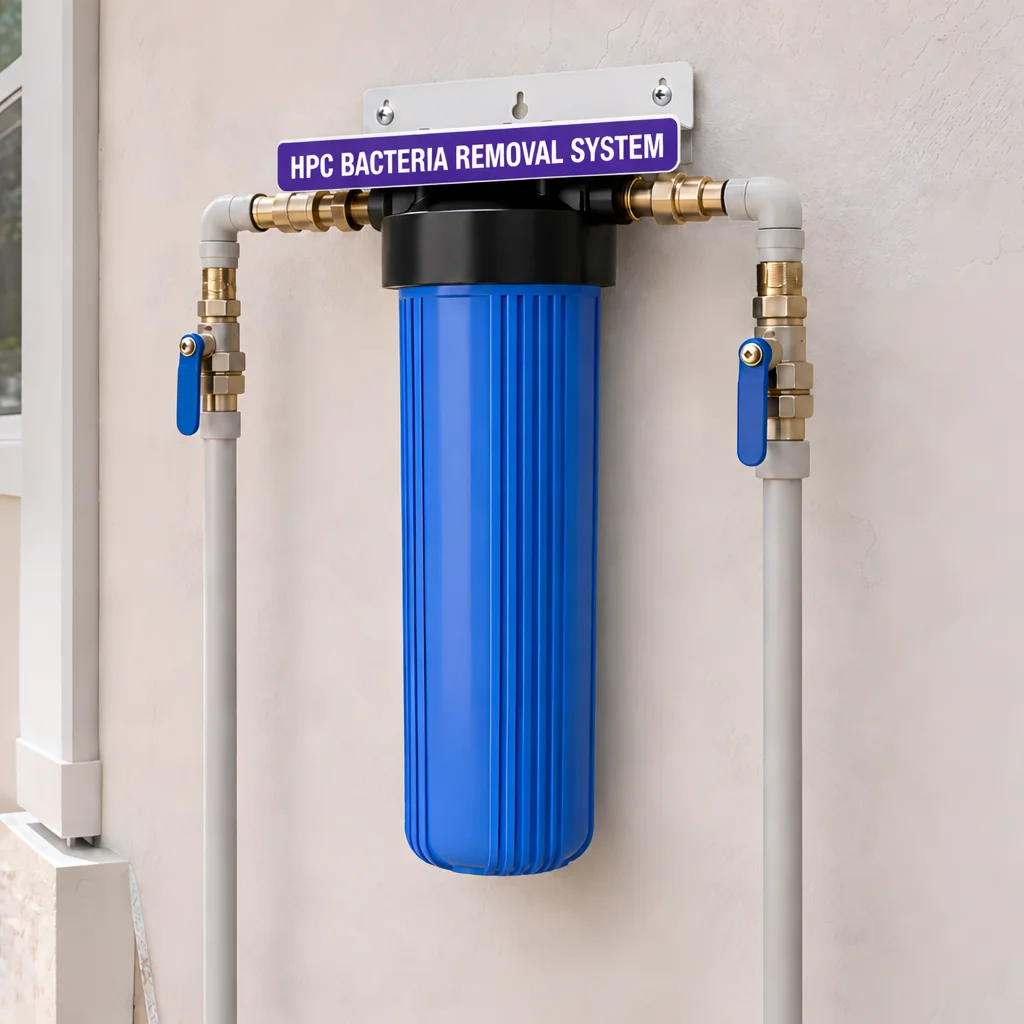
For whole-house control of HPC bacteria, a ultraviolet (UV) disinfection system is generally the most effective single filter-style option. UV inactivates microorganisms as water flows through a stainless chamber and is exposed to a UV lamp, treating water in real time without adding chemicals or altering taste. When installed at the main water entry to a Cluster Springs residence, UV protection works for every tap, shower, and appliance in the house.
UV needs clear water to work well because heavy sediment, iron, or cloudiness can block the light and shield microbes. That’s why many whole-house UV setups include a prefilter, while the UV stage remains the primary technology targeting microorganisms like HPC bacteria. Correct sizing for your home’s flow rate and regular lamp and sleeve maintenance keep the system performing; Mr. Pure Water can help Cluster Springs homeowners choose and install the right whole-house UV system to better control heterotrophic plate count at the source.
 850-772-1365
 info@bestwaterheater.com

