 Phone: 561-300-5075
 info@bestwaterheater.com
Phone: 561-300-5075
info@bestwaterheater.com
info@bestwaterheater.com
Phone: 561-300-5075
info@bestwaterheater.com
 Phone: 561-300-5075
info@bestwaterheater.com
Phone: 561-300-5075
info@bestwaterheater.com

Including filter system and high-performance Iron filter.



Iron in household water is a common nuisance that can quickly become a daily frustration. Even when it is not a health concern, too much iron can make water look discolored and leave a metallic taste. You may notice reddish-brown staining in sinks, tubs, and toilets, or laundry that comes out with yellow or rust-colored marks. Over time, iron buildup can also collect in plumbing fixtures and appliances, making them harder to keep clean.
Iron can show up in different forms, and that affects what you see and how it behaves. Dissolved ferrous iron is often clear when it comes out of the tap, then turns orange or brown after it sits or is exposed to air. Ferric iron is already oxidized and may appear as visible particles or sediment. Some homes also deal with iron-related odors when iron interacts with other naturally occurring compounds in water, which can make showers and drinking water less enjoyable.
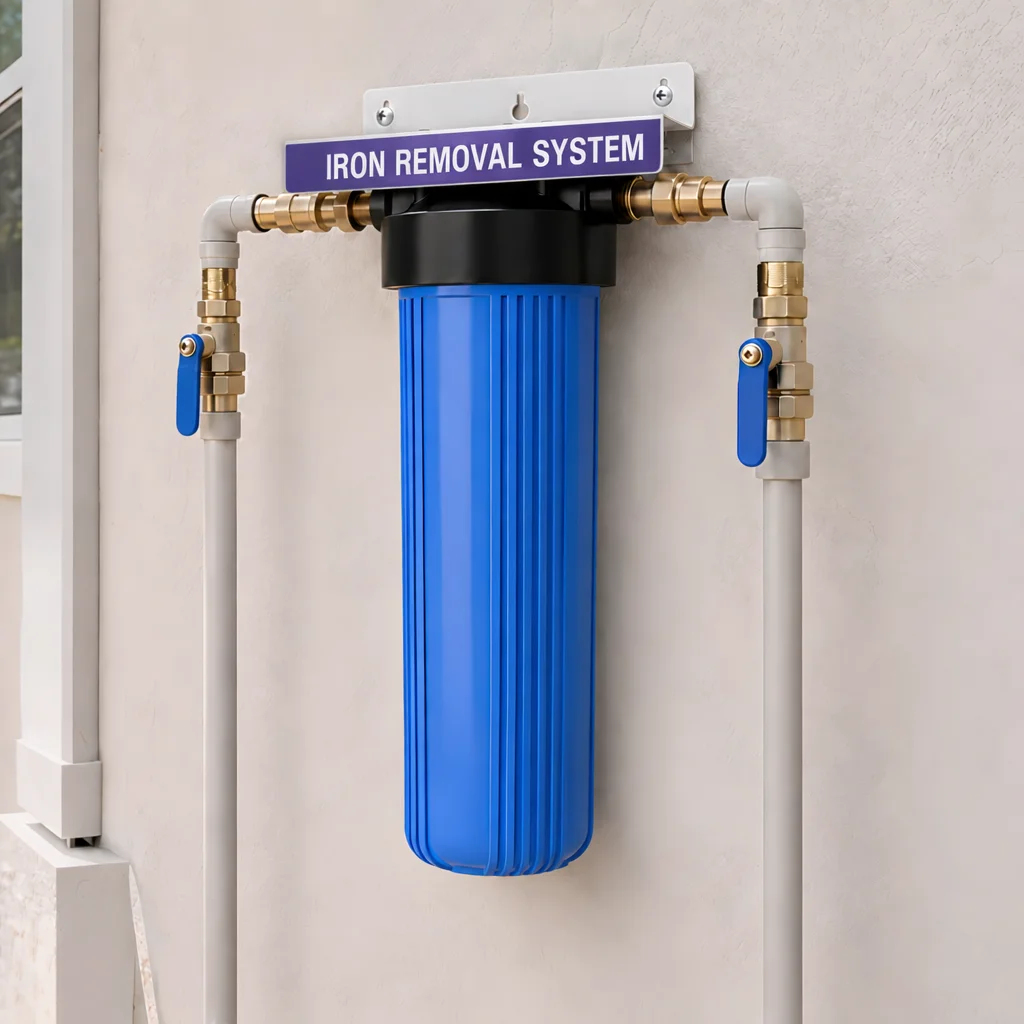
For most homes, the single most effective whole-house filter approach for iron is an oxidation plus filtration iron filter that uses catalytic media. This type of system is designed to convert dissolved ferrous iron into a filterable form and then capture it as water flows through the tank. It can also help reduce the staining and discoloration that come from oxidized iron particles. Because it treats water at the point of entry, it helps protect plumbing, fixtures, and water-using appliances throughout the home.
A catalytic iron filter is typically paired with an automatic backwashing control valve to rinse away trapped iron and keep performance steady. That self-cleaning action helps prevent the media from clogging and reduces the maintenance headaches common with cartridge-only solutions. The right setup depends on the form of iron present and whether other issues, like sediment or manganese, are involved. With a properly sized whole-house system, you get clearer water at every tap and fewer stains to scrub.
 561-300-5075
 info@bestwaterheater.com

