 Phone: 561-300-5075
 info@bestwaterheater.com
Phone: 561-300-5075
info@bestwaterheater.com
info@bestwaterheater.com
Phone: 561-300-5075
info@bestwaterheater.com
 Phone: 561-300-5075
info@bestwaterheater.com
Phone: 561-300-5075
info@bestwaterheater.com

Including filter system and high-performance Iron Staining filter.



Iron staining is one of the most aggravating water problems homeowners face because it shows up wherever water runs. In Gulf Stream you might see reddish-brown or yellow marks in sinks, tubs, and toilets, dingy laundry, and spots on dishes; sometimes water develops a metallic taste or odor after sitting in pipes. Iron is a natural mineral, and when it becomes concentrated it creates ongoing cosmetic and maintenance headaches that make everyday chores more work.
Iron doesn’t always act the same way, so symptoms can differ from one Gulf Stream house to the next. Clear-water iron (ferrous) can look normal at the tap but turn rusty once exposed to air, while red-water iron (ferric) is already oxidized and leaves immediate discoloration and sediment. In some situations iron bacteria produce slimy deposits that stain and leave a slippery film on fixtures and in toilet tanks. Even when the water is safe to drink, these issues—especially in our Hard, coastal Palm Beach County supply—can feel like a constant nuisance.
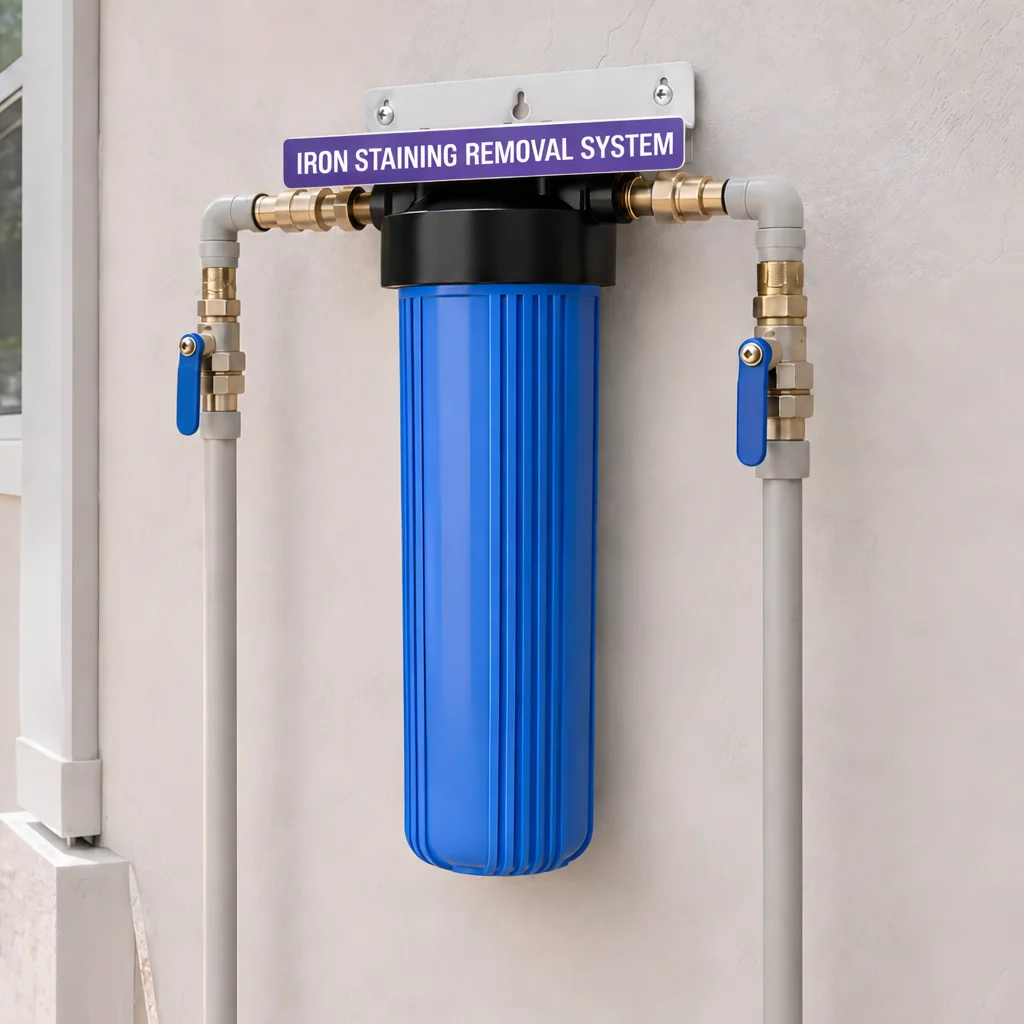
For most Gulf Stream homes tackling iron staining, a single-filter oxidation and catalytic carbon system is the most effective whole-house choice. This setup oxidizes dissolved iron so it can be trapped, while catalytic carbon captures particles and improves taste and odor. Because it treats water at the main line, it helps prevent fresh staining in bathrooms, kitchens, and laundry and reduces iron buildup inside plumbing—an efficient, centralized solution when staining is your primary concern.
A correctly sized whole-house catalytic carbon iron filter is mounted on the main water line so every faucet and appliance in your Gulf Stream home benefits. It’s especially handy when iron is intermittent, since it operates continuously without relying on pitchers or under-sink units. To perform reliably, the system should be chosen with the specific iron form and any related concerns—like sediment, manganese, or sulfur-like odors—in mind; Mr. Pure Water can assess the cause of staining and recommend the right single-tank setup.
 561-300-5075
 info@bestwaterheater.com

