 Phone: 772-290-5223
 info@bestwaterheater.com
Phone: 772-290-5223
info@bestwaterheater.com
info@bestwaterheater.com
Phone: 772-290-5223
info@bestwaterheater.com
 Phone: 772-290-5223
info@bestwaterheater.com
Phone: 772-290-5223
info@bestwaterheater.com

Including filter system and high-performance Iron Staining filter.



Iron staining is one of the more aggravating water problems for Harker homeowners because it can appear wherever water is used. You might see reddish-brown or yellow streaks in tubs, sinks, and toilets, dingy laundry, or spots on dishes, and sometimes a metallic taste or smell develops after water sits in pipes. Iron occurs naturally, but when it’s present in higher amounts it causes ongoing cosmetic issues and extra cleaning or maintenance around the house.
Iron doesn’t always act the same way, so symptoms in Harker homes can differ depending on the water source. Clear-water iron (ferrous) can look normal at the tap and then oxidize into reddish deposits after exposure to air, while red-water iron (ferric) is already oxidized and creates immediate discoloration and sediment. In some wells or systems iron-related slime from bacteria can develop, leaving stains plus a slippery film in toilet tanks or on fixtures. Even when the water meets safety standards, the visible staining and buildup make routine tasks more difficult.
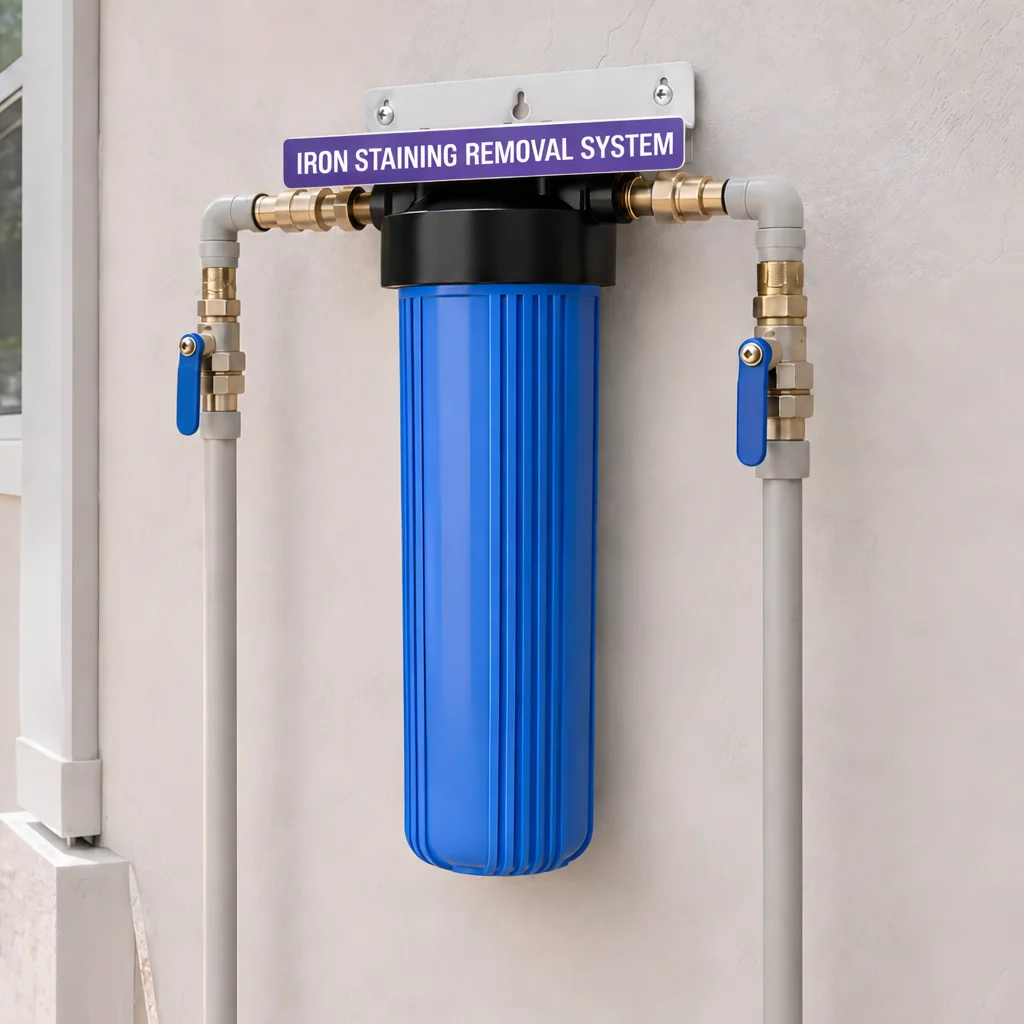
For many Harker houses, the best single-filter solution is an oxidation plus catalytic carbon system built for iron reduction. This whole-house setup helps oxidize dissolved iron so it can be captured, while the catalytic carbon media traps particles and improves taste and odor. Because it conditions water at the main line, it prevents new staining in bathrooms, kitchens, and laundry and reduces iron accumulation inside plumbing—an effective, centralized choice when staining is the primary concern.
A correctly sized whole-house catalytic carbon iron filter is fitted on the main water line so every faucet and appliance in your Harker home benefits. It’s particularly helpful when iron shows up intermittently, since it runs continuously without relying on pitchers or under-sink units. The unit should be chosen based on the form of iron present and any companion problems like sediment, manganese, or sulfur-like odor; Mr. Pure Water can assess your supply—whether well or municipal—and recommend the right single-tank filtration setup.
 772-290-5223
 info@bestwaterheater.com

