 Phone: 850-772-1365
 info@bestwaterheater.com
Phone: 850-772-1365
info@bestwaterheater.com
info@bestwaterheater.com
Phone: 850-772-1365
info@bestwaterheater.com
 Phone: 850-772-1365
info@bestwaterheater.com
Phone: 850-772-1365
info@bestwaterheater.com

Including filter system and high-performance Iron Staining filter.


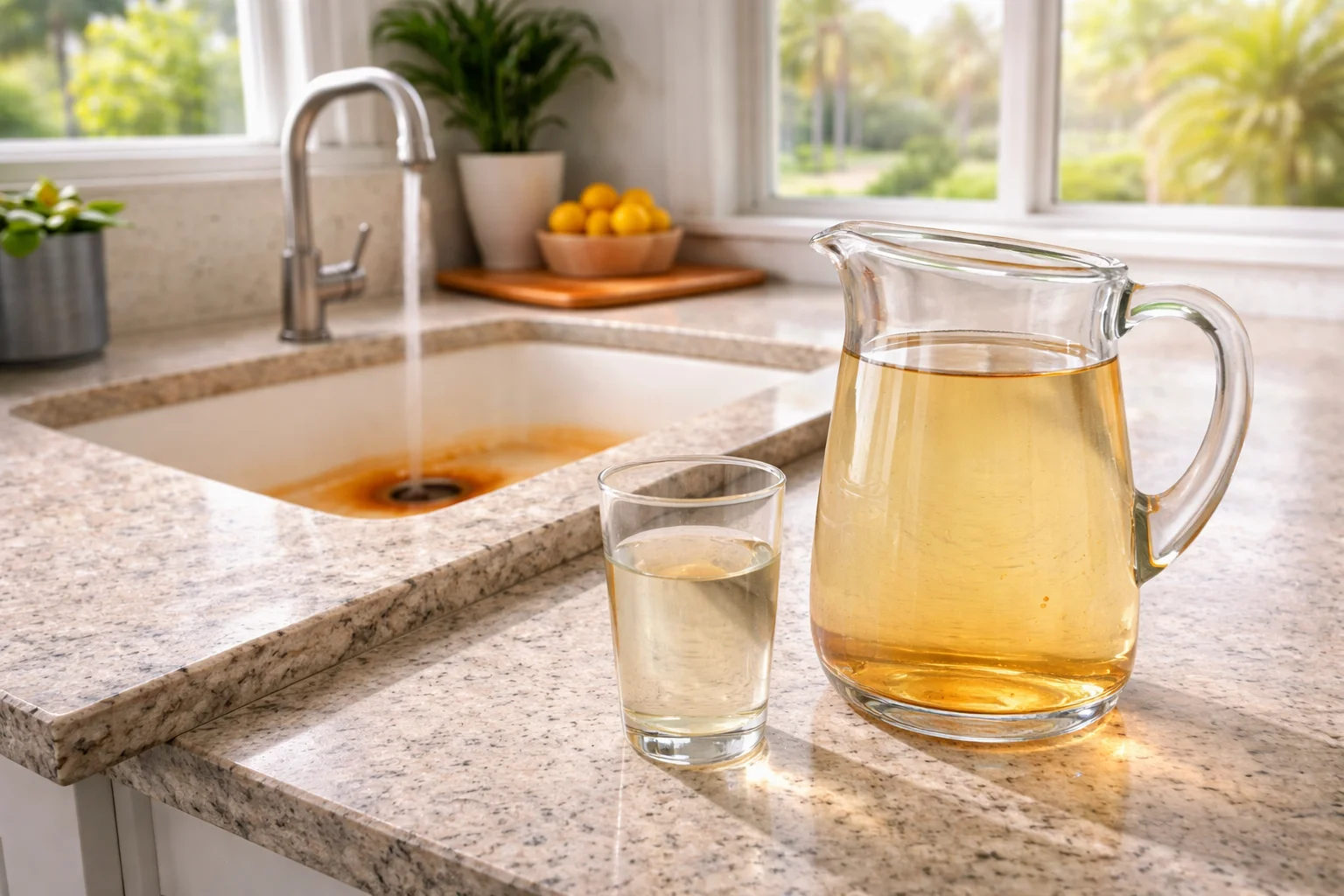
Iron staining is one of the most aggravating water problems for homeowners because it appears wherever you use water. In Harold you might see reddish-brown or yellow marks on sinks, tubs, and toilets, dingy laundry, or spots on dishes — and sometimes a metallic taste when water sits in pipes. Iron is a natural mineral, but when it’s present in greater amounts it causes stubborn cosmetic issues and extra maintenance around the house.
Iron doesn’t all act the same, so symptoms vary between homes across Harold. Clear-water (ferrous) iron can look normal at the tap but oxidize into rusty stains once exposed to air. Red-water (ferric) iron is already oxidized and can show up as immediate discoloration or sediment. When iron bacteria are involved you may also notice slimy deposits or a slippery film on fixtures and inside toilet tanks. Even when water is otherwise safe, the staining and buildup make everyday chores more tedious.
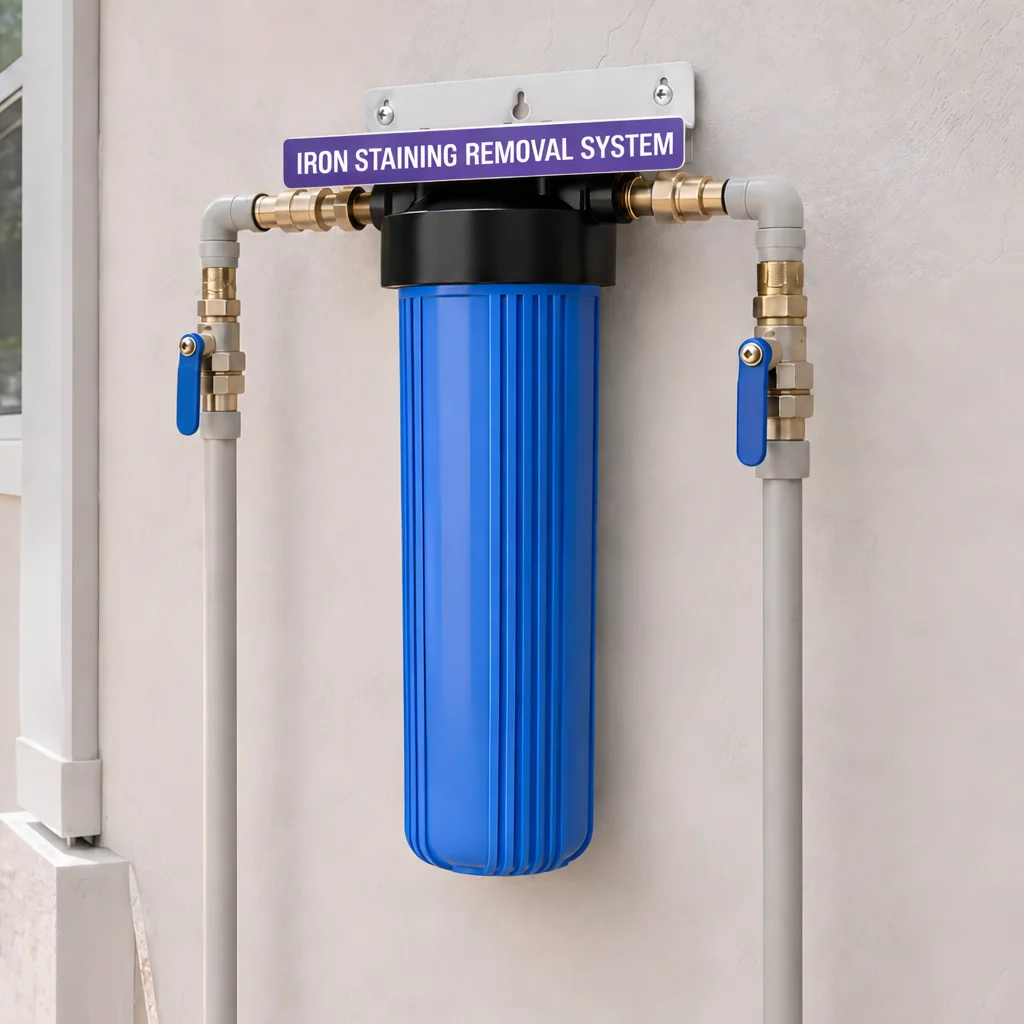
For most Harold houses dealing with iron staining, a single-filter oxidation and catalytic carbon system is the most effective whole-home solution. This setup oxidizes dissolved iron so it can be captured, while the catalytic carbon media traps particles and helps improve taste and odor. Because it treats water at the point it enters your Harold home, it prevents new stains on bathroom fixtures, kitchen surfaces, and laundry and reduces iron buildup inside plumbing — a practical, centralized option when staining is your primary concern.
A correctly sized catalytic carbon iron filter is fitted on the main line so every faucet and appliance in your Harold home benefits. It’s especially handy when iron shows up intermittently, since it works continuously without needing pitchers or under-sink units. Performance depends on selecting the right system for the form of iron present and any companion issues like sediment, manganese, or sulfur-like odors. Mr. Pure Water can evaluate what’s causing staining in your Harold house and recommend the appropriate single-tank filtration system.
 850-772-1365
 info@bestwaterheater.com

