 Phone: 850-772-1365
 info@bestwaterheater.com
Phone: 850-772-1365
info@bestwaterheater.com
info@bestwaterheater.com
Phone: 850-772-1365
info@bestwaterheater.com
 Phone: 850-772-1365
info@bestwaterheater.com
Phone: 850-772-1365
info@bestwaterheater.com

Including filter system and high-performance Iron Staining filter.



Iron staining is one of those household problems that shows up in the most annoying places — toilets, tubs, sinks and laundry. You might see reddish-brown or yellow marks, dingy clothes, or spots on dishes, and sometimes the water carries a metallic taste or odor after sitting in pipes. While iron is a natural mineral, when it becomes concentrated it creates persistent discoloration and extra cleaning and maintenance that Lewis homeowners don’t want to deal with.
Iron doesn’t always act the same, so symptoms can differ between houses around Lewis. Clear-water (ferrous) iron can look normal at the tap and then turn rusty when exposed to air, while red-water (ferric) iron is already oxidized and can cause immediate staining and sediment. In some situations, iron bacteria create slimy buildup, leaving a slippery film in toilet tanks or on fixtures. Even if the water is safe to drink, the aesthetic problems and residue make everyday chores more difficult for local families.
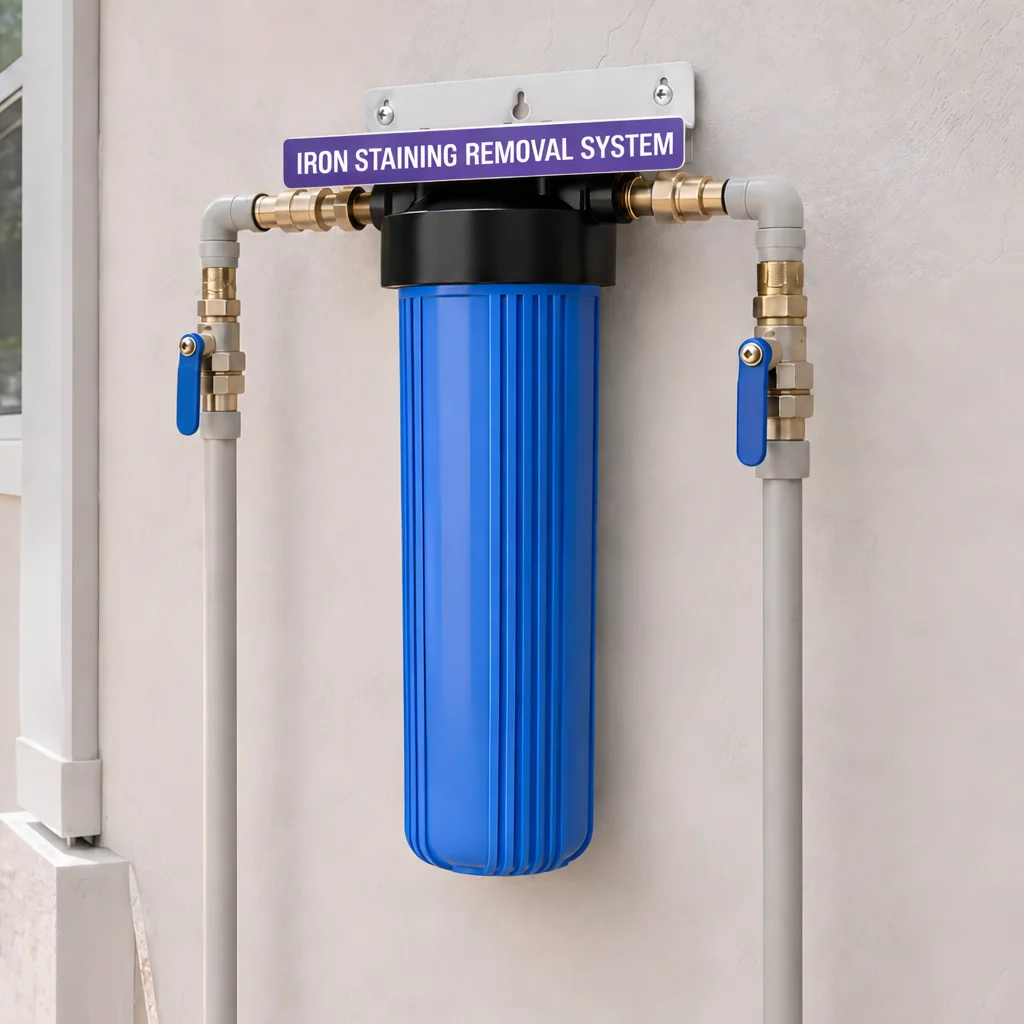
For most Lewis residences, the best single-filter choice is an oxidation plus catalytic carbon system engineered for iron reduction. This whole-house filter oxidizes dissolved iron so it can be captured, while catalytic carbon traps particles and helps improve taste and odor. Installed at the main water entry, it prevents fresh staining in bathrooms, kitchens and laundry and reduces the iron that accumulates inside plumbing — a convenient centralized solution when staining is the primary concern.
A correctly sized whole-house catalytic carbon iron filter is fitted on the main line so every faucet and appliance in your Lewis home benefits. It’s especially helpful when iron is intermittent, because it continuously treats water without needing point-of-use devices. Selecting the right system requires knowing which form of iron is present and checking for related issues like sediment, manganese, or sulfur-like odors that can accompany iron — Mr. Pure Water can assess what’s causing the staining and recommend the appropriate single-tank setup.
 850-772-1365
 info@bestwaterheater.com

