 Phone: 850-772-1365
 info@bestwaterheater.com
Phone: 850-772-1365
info@bestwaterheater.com
info@bestwaterheater.com
Phone: 850-772-1365
info@bestwaterheater.com
 Phone: 850-772-1365
info@bestwaterheater.com
Phone: 850-772-1365
info@bestwaterheater.com

Including filter system and high-performance Magnesium Carbonate filter.



In Auburn, magnesium carbonate often shows up as part of hard water—dissolved minerals that leave scale when water is heated or evaporates. Homeowners may spot chalky films on faucets, cloudy glassware, or notice that soap and shampoo don’t lather as well. Although magnesium itself is a natural mineral, higher levels can create nuisance buildup around sinks, showers and appliances, making water feel harder to manage even when it looks clear from the tap.
You’ll also see this compound called magnesium bicarbonate in some descriptions, since bicarbonate forms can be present and later contribute to scaling as conditions change. These minerals tend to accumulate in water heaters, showerheads and appliance valves, which can reduce flow and efficiency over time. The flavor of hot beverages may pick up a mineral note as well. If you’re seeing recurring scale or residue in your Auburn home, that’s usually a sign a whole-house approach is needed rather than treating single fixtures.
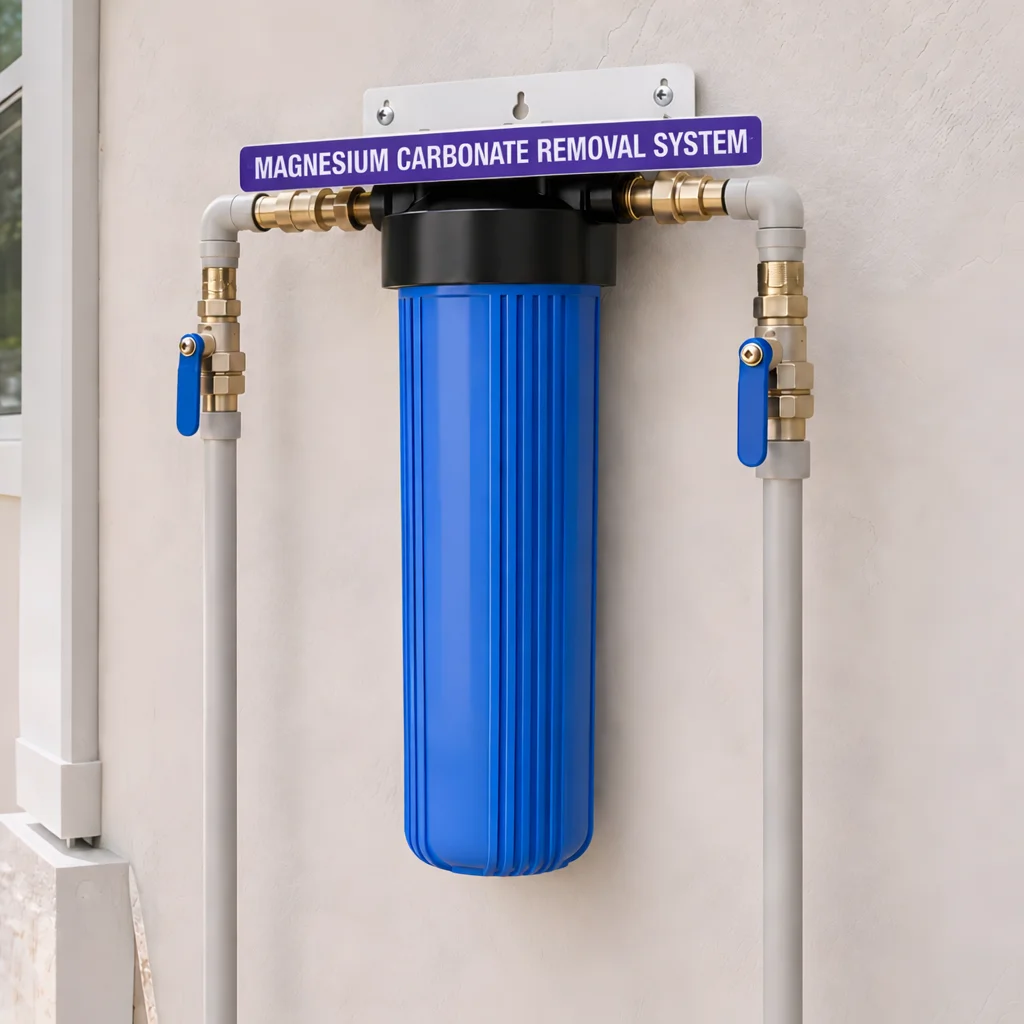
For magnesium carbonate and magnesium bicarbonate control, the most effective single-filter whole-house option is a salt-free scale inhibition system—commonly known as a template-assisted crystallization (TAC) filter. Rather than removing dissolved minerals, TAC media alters how hardness minerals behave so they form tiny, stable crystals that don’t adhere to pipes or heating elements. That reduces typical scale buildup while keeping strong water flow throughout the house.
A whole-house TAC filter is mounted where water enters your Auburn home so every faucet, shower and appliance benefits from scale control. It’s particularly well suited when magnesium-based carbonates are the main concern, rather than disinfectants or organic contaminants. Sized to your home’s flow needs, it can cut down on crusty fixtures and constant descaling; Mr. Pure Water can assess whether a TAC system alone is right or if pairing it with other treatments would better meet your goals.
 850-772-1365
 info@bestwaterheater.com

