 Phone: 407-214-2646
 info@bestwaterheater.com
Phone: 407-214-2646
info@bestwaterheater.com
info@bestwaterheater.com
Phone: 407-214-2646
info@bestwaterheater.com
 Phone: 407-214-2646
info@bestwaterheater.com
Phone: 407-214-2646
info@bestwaterheater.com

Including filter system and high-performance Musty Taste and Odor filter.



A musty taste and odor can make Bay Lake homeowners wary of using tap water, even when it looks clear. People often describe the smell as earthy, damp, or like wet cardboard, and it can affect drinking water, ice, and showers. These off‑odors typically come from naturally occurring organic compounds rather than an obvious contamination event, and when the taste lingers it can influence coffee, tea, and cooking water used at home in the Walt Disney World area and nearby Lake Buena Vista.
Musty taste is frequently linked to compounds produced by algae and microbes in source water—such as geosmin and 2-MIB—that people can detect at very low levels. It can also stem from decaying vegetation, biofilm in plumbing, or seasonal shifts that change how municipal treatment and distribution behave in Orange County. While a musty odor doesn’t always mean a health risk, it is a water quality concern that can disrupt daily life; when Bay Lake households notice a sudden musty smell, it’s better to investigate the cause than simply mask it.
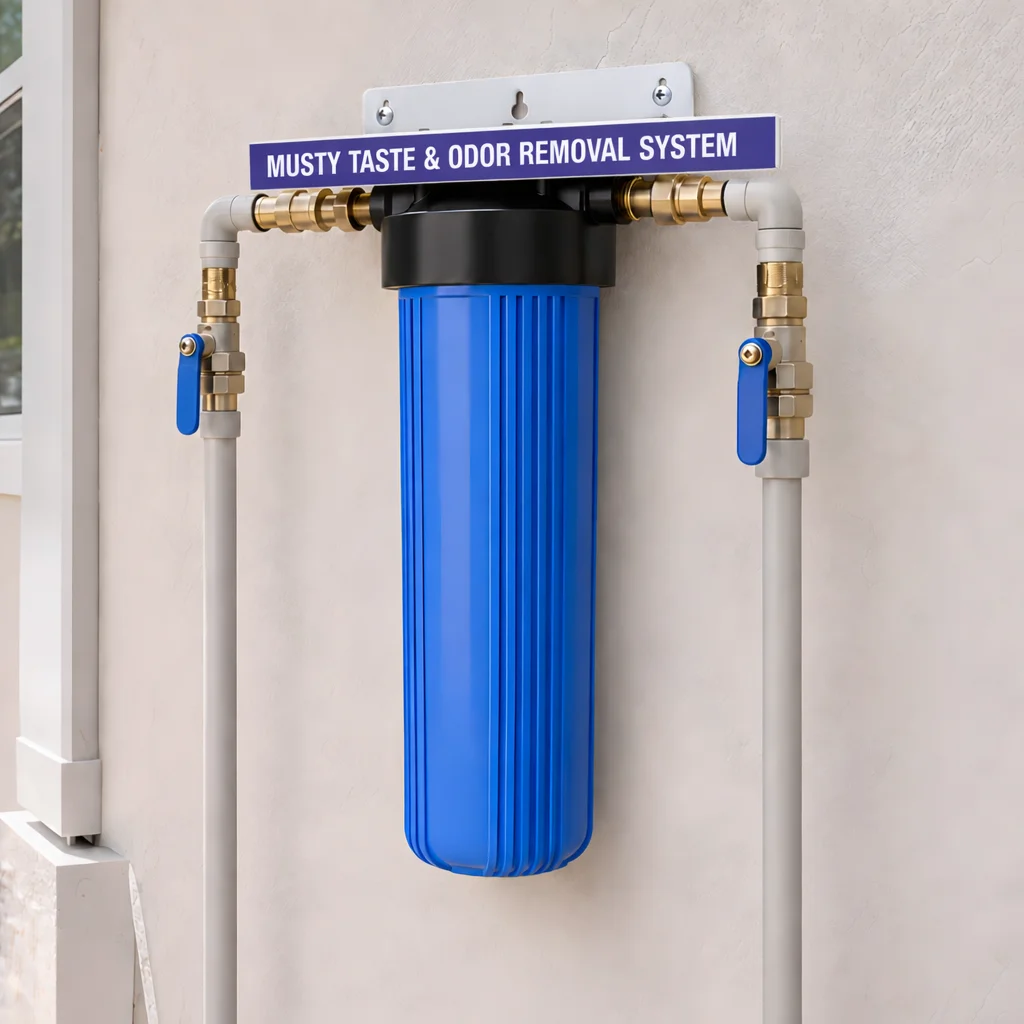
To reduce musty taste and odor throughout a Bay Lake home, a whole-house activated carbon filter is generally the most effective single-filter choice. Activated carbon adsorbs the trace organic compounds responsible for musty odor and musty taste, including earthy molecules like geosmin and 2-MIB, and installing it where water enters the house treats every tap—so the problem doesn’t follow you into showers, laundry, or dishwashing in this humid subtropical area.
A correctly sized whole-house carbon system gives enough contact time to remove odor-causing organics while keeping good household flow. Because musty taste and odor may come from multiple sources, carbon is commonly chosen for broad reduction of many taste- and odor-related organics rather than targeting a single compound. Mr. Pure Water can help Bay Lake residents pick the right carbon media and tank size—considering local factors like moderate water hardness and potential scale or corrosion concerns in Central Florida—and pairing carbon with a sediment prefilter can help the system perform at its best.
 407-214-2646
 info@bestwaterheater.com

